
We took you on a flight! (Part 2)

On 22-26 September Trade Airlines took care of more than 1,100 passengers at the airport set up in Hunguest Hotel Pelion in Tapolca. At the Business Days conference organised by the Chain Bridge Club and Trade magazin, professionals from the HoReCa and FMCG sectors travelled in Business Class and received up-to-date information on how to avoid turbulence, serve their own “passengers” and ensure a safe landing. In the second part of our report, we review the second half of the week.
Written by Eszter Barok, Andrea Tisza
This article is available for reading in Trade magazin 2025/12-2026.01
Moderated by Szilvia Krizsó, Thursday focused on the intersection of strategic thinking, market assessment and innovation.

Once again, Szilvia Krizsó welcomed the conference guests on Thursday morning as a Trade Airlines stewardess
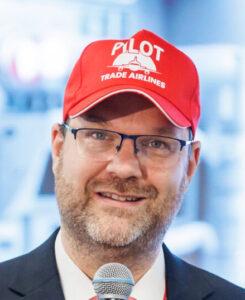
Péter Mondovics
marketing manager
Mastercard
Beginning the day’s work, Péter Mondovics marketing manager of Mastercard introduced the company’s Dynamic Yield system, which can already be used to personalise menus in more than 12,000 McDonald’s restaurants.
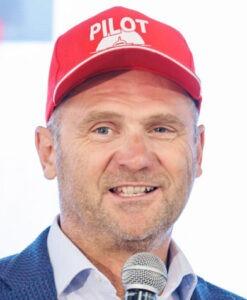
György Jaksity
chairman of the board
Concorde
György Jaksity, chairman of the board of Concorde painted a picture of the reality of global trade: there is a real imbalance behind the US-China trade conflict, with half of the US deficit and global surplus materialising between these two countries.
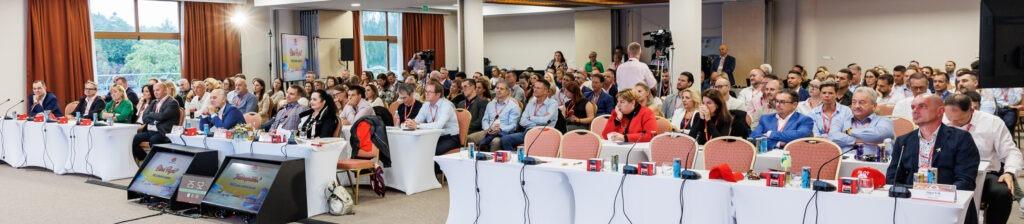
Throughout the five days of Business Days, every Trade Airlines flight was packed – the annual meeting point for the full spectrum of FMCG decision-makers
Brands under pressure

Tamás Ács
head of country
Unilever
Tamás Ács, head of country at Unilever said during a roundtable discussion hosted by Branded Goods Association Hungary that large FMCG companies are currently operating under serious market pressure, so the two keys to growth are innovation and employee retention.
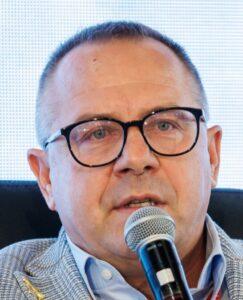
Csaba Belovai
CEO
Zwack Unicum
According to Csaba Belovai, the CEO of Zwack Unicum, domestic consumer behaviour has changed dramatically: price caps have accelerated the decline of small shops, with lots of consumers turning to discount stores to protect their family budgets. This is a big challenge for manufacturers, as a hypermarket can stock up to 70 SKUs distributed by Zwack, while a discount store is lucky if it can stock 10.

Dr. Ágnes Fábián
managing director
Henkel
Dr Ágnes Fábián, managing director of Henkel told that today sustainable growth today is still based on the triple combination of innovation, consumer communication and added value – especially because volume sales aren’t growing on the FMCG market.

Zoltán Fekete
secretary general
Branded Goods
Association Hungary
Zoltán Fekete, secretary general of Branded Goods Association Hungary said in the first roundtable discussion of the day: the current business environment is characterised by unfavourable market trends such as inflation and lower purchasing power, but on the other hand there are also government measures responding to these trends.

Péter Noszek
CEO
Nestlé
Péter Noszek, the CEO of Nestlé explained that sustainable growth requires a dual strategy: in the short term continuous price elasticity analysis is necessary, while in the long run investments in domestic production bases determine competitiveness.

Attila Sófalvi
general manager
MARS
Attila Sófalvi, general manager of MARS reported that the company’s regional operations underwent major changes: Poland, Ukraine, the three Baltic States and Moldova joined the former Hungarian-Czech-Romanian-Slovak cluster.

Zoltán Venter
country manager
Essity
Zoltán Venter, country manager of Essity underlined that the margin freeze is affecting both manufacturers and retailers, and it is expected to remain with us until the elections. In his view the pricing logic is falling apart, so brand building and strategy implementation are becoming more important.
Opportunities for young talents – the industry joins forces
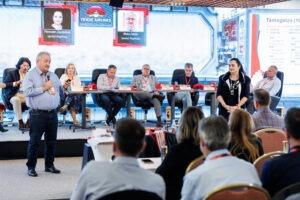
The Chain Bridge Foundation helps disadvantaged, talented high school students continue their education with a total of HUF 3m for 10 semesters per student. Chair of the board of trustees Zsuzsanna Hermann told that the support isn’t driven by corporate PR, but by the personal commitment of FMCG executives. Since 2016 nearly 40 students have entered higher education with the help of the foundation. Board member István Matus added that the students often come from extremely difficult family backgrounds and for many of them this is their only opportunity to continue their education.

Tünde Turcsán
managing director
YouGov Shopper

Dorottya Brenner
consultant
YouGov Shopper
Following the foundation’s status report Dorottya Brenner, a consultant at YouGov presented their Brand Footprint research, whose Consumer Reach Point indicator uses actual purchase data to show which brands are most often taken off the shelves by households. The Brand Footprint awards were presented jointly by Tünde Turcsán, managing director of YouGov Shopper and Dorottya Brenner: the Fastest Riser prize went to Lipóti (+178 places), the Breakout Brand award was taken home by Apenta (14th place), while the Top 3 CRP brands were Kinder, Coca-Cola, and Hell Energy.
Brand Footprint awards
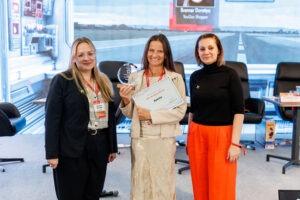
The award was presented to Andrea Kiss marketing director, Apenta
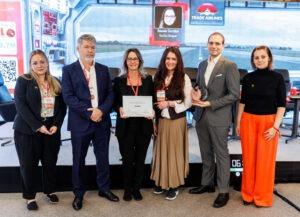
The award was presented to József Mári sales manager, Éva Gonda TM & BD manager, Ilona Zimmermann HRBP HU-GCM and András Telkes head of country marketing – Ferrero (Kinder)
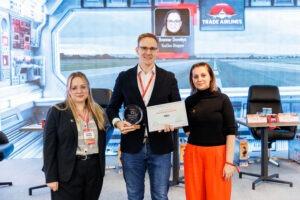
The award was presented to Hartung György national key account manager, HELL Energy
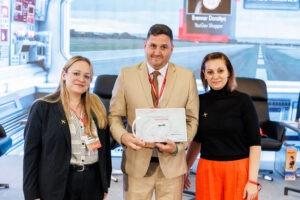
The award was presented to Zoltán Bugyenszki head of baking technology and gastronomy, Lipóti Pékség
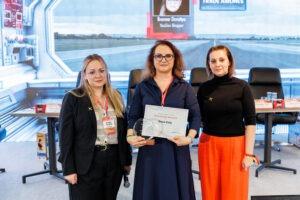
The award was presented to Anita Gürney corporate affairs & sustainability director, Coca-Cola

András Galavics
revenue and margin
growth manager
atmedia

János Kapitány
head of direct sales
and promotion
atmedia
The secrets behind the most effective advertisements
Revenue and margin growth manager András Galavics and head of direct sales and promotion János Kapitány from the Atmedia Group showed: radio not only builds brands in the FMCG sector, but it also generates sales. The Balázsék Spring Roadshow reached 2.8 million listeners, with 200+ radio appearances per brand and an average of 23 contacts.

Gábor Tolnai
division head
Kantar Hoffmann
Gábor Tolnai, chief operating officer of Kantar Hoffmann introduced the Creative Effectiveness 2025 ranking, which measures the short-term sales impact and long-term brand building of advertisements by using the Link methodology.

Virág Kiss
manager
PwC Magyarország
Virág Kiss, a manager at PwC Magyarország pointed out that there are many loyalty programmes available in Hungary, but only 4-5 are actively used by customers. Loyalty is driven not by transactions, but by a combination of emotions, experiences and habits.
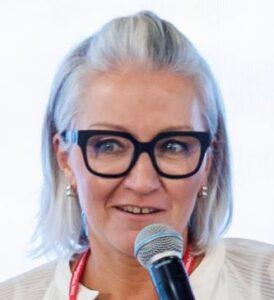
Csilla Kővári
head of brand communication &
execution
Tesco
Csilla Kővári, head of brand communication at Tesco highlighted that Clubcard is now used in nearly three-quarters of transactions, and card users spend 116% more. From the 2.7 million active users 1.6 million use the app.

Klára Tihanyi
exhibition director
Hungexpo
Klára Tihanyi, exhibition director of Hungexpo emphasised that SIRHA Budapest 2026 (3-5 March) offers a great opportunity for brands that wish to get close to purchasing decisions. At the last event 77% of visitors were decision-makers and more than 50% were owners or senior professionals.

Erik Vágyi
managing director
NIQ
According to Erik Vágyi, managing director of NielsenIQ (NIQ), price stabilisation hasn’t automatically led to volume growth: shopping baskets remain disciplined, confidence is improving only slowly and price sensitivity remains high.

Gabriella Heiszler
president-CEO
SPAR
Gabriella Heiszler, SPAR’s president-CEO sat down for a conversation with Szilvia Krizsó. She told that owing to regulatory uncertainty, planning can only be done in the ultra-short and ultra-long term. SPAR strives for higher added value: the meat counter, gastronomy and the display bakery deliver a stronger shopping basket and brand experience.
Different paths, same goal

Nóra Hevesi
head of communications
Tesco
Nóra Hevesi, head of communications at Tesco underlined in the next roundtable discussion: given the constraints of price control measures, the stability of selection and supply can only be maintained by working together with suppliers. Predictable regulation is a prerequisite for operability.
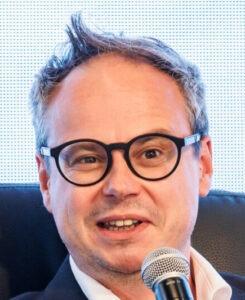
Dr. Tamás Kaibinger
Head of corporate
affairs
Lidl
Lidl’s business model is based on a well-planned product range tailored to consumer needs and simplicity. Head of corporate affairs Dr Tamás Kaibinger commented that it is this simplicity – coupled with preparedness – that enables Lidl to respond quickly to changing consumer demands and regulatory changes.

Eszter Kazatsay
head of corporate
communications
PENNY
90% of PENNY stores are located in rural areas and operate efficiently even with a format smaller than 400m², by this ensuring stable supply in towns where other chains aren’t necessarily present. According to head of corporate communications Eszter Kazatsay, this geographical coverage is one of PENNY’s greatest competitive edges.
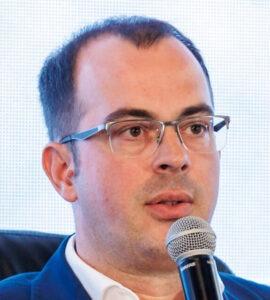
Márk Maczelka
head of communications
SPAR
Márk Maczelka, head of communications at SPAR noted that the market is currently undergoing a two-way convergence: discounters are becoming more like supermarkets with fresh selections and counters, while supermarkets are becoming discounter-like with process and portfolio efficiency.
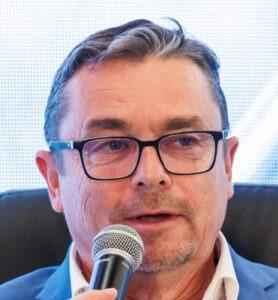
János Mezei
commercial director
Co-op Star
Coop has been adapting to the constantly changing environment for 30 years, and this is still the key to survival today, said János Mezei, commercial director of Co-op Star Zrt. Coop is the last store in many towns, so it also has a social responsibility.

Attila Nagy
sales director
Auchan
Attila Nagy, sales director of Auchan said a well-functioning hypermarket chain remains a strategic foundation. In Auchan stores the interiors are currently being optimised for scale efficiency, e.g. the Dunakeszi unit has been reduced to 18,000m².
Stability and consciousness: drugstore roundtable

Ágnes Bárczi-Elek
director of purchasing
Müller Drogéria
In the last roundtable discussion of the day Ágnes Bárczi-Elek, director of purchasing at Müller Drogéria said that Müller is constantly introducing product and service innovations that contribute to expanding the customer base and retaining loyal customers.

Ferenc Czigány
head of sales
Ecofamily
Ecofamily operates 70 stores nationwide and it is maintaining its position by being close to rural shoppers and operating flexibly, explained head of sales Ferenc Czigány.

István Dobi
owner
Dél-100
István Dobi, the owner of Dél-100 shared that as a smaller regional chain, Dél-100 was exempted from the government’s margin freeze measure, allowing the company to maintain a uniform price structure and consistent promotional calendar without distorting pressures.

Hajnalka Horváth-Tokaji
purchasing category
manager
Rossmann
Hajnalka Horváth-Tokaji, purchasing category manager of Rossmann opined that shoppers remain price-sensitive and are increasingly conscious in their choice of products, based on various criteria that aren’t easy to meet.
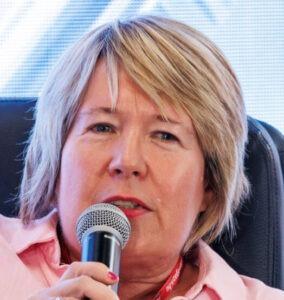
Mariann Józsa
managing director
dm
Mariann Józsa, managing director of dm remarked that customers often look for special offers and don’t notice that – due to the margin freeze – they are actually getting products 25% cheaper on average.

Marcell Sárközi
sales director
Henkel Consumer Brands
Mandatory margin reductions don’t generate additional volume sales, pointed out Marcell Sárközi, sales director of Henkel Consumer Brands. His experience is that volume sales are stagnating and players are growing at each other’s expense on both the supplier and retail sides.
After the professional programmes Thursday ended with a gala dinner and an awards ceremony: the Lifetime Achievement Award and the Retailer of the Year 2025 awards were presented. Following the birthday greetings, the Vegas Show Band kept the party going until dawn.
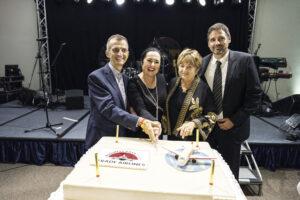
At the gala dinner, the birthday Szamos cake was celebrated together with lifetime achievement awardee Zoltán Gazsi, chief organizer Zsuzsanna Hermann, and Szamos Marcipán owners Gabriella Kelényi Szamos and Ádám Kelényi

Vegas Show Band ensures the festive atmosphere of the gala dinner each year
Business Days – Lifetime Achievement Award 2025
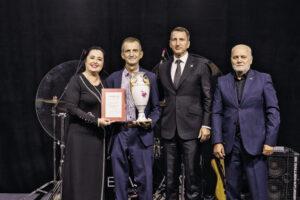
This year’s lifetime achievement awardee, Zoltán Gazsi (holding the award), together with the presenters: Zsuzsanna Hermann, editor-in-chief of Trade magazine and vice president of Chain Bridge Club; Tibor Székács, president; and László Hovánszky, honorary president for life of Chain Bridge Club.
This award goes to Zoltán Gazsi who has already received numerous recognitions. He writes posts on LinkedIn which are read by more than 23,000 people. With his outspoken, taboo-breaking posts, he makes thousands of people think with every piece he writes. Last spring he published his book, Emberszemlélet (“A Human Approach – The Life Affirming Executive”), which is a corporate impressionist textbook disguised as a biography. He is the founder of the Blue Zone community, which seeks to build community and share inspiration.
However, the past period has been harder for him than ever before: his illness taught him several years ago to appreciate genuine good intentions and connections. Today he only does what brings him joy, passing on his experiences to others. He was the managing director of Eisberg for 15 years. He taught us not to dwell on or get upset about irrelevant things, but to focus our energy and attention on the situations and decisions that really matter – and that we should always remain optimistic, because our decisions can create a better world.
We are proud of our latest award
CBA won the Retail Award of Excellence for Hungarian Products in 2025.

As a Hungarian-owned chain, we have always considered it very important to maintain the best possible relationships with our producers, manufacturers and suppliers. We strive to make Hungarian products available to as many shoppers as possible and to give them the greatest possible assistance in increasing their recognition and popularity. We have implemented lots of programmes aimed at achieving this goal.
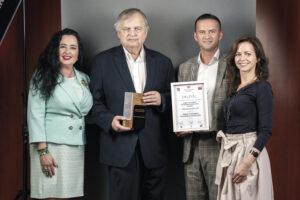
On behalf of CBA, Vice President Zsolt Gyelán and Procurement Director Zoltán Noszlopy received the award
CBA was among the first retail chains to join the trademark users of Hungarian Product Nonprofit Kft. Years ago an independent survey confirmed that the share of Hungarian products in our network is over 80%. We keep going forward on this path and will continue our mission for the benefit of Hungarian products in the future.
Consistently supporting domestic products: another professional recognition for PENNY
PENNY Magyarország has won the Retail Award of Excellence for Hungarian Products for the fourth time.

For many years now, the discount store chain has been working consistently to make domestic products part of everyday shopping. Az elmúlt évek során a diszkontlánc számos edukációs kampánnyal hívta fel a figyelmet a hazai termékek értékére, ezzel erősítve a fogyasztói tudatosságot és a helyi gazdaságot. Az elért eredmények és a vásárlók bizalma mutatják: a hazai minőség iránti elköteleződés közös érték.
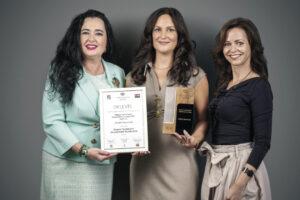
PENNY Market Ltd. was among the winners of the 2025 Hungarian Products Trade Excellence Award, with Communications Director Eszter Kazatsay representing the chain at the ceremony

SPAR Magyarország showered with trade awards
Thanks to consumer votes, SPAR Magyarország has won the Customer Choice Award for Hungarian Products for the third time, which shows that shoppers believe: the chain offers the widest range of products bearing the Hungarian Product label.

Plus the jury of experts decided that the bronze medal should go to SPAR in the Retail Award of Excellence for Hungarian Products competition, which recognises outstanding performance in the distribution, communication and promotion of Hungarian products.
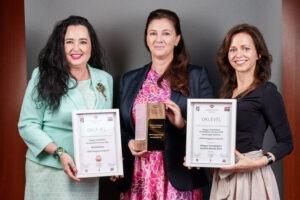
Krisztina Várkonyi, Procurement Director at SPAR, collected several recognitions: alongside the bronze medal, SPAR was also awarded the Customer Excellence Prize this year
Prior to this, SPAR won three awards in the 2025 Retailer of the Year competition of Trade magazin. What is more, SPAR was also victorious in the Symbol of Sustainability 2025 competition, in the “Technological solution, process” category. “These awards are particularly valuable because they send the message that what we do for consumers is also considered exemplary by the industry”, commented head of communications Márk Maczelka.
“From farm to table” Auchan deeply cares about Hungarian quality
At the heart of Auchan Magyarország’s strategy we find high-quality groceries of Hungarian origin, as the retailer is convinced that the best ingredients come from neighbouring communities.

Today more than 1,300 suppliers work with the company and nearly 90% of them are Hungarian. Auchan’s “From Farm to Table” programme exclusively features domestic products and is based on three pillars: quality, traceability and sustainability.
Up until now more than 62 Hungarian producers have joined the initiative. Auchan stores sell nearly 1,100 trademarked products, 126 of which are private labels bearing the Hungarian Product, Domestic Product or Domestically Processed Product certification label.
“We explained the meaning of the trademarks in our promotional leaflets, so that our customers know exactly what Hungarian origin means”,
said sales director Attila Nagy.
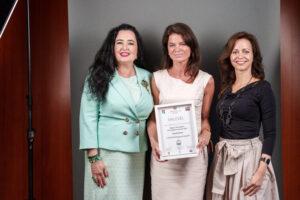
On behalf of Auchan, Ildikó Balázs, Director of Corporate Relations, accepted the certificate for the joint second place in the 2025 Hungarian Products Trade Excellence Award
Commitment to Hungarian products: METRO wins silver medal
METRO Magyarország was proud to receive the silver medal in the Retail Award of Excellence for Hungarian Products 2025 competition. This recognition confirms that our support for Hungarian products isn’t a marketing ploy, but a genuine, long-term strategic commitment on our part.

The Hungarian Product trademark fits perfectly with our values: controlled quality and origin, competitive prices and sustainability.
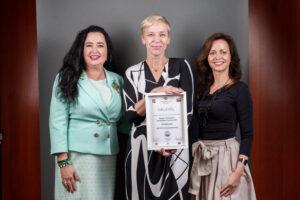
On behalf of METRO, Dr. Beáta Kápolna, Director of Procurement, received the certificate of recognition
Our HoReCa partners know that local ingredients not only mean freshness and quality, but also offer an authentic taste experience. Retailers are well aware of the strong customer preference for domestic products. Tasty Hungary is the latest example of our dedication to Hungarian dishes: the initiative was launched in 2025 and sets out to preserve traditional Hungarian cuisine. As part of the Tasty Hungary programme, we support HoReCa partners in their work to prepare authentic Hungarian dishes from the highest quality domestic ingredients. This silver medal also represents an allegiance for us: we want to continue to lead the way in supporting Hungarian quality.
Friday is traditionally taking a somewhat lighter tone at the Business Days, zooming in on certain details of the world around us.

Balázs Hajnal
director
MasterCard
In his opening presentation Balázs Hajnal, a director at MasterCard highlighted how Generation Z wants everything immediately. For them shopping is a form of self-expression, but the majority aren’t sure they have made the right choice when buying. The key to the solution is data-driven understanding: by combining data from retailers and payment providers, personalised strategies can be developed that help Generation Z to make decisions.
We can overcome fear
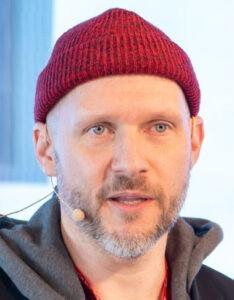
Arthur Keleti
cyber security futurist,
founder
ITBN
The first speaker of the day was Arthur Keleti, cyber security futurist and founder of ITBN. He told that many people still view AI as a threat, but it is becoming increasingly clear that this technology complements and elevates human capabilities to a new level. Today’s AI solutions such as GPT-5, Grok 4 and Gemini aren’t smarter than humans, they are just intelligent in a different way. In the Vending-Bench test presented by Arthur Keleti, which is closely related to the world of FMCG, AI had to operate a food and beverage vending machine. In a real market simulation, the AI stocked the vending machine with goods, priced them, reordered them, came up with promotions and generated profits – with full independence and so successfully that while the human “operator” ended up with a profit of a just few hundred dollars, GPT-5 and Grok 4 brought in thousands of dollars in profits. The message is clear: AI is capable of managing complex supply and sales processes, even making decisions independently. Going beyond simply executing commands, the systems used in Figure Robotics and Amazon warehouses also understand context: they recognise products, make decisions and collaborate with other robots. Today AI agents can also be self-learning or highly autonomous: they are given a task and decide for themselves how to proceed.
The VUCA method: staying on your feet in hard times
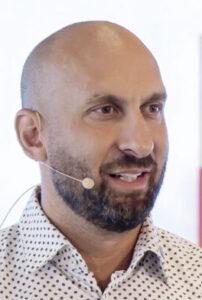
András Avidor
chairman
BNI Global strategic council
When at the end of the Cold War the US military realised that the environment had transformed completely and has continued to change too quickly ever since, it sought an appropriate label for this state of affairs, explained the second speaker, András Avidor, pilot and chairman of BNI Global’s strategic council. Volatility, Uncertainty, Complexity, Ambiguity (VUCA) has become a key concept in corporate strategy and management from the 2000s: it refers to an environment that is volatile, uncertain, complex and ambiguous. This also applies to the current economic reality in Hungary. It is vital not only to recognise VUCA but also to declare it, because as long as an organisation doesn’t acknowledge that its environment has changed, it will cling to old operating patterns.
Leadership is key
VUCA isn’t simply a crisis: it requires a new way of operating, which is why the No.1 leader must master three very basic behaviours, according to András Avidor. In VUCA the top man takes responsibility, tries to obtain information as quickly as possible (AI can be a great help here) and makes quick decisions. Typically, decision cycles of 1-3 days or a maximum of 1-3 weeks work well, rather than quarterly presentations. Leaders do all this by delegating authority: they pass decision-making power down to those who are closest to the action, making decision cycles shorter and more efficient.
What steps can Hungarian firms take?
Introducing English-language work broadens the labour market pool and accelerates the spread of AI tools. Training and team building can greatly increase efficiency by creating sufficiently diverse, integrated teams. Managers must be prepared for VUCA in practice, as fear of feedback and losing their position often paralyses leadership. Successful VUCA leaders are 40% more effective in crisis situations.
Related news
Shoppers loved chocolate bars
🎧 Hallgasd a cikket: Lejátszás Szünet Folytatás Leállítás Nyelv: Auto…
Read more >
Nestlé hunts for clues to 12-ton chocolate theft with ‘Stolen KitKat Tracker’
🎧 Hallgasd a cikket: Lejátszás Szünet Folytatás Leállítás Nyelv: Auto…
Read more >
Lidl treats employees to a vegan breakfast
🎧 Hallgasd a cikket: Lejátszás Szünet Folytatás Leállítás Nyelv: Auto…
Read more >Related news

EY: The EU customs system is undergoing fundamental changes: the reform will affect many companies
🎧 Hallgasd a cikket: Lejátszás Szünet Folytatás Leállítás Nyelv: Auto…
Read more >
A single courier can save up to 9 liters of fuel per day – this is how online ordering changes fuel consumption
🎧 Hallgasd a cikket: Lejátszás Szünet Folytatás Leállítás Nyelv: Auto…
Read more >
Shoppers loved chocolate bars
🎧 Hallgasd a cikket: Lejátszás Szünet Folytatás Leállítás Nyelv: Auto…
Read more >
)