
The Year of the Horse – Culinary trends in 2026

According to Chinese astrology, 2026 is the Year of the Horse. Predictions foresee breakthroughs, innovations and rapid changes. Our annual trend forecast is based on the analyses of global food industry and gastronomic platforms, as well as the world’s leading market research companies.
This article is available for reading in Trade magazin 2026/02-03
Instinctive or strategic?
Market players with an overview of the sector say there are far too many restaurants in Hungary, and most aren’t concerned with development or marketing. Many restaurateurs make instinct-based, short-term decisions. However, this is becoming less sustainable: recent economic and regulatory changes show the sector is shifting towards a new operating logic. Hospitality is moving away from discount- and price-driven competition and increasingly focuses on survival, stabilisation and conscious cost management. Labour shortages continue to put pressure on operations.
Eating out is increasingly becoming an occasion rather than a routine: fewer visits, higher expectations. According to the Central Statistical Office (KSH), the number of hospitality units has dropped by an average of 4–5 per day since 2020, with fewer than 44,000 places in operation at the end of 2024. For the industry to return to growth, modernised regulations, a business-friendly environment and reduced administrative burdens are essential. Hungary’s confectionery sector performs relatively better: confectioneries are more resilient, supported by a cohesive professional community and a takeaway-friendly product portfolio.
The new guest
Consumers make decisions from a fundamentally different mindset than a few years ago. Under constant economic, social and information pressure, the search for security, predictability and control has become dominant. Food and drink are less about status and more about rational consumption and balance. The “new guest” doesn’t want more, but wants to decide better. Guests visit restaurants less often, but are willing to spend more per occasion if they clearly understand and accept the value for money offered.
Alcohol consumption is also changing. Moderation has become an accepted choice, and more people switch between alcoholic, low-alcohol and non-alcoholic drinks within one occasion. Appetite-regulating weight loss drugs are spreading, leading to smaller portions and more thoughtful choices.
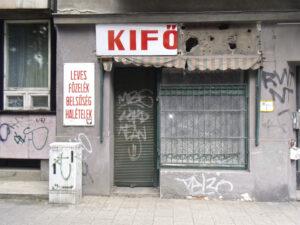
We mourn “prestigious”, “long‑established”, “well‑known” restaurants almost every week: since COVID, an average of 4–5 hospitality venues close every day in Hungary. The economic environment is unfavourable indeed, but experts say most operators do not invest in development or marketing — they simply hope for the best
New price-value logic
The operating framework is being fundamentally restructured, with the emphasis on operability, stability and adaptability. “Occasion” is becoming a key organising principle: guests don’t think in strict restaurant categories, but in specific situations and time frames. The value of a place is measured less by how it defines itself and more by how well it adapts to different consumption moments. Successful operation increasingly depends on whether a unit can serve multiple occasions in the same space and respond flexibly to different times of day.
Price’s role is also changing: hospitality is becoming less of a price-competition market and more of a value-based one. Guests don’t necessarily choose the cheapest offer, but the one whose price they understand and accept. Pricing has become strategic: it requires a clear price-value ratio, consistent quality and transparent communication. Premium is created by clarity: what the guest receives in return.
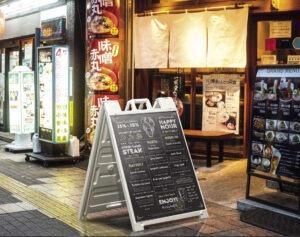
The hospitality sector is becoming less of a pure price‑driven market and far more value‑driven. Guests don’t necessarily choose the cheapest option; they choose the one whose pricing they understand and accept
How do guests eat?
Food is increasingly expected to have a function, not only provide an experience. “Feeling full” is no longer enough: consumers expect food to support performance, mental freshness or general well-being. Breakfast, brunch and lunch are especially important in this regard. The “brain food” approach is emerging: food should help concentration, provide energy and avoid overload.
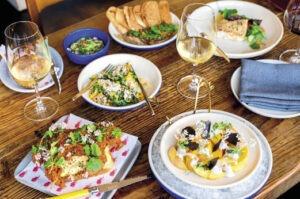
The rise of flavour‑maximalism is unmistakable — it’s all about concentrated, layered, memorable tastes, often in smaller portions. Guests are increasingly happy to choose a bold starter, a refined dessert or a distinctive drink, as long as it delivers a genuine experience
Protein remains essential, but in 2026 it becomes a silent baseline expectation rather than a headline message. Functional foods and beverages are gaining acceptance in hospitality, especially in cafés, bars and hotel concepts. Restaurants are becoming not only places to eat, but also wellbeing platforms.
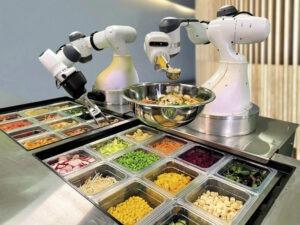
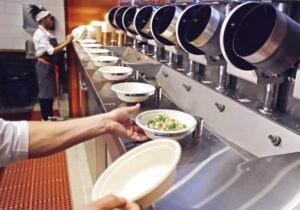
There is far more noise around robotisation than real‑world presence. The robots appearing in guest areas are, for now, more of a visual attraction than a genuine operational solution. Digitalisation and process automation, however, truly do take the burden off staff.
Experience and function
Boundaries between food and drink categories are blurring. Consumers eat more flexibly, occasions merge, and hybrid formats appear. Transitions between salty and sweet, food and drink, snacks and main courses are becoming natural, creating space for offerings that fit changing schedules instead of rigid categories.
The drinks category is transforming rapidly: consumers drink less but choose more consciously. Hospitality is not a technology industry, but it can no longer remain outside digital solutions. Most developments are not spectacular guest-facing innovations, but quiet background support. Automation reduces burdens on people, helping staff focus on what needs a human touch: attention, atmosphere and guest relations. AI supports planning, pattern recognition and error reduction.

Related news


The bible of food safety
🎧 Hallgasd a cikket: Lejátszás Szünet Folytatás Leállítás Nyelv: Auto…
Read more >Related news
Good Friday is in a week: the Easter shopping season has begun
🎧 Hallgasd a cikket: Lejátszás Szünet Folytatás Leállítás Nyelv: Auto…
Read more >
Seed sampling in focus: VSZT and Nébih held a training day
🎧 Hallgasd a cikket: Lejátszás Szünet Folytatás Leállítás Nyelv: Auto…
Read more >
This is how the construction industry will change in 2026
🎧 Hallgasd a cikket: Lejátszás Szünet Folytatás Leállítás Nyelv: Auto…
Read more >
