
Finger Food Experience

Finger food isn’t just a gastronomic trend, but a conscious response to our accelerated lifestyle and the new economic challenges of hospitality.
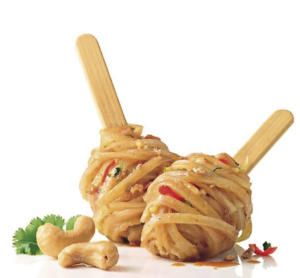
This article is available for reading in Trade magazin 2026/04
In recent years the category of foods that can be eaten in one or a few bites has become a format with independent economic significance, responding simultaneously to changes in consumer lifestyles, retail innovation, and the operational constraints of the hospitality industry.
Finger food – although it rarely appears in statistics as a separate market segment – has significant commercial weight: the European market was estimated to be worth USD 20-35bn in 2024, with a compound annual growth rate of 4-6% through 2030. Finger foods cover a wide spectrum: from frozen appetisers to party plates and catering snacks, tapas and meze style offerings, in-store bakery and deli selections, and packaged, ready-to-heat retail snacks.
The loosening of meal structures, the decline in the dominance of three main meals a day, and the rise of flexible scheduling all reinforce the positions of finger food. Consumers are increasingly choosing smaller, combinable snacks that fit into their on-the-go routines, after-school snacking, or informal dinners at home. One of the main engines of growth is the rise of convenience culture. Frozen finger food products have established a particularly strong position, as they offer longer shelf life, precise portioning, and predictable inventory management. Standardised preparation processes guarantee consistent quality, while also reducing on-site labour requirements. The expansion of the catering and events sector is also strengthening the category. Intense innovation work can be observed in the retail sector, especially in Western and Northern Europe. Supermarkets are expanding their range of frozen and chilled finger foods.
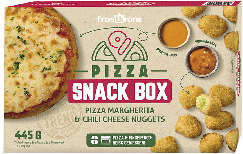
From pizza, only the mini versions, cones and slices are typically classified as finger foods, but manufacturers in the category are increasingly combining them with finger‑food ‘classics
Paradoxically, the inflationary environment and cost pressures also favour the finger food category. In many cases consumers are moving towards so-called “affordable indulgence”: instead of a full restaurant dinner, they are opting for smaller, controlled spending on premium snacks or special treats. Finger food is thus able to satisfy both the desire for experience and cost-consciousness.
The rise of discount chains is further democratising the premium offering: private label, internationally inspired finger food products are appearing at prices accessible to a wider range of consumers. Finger food is also the ideal solution for small, informal gatherings of friends or family.
Premium and health-conscious trends are also shaping the market. Inspiration from street food culture further enriches the finger food offering, e.g. mini burgers, mini wraps, etc.
In hospitality finger food has become a consciously used strategic tool. Its flexibility allows it to work at the bar, in the hotel lobby, on the rooftop terrace, in quick service units, or as part of a premium sharing concept. The stable 4-6% growth rate of the category indicates that finger food is becoming a permanent fixture in European consumption and catering systems.
Unlimited opportunities for innovation

Ádám Nagy
managing director
Nádudvari Élelmiszer
The domestic finger food market goes far beyond classic appetisers: consumers are looking for quick-to-prepare, varied, and high-quality solutions. Europe’s finger food segment is growing dynamically, partly due to the demand for convenience and variety, while popularity of premium and health-conscious snacks is also on the rise.
For Nádudvari this category offers virtually unlimited opportunities for innovation: cheeses and vegetables further expand our plant-based offering.
Trend-compatible products

Beáta Bukovenszki
head of domestic
retail
Gallicoop
In Hungary the finger food category serves both the needs of quick dinners and the hospitality sector. Three trends are driving development. Besides value-oriented shopping, the search for quality is gaining ground. Better-for-you snacking, the rise of protein-rich savoury snacks, and air fryer compatibility are more and more important: due to quick, low-fat preparation, the optimisation of breaded proteins is an industry focus.
Burger is the driving force behind finger food
The burger remains one of the strongest and most stable staple products in the finger food segment. It is no coincidence that companies producing bite-sized products offer an exceptionally large selection of burgers: mini meat patties, slider buns, pre-formed patties and complete, quick-to-assemble sets.
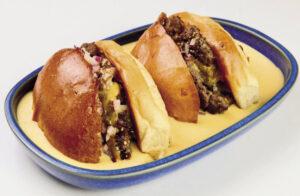
The Cheese Pool Burger is a viral idea: the halved cheeseburger is served with hot, flowing cheese sauce
Burger is the ideal finger food, since it can be easily standardised and varied, and it works equally well as street food, catering product or premium event snack. The global market for packaged burgers was worth USD 4.43bn in 2024 and could grow to nearly USD 7bn by 2030. Frozen products account for 83.4% of the segment, which is essential from a finger food production perspective.
Diverse offering

Norbert Pásztor
director of operations
Marnevall
Today finger food plays a key role in both home consumption and hospitality. Marnevall Zrt.’s product range reflects this diversity: in addition to classic favourites, it also features trend-following and premium solutions. During product development work we constantly examine which new flavours, culinary approaches, and health-conscious trends are shaping consumer expectations, and we incorporate these into our own offering.

Related news
(HU) FruttaMax Gold szörpök
🎧 Hallgasd a cikket: Lejátszás Szünet Folytatás Leállítás Nyelv: Auto…
Read more >
Nappy market: forced to adapt
🎧 Hallgasd a cikket: Lejátszás Szünet Folytatás Leállítás Nyelv: Auto…
Read more >
Green light for SPAR’s new acquisition in Austria
🎧 Hallgasd a cikket: Lejátszás Szünet Folytatás Leállítás Nyelv: Auto…
Read more >Related news

Brake on Shein’s growth in Europe
🎧 Hallgasd a cikket: Lejátszás Szünet Folytatás Leállítás Nyelv: Auto…
Read more >
GKI: High base rate, low inflation?
🎧 Hallgasd a cikket: Lejátszás Szünet Folytatás Leállítás Nyelv: Auto…
Read more >
Lidl sold nearly 100 million liters of Hungarian milk
🎧 Hallgasd a cikket: Lejátszás Szünet Folytatás Leállítás Nyelv: Auto…
Read more >
