
They’re coming, crunching and munching

Snacking isn’t simply about extra calories, but increasingly a new way of organising everyday life: consumers adjust their eating to their own rhythm, not the other way around. Snacks aren’t a complementary product line, but an independent form of consumption that requires a separate product logic, channel strategy, and communication language.
This article is available for reading in Trade magazin 2026/04
Motivations and occasions
Snacks give a quick solution to a wide range of needs. For some they are a reward, a desire or a treat; for others they are a way to relieve stress; and for still others they are a practical solution to a lack of time. The diversity of motivations is important from a business perspective because the category cannot be optimised for a single “moment of hunger”. Obviously lifestyle changes are behind this trend. The younger generations have less structured schedules and their eating habits are correspondingly less rigid. Snacking patterns are by no means uniform. The most striking difference is generational: while less than a quarter of Boomers regularly eat between meals, this proportion is close to two-thirds among Generation Z, according to European data. Snacks are gradually replacing traditional main meals. Globally only 40% of Generation Z say they have three main meals a day, compared to more than half of the total population.

For Generations Y and Z, snacking means short, repeated occasions, flexible portions, and the freedom of choice
Retail wins, but mobile consumption is the driving force
The number one winner of the snacking trend so far is retail: snack sales in European supermarkets have grown by nearly two-thirds in the last six years. This indicates that the category in its current form is better suited to the retail environment: large product selection, quick decisions, immediate access, and the fact that many people buy snacks “for later” and then eat them flexibly. Consumption away from home is also growing and snacks are no longer a minor element in many catering establishments: in certain segments they account for a large part of turnover and the category encompasses everything, from fruit to sandwiches to specialty coffees. Since the pandemic takeaway and delivery are no longer extra services but basic expectations, making the mobile nature of snacks even stronger. One of the most dynamically growing trends on the market is the mini format.
Better-for-you
The snack market isn’t just about flavours, but also about consumers looking for products they feel are a good choice. Two-thirds of Americans specifically seek out snacks that fit their health considerations. The growth areas are clear: yoghurt, natural cheese bites, protein-rich snacks, probiotics, added fiber, and reduced sugar. However, better-for-you (the health-conscious alternative) isn’t moralising, but a value proposition: consumers don’t want to give up snacking, but to enjoy good food with fewer compromises. On the snack market innovation doesn’t just mean new recipes. One of the most striking areas of innovation is collaborative product development. In co-branding two brands create a product together, offering both novelty and security.
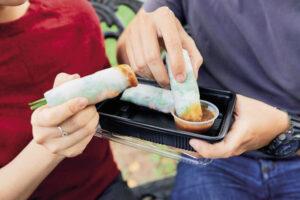
On-the-go and shareable
Climate and supply risks
The snack industry doesn’t seem entirely predictable at the moment – the risks surrounding potato chips show that the supply side is becoming increasingly fragile. According to scientific forecasts, global potato yields could decline by as much as 16% by 2035 if global warming continues. Companies have responded in a variety of ways: breeding heat-resistant varieties, increasing imports, implementing regenerative agriculture programmes, using more water- and energy-efficient processing methods, and diversifying raw materials (corn, lentils, mixed bases). In the near future the spread of GLP-1-based drugs will be an important factor in market development. The effect isn’t only quantitative (eating less) but also qualitative: hunger signals, urges, and even sensory perception may change.
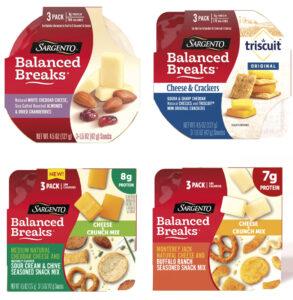
Products in the snackable cheese trend don’t evoke the classic ‘junk food’ feeling and naturally contain high levels of protein. Manufacturers are responding to the demand with snack-sized portions and often with combined packs (cheese + nuts/crackers/dried fruit).
Texture
Ultimately, every strategy is decided in a single moment: when the consumer takes a bite. Today texture is becoming one of the key factors in purchasing decisions. Research consistently shows that consumers will forgive a less-than-perfect taste, but not a poor texture. Crispness alone is no longer enough, it has become a basic expectation rather than a distinguishing feature. Today’s consumers expect precise texture: light but not stale; loud but not hard; clean-breaking, not tooth-testing. What’s more, crispness must coexist with softer, creamier or chewier elements. The strongest trend is contrast – soft meets crunchy, creamy meets flaky, chewy meets crispy. Decreasing portion sizes, sugar reduction, protein enrichment, and ingredient transformation often result in compromises in taste and mouthfeel. In these cases texture “carries the emotional weight”: creaminess masks bitterness, crunchiness compensates for lower sweetness, and chewiness suggests fullness. Protein-fortified snacks have become one of the most dynamically growing categories in health-conscious nutrition.
Cheese in new clothes
“Snackable cheese” is a slowly but steadily growing trend, combining almost everything we love about snacks. It responds to the rise of health-conscious snacking – brands are introducing a growing number of easy-to-eat, small-sized cheese products. These offer an alternative to traditional snacks that are perceived as overly processed, while their natural protein content promotes satiety and stable energy levels. The goal isn’t just a bite-sized snack, but a “mini meal” experience. As it can be seen from the above, the snack market is currently a matter of enjoyment, health, and logistics. The winners won’t be those who follow the loudest trends, but those who are able to coordinate the key factors in the same product and offering.
Puffed snacks were a big hit in 2025

Attila Nagy
director of sales and
operations
Auchan
The most important thing for consumers is good value for money. They are happy to buy large formats if the price is right. Sales of puffed snacks showed significant growth in 2025, because this is typically a product that is available in large bags, but is still inexpensive per gram.
Another important factor is the unique flavour. Shoppers usually buy a basic flavour (salty, cheesy) that is a safe bet, but they are also willing to try something more special (such as chilli or BBQ). Manufacturers are trying to steer consumers toward healthier options.
Price and experience

Zoltán Matskási
marketing and business
development director
Pek-Snack
In 2026 Hungarian snack consumers are both experience-seeking and price-sensitive. They are open to new products, but only if they are understandable, appealing, and affordable.
As regards flavours, there is a clear shift towards premium yet familiar tastes – a good example of this is the growing popularity of pistachio variants. In terms of size the trend shift is clear: it isn’t quantity that counts, but experience – smaller, indulgent portions are more appealing.
Small, freshly baked products are quick, enjoyable, and emotionally justifiable.
Guilt-free snacking

György Madalina
dry food purchasing
manager
METRO
In 2026 Hungarian consumers expect snacks to be healthy and tasty. The goal is guilt-free snacking and products will be in line with trends if they are healthier (containing less sugar/fat). There is growing demand for snacks that are high in protein and fiber and low in sugar and salt.
In 2025 Metro focused on healthier snacking: oven-baked, lower-fat snacks, whole grain chips and bars, gluten-free, fiber-rich alternatives with natural ingredients.
In 2026 we are going to expand our selection with vegetable chips and gluten-free chips.
Sports events also boost sales in this category

Márk Maczelka
head of communications
SPAR
We have great expectations about the summer season: the football World Cup and the Champions League final could boost sales in this impulsive category. Hungarian consumers remain price-sensitive, so large products are increasingly popular.
Promotions continue to have a big influence on purchasing decisions, with value for money being the primary decision-making factor.
As shoppers are looking for health-conscious alternatives too, more reduced-fat, oven-baked snacks are appearing on store shelves, e.g. Chio Oven.
Conscious choice

Dr. Tamás Kaibinger
head of corporate affairs
Lidl Magyarország
Lidl stores offer shoppers a wide selection of snacks. Although value for money remains the most important factor when choosing products, more and more people are looking for more conscious alternatives.
Lidl is constantly expanding its selection of snacks that fit into a health-conscious diet.
One of the most popular pillars of this category is the private label Alesto product range. This portfolio has more than 30 high-quality products – various natural and roasted nuts and nut mixes.
Creative flavours, spectacular appearance

Márta Sirkó
snack category manager
Shell Hungary
Premium snacks are gaining ground at Shell service stations. Our customers are specifically looking for special desserts and savoury products, so we are focusing on products with creative flavours and a spectacular appearance.
Demand for healthier alternatives is also growing steadily. As a result, we have expanded our selection to include protein and collagen bars, sugar-free cookies, gluten-free and vegan snacks, and freeze-dried fruits.
Practical packaging and good portions are essential.
Satisfying new types of demand

Dr. László Vereczkei
chief scientific officer
BioTechUSA
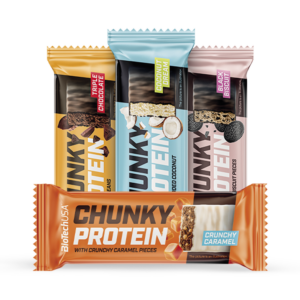
In addition to the market demand for sugar-, gluten- and lactose-free products, I would like to highlight two less obvious but more relevant development aspects. One is the emergence of phone-proof snacks – snacks that are easy to eat while using a smartphone.
The other trend is size reduction: new protein and functional bars are often smaller, with lower protein and calorie content.
This responds to the demand for conscious portion control, the “snack, not meal” positioning, and the improvement of the consumer experience.
Sponsored illustration
Adapting to the trends

Tünde Matyasovszky
senior brand manager
Bonafarm
When it comes to breaded snack products, consumers aren’t willing to compromise: in addition to convenience, the primary considerations when making a choice are good price, high meat content, and flavours that most closely resemble those enjoyed at home.
In recent years, snack-type products have experienced dynamic growth in the category – their consumption is no longer a guilty pleasure, but a nutritious, high-protein mini-meal that must fit into a busy, hybrid lifestyle.
Exciting, innovative flavour variations

Anna Pókecz
marketing manager
Cerbona
As consumer demand continues to evolve, expectations of snacks are constantly expanding. In addition to well-known flavours, there is a growing demand for exciting, innovative flavour variations and different product functions.
There is a noticeable increase in consumer consciousness and demand for functional products.
In 2025 we launched and in 2026 we are introducing several new products, mainly seasonal variants, with more adventurous flavours and sugar-free, functional solutions.
Oil-free technology

Katalin Sarkadi
head of marketing
Abonett
The snack market underwent a spectacular transformation in recent years: consumers are becoming increasingly conscious in their choices, but at the same time they are unwilling to compromise on enjoyment.
Real competitive advantage increasingly lies in manufacturing technology, purity of composition, and functional benefits.
Abonett’s new product range of red lentil and chickpea-based extruded snacks is made using oil-free technology: no oil is added to the products during either production or flavouring.
Grab and eat!

Norbert Poór
head of domestic retail
Corn&Joy CA
Consumers are becoming more conscious: they are looking for healthy snacks that contain more fiber and natural ingredients. Trendy flavours, sustainable packaging and affordability are also important.
Convenience and “snacks as mini-meals” are essential too: grab and eat formats that can be enjoyed on the go are becoming increasingly popular.
This year we are paying special attention to children: our new product is the 100% Bio Bonabo Baby, whose ingredients come from certified organic farming.
Deli-experience

Gergely Németh
managing director
Culinaris Retail
At Culinaris we firmly believe in the dining experience and sharing experiences, so we pay special attention to unique, high-quality snacks with our offering – be it sweet, savoury or even free-from products.
What is more, Culinaris’ freshly prepared plates bring a real deli experience to the table: carefully selected European cheeses, matured hams, distinctive cold cuts, and Mediterranean accompaniments in perfect proportions, ready to eat and share.
Growth potential

Enikő Ecseri
project & marketing
manager
Cornexi Food
Today’s consumers no longer want to simply snack, but make more conscious choices: enjoyment remains important, but protein content, lower sugar content, clean ingredients and good value for money are increasingly important.
Health and convenience are now both factors in the decision-making process. There is a clear shift towards more conscious and functional solutions, but the domestic offering and innovation lag behind international markets, so there is still room for development in this category.
Conscious hedonists

Réka Homonnay
brand manager
Mogyi
In 2026 Hungarian consumers are no longer just snacking, but seeking a functional experience. In the spirit of conscious hedonism, they value both enjoyment and health-conscious ingredients, such as fiber, protein, and various allergen-free options. In 2025 we expanded our nut mix product range: in addition to fit and protein, we introduced vital and energy mixes, where we combined nuts with fruits. We also entered the extruded segment with corn-based MONS.

Related news
Lidl sold nearly 100 million liters of Hungarian milk
🎧 Hallgasd a cikket: Lejátszás Szünet Folytatás Leállítás Nyelv: Auto…
Read more >
(HU) FruttaMax Gold szörpök
🎧 Hallgasd a cikket: Lejátszás Szünet Folytatás Leállítás Nyelv: Auto…
Read more >
Nappy market: forced to adapt
🎧 Hallgasd a cikket: Lejátszás Szünet Folytatás Leállítás Nyelv: Auto…
Read more >Related news
Brake on Shein’s growth in Europe
🎧 Hallgasd a cikket: Lejátszás Szünet Folytatás Leállítás Nyelv: Auto…
Read more >
GKI: High base rate, low inflation?
🎧 Hallgasd a cikket: Lejátszás Szünet Folytatás Leállítás Nyelv: Auto…
Read more >
Lidl sold nearly 100 million liters of Hungarian milk
🎧 Hallgasd a cikket: Lejátszás Szünet Folytatás Leállítás Nyelv: Auto…
Read more >
