
There are no unhealthy foods, only poorly chosen quantities

Why do we really eat? Just to avoid hunger, or to stay healthy in the long term? For most of human history, food was primarily for survival: we needed enough energy and essential nutrients to survive the challenges of everyday life. Today, however, the situation is very different. Life expectancy has more than doubled in recent centuries, so the role of nutrition has also changed. The question is no longer just what we eat today, but also how it will affect our bodies in ten, twenty or even forty years. The quality, variety and composition of food now play a key role in ensuring that old age is not only long, but also an active and healthy period of life.

A varied and moderate diet is one of the keys
Modern nutrition science is therefore increasingly placing emphasis on the qualitative composition of foods, micronutrients and physiological effects. At the same time, it is important to be cautious about statements that label a food as “unhealthy”. A single ingredient in itself is rarely considered harmful; rather, the method, quantity and frequency of consumption determine the effect on health. The problem is usually a one-sided, monotonous diet. The exclusive consumption of even the healthiest foods can lead to deficiencies.
Deficiency diseases can develop quickly. A good example of this is the vegan and vegetarian diet, which can have many benefits, but without proper planning, vitamin B12 deficiency can develop. This vitamin is found in its natural form almost exclusively in foods of animal origin, and its deficiency can lead to nervous system and blood problems in the long term. This example clearly shows that the key to a healthy diet is not the idealization of individual foods, but rather variety and finding the right proportions. No matter how much ingredients such as spinach or Brussels sprouts, which are constantly praised in movies, support our health, if we were to consume them exclusively, we would run into serious problems.
– said Dr. Csaba Németh, food engineer, c. university professor.
There are superfoods! But super can be even super
Of course, there are so-called superfoods or particularly valuable ingredients that stand out due to their nutritional content. Eggs are a classic example of this: they contain high-quality protein, essential amino acids, fats, vitamins and minerals, in an almost ideal composition for the human body.
It must be said and made aware that even the most complex foods cannot cover all needs on their own. For example, in the case of egg consumption, a well-composed salad mix, various vegetables, fruits or a few oil seeds complement the diet with valuable fibers, antioxidants and other micronutrients.
– continued Dr. Csaba Németh.
So the answer to the introductory question is clear: we eat not only to gain energy, but also to lay the foundation for our long-term health. Foods in themselves are rarely “good” or “bad”; the real risk is one-sided, excessive consumption. The basic principle of modern nutrition is therefore variety: different ingredients, different nutritional composition, complementary effects. Even exceptionally valuable ingredients considered superfoods – such as eggs – have their most positive effects when they are part of a balanced diet. If we choose our food consciously, diversely, and with foresight, then nutrition will shape not only our present, but also the quality of our entire life.
Related news

Never seen anything like this before: anyone who quits smoking will receive a cash reward
🎧 Hallgasd a cikket: Lejátszás Szünet Folytatás Leállítás Nyelv: Auto…
Read more >
World Rare Disease Day: advances in clinical trials and expansion of genetic diagnostics are essential for the development of precision medicine
🎧 Hallgasd a cikket: Lejátszás Szünet Folytatás Leállítás Nyelv: Auto…
Read more >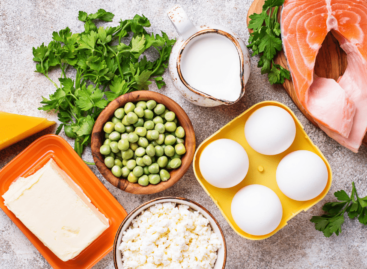
Winter often brings with it deficiency diseases
🎧 Hallgasd a cikket: Lejátszás Szünet Folytatás Leállítás Nyelv: Auto…
Read more >Related news

Oat-based “feta” wins the cheese innovation competition of Lidl Germany and ProVeg
🎧 Hallgasd a cikket: Lejátszás Szünet Folytatás Leállítás Nyelv: Auto…
Read more >
The horticulture of the future is being built in Szentes
🎧 Hallgasd a cikket: Lejátszás Szünet Folytatás Leállítás Nyelv: Auto…
Read more >
Finger Food Experience
🎧 Hallgasd a cikket: Lejátszás Szünet Folytatás Leállítás Nyelv: Auto…
Read more >
