
The food industry faces serious challenges
The past few years have brought a busy period for the Hungarian food industry, which continues to show a heterogeneous picture in terms of ownership, company size, technology and management systems. Gergely Giczi, deputy managing director of the Agricultural Marketing Center, will also participate in the upcoming Portfolio Agricultural Sector Conference, where he will talk about the importance of export development and the challenges facing the domestic food industry.
According to Giczi, the Hungarian food industry is showing significant progress, especially in terms of technological developments, but large differences can still be observed between multinational companies and domestic SMEs. Multik’s export market role and professional decision-making processes are a significant advantage, but domestic companies are increasingly relying on competitive technologies.
In the future, tenders focusing on food industry developments will offer the opportunity to introduce state-of-the-art technologies, which could mean a serious improvement in competitiveness for the sector. Giczi emphasized that the quality of the Hungarian food industry generally exceeds the European average, and if this can be combined with a jump in international competitiveness, then we can achieve serious results in the field of exports.
The new application cycle, which starts in September, provides significant resources for the food industry. The available grant funds worth HUF 150+50 billion offer a historic opportunity for the Hungarian food industry to really “shake itself up” and set itself on a path of sustainable development.
In response to global market challenges, the Agrármarketing Centrum launched its Hungarian Food Business Program two years ago, which helps Hungarian food industry companies reach the international market with professional international exhibitions, B2B programs and a digital export catalog. Hundreds of domestic companies are already participating in the program, taking advantage of export development opportunities.
The challenges and opportunities facing the Hungarian food industry are therefore significant, and in the years ahead it will be crucial to respond appropriately to ensure the sector’s sustainable development and international competitiveness.

Related news

In February, industrial production decreased by 1.5 percent compared to the same period of the previous year and by 1.8 percent compared to the previous month
🎧 Hallgasd a cikket: Lejátszás Szünet Folytatás Leállítás Nyelv: Auto…
Read more >
Turkish food company Dogus Cay is establishing its first plant outside Turkey in Orosháza, creating 440 jobs
🎧 Hallgasd a cikket: Lejátszás Szünet Folytatás Leállítás Nyelv: Auto…
Read more >
Turkish food company Dogus Cay is establishing its first plant outside Turkey in Orosháza, creating 440 jobs
🎧 Hallgasd a cikket: Lejátszás Szünet Folytatás Leállítás Nyelv: Auto…
Read more >Related news
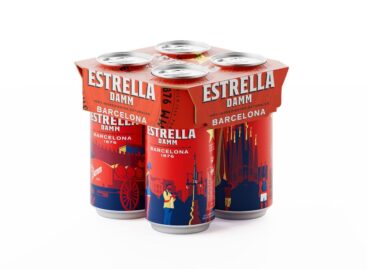
Damm Unveils Limited-Edition Packaging Designs To Mark 150th Anniversary
🎧 Hallgasd a cikket: Lejátszás Szünet Folytatás Leállítás Nyelv: Auto…
Read more >
Seed Association: procurement of small garden seeds has started
🎧 Hallgasd a cikket: Lejátszás Szünet Folytatás Leállítás Nyelv: Auto…
Read more >
(HU) Látványos takarítás, tiszta parkok – A nap videója
🎧 Hallgasd a cikket: Lejátszás Szünet Folytatás Leállítás Nyelv: Auto…
Read more >
