
Double price, changing demand: the domestic carp market is on a new path

Carp has been one of the most stable players on the Hungarian Christmas table for decades, but in recent years it has become one of the most expensive fish products. According to joint data from the Central Statistical Office, the National Archives and MTI, the average consumer price of pontos slices and carp fillets in Hungary more than doubled between 2017 and 2024: while eight years ago it was still 1930 forints per kilogram, last year a price level of around 4320 forints became typical. This represents a price increase of nearly 125 percent in less than a decade, points out the Agrarszektor article.
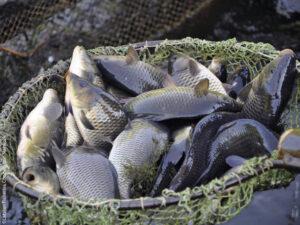 The price increase was not uniform. The biggest jump occurred between 2021 and 2023, when prices increased by more than 30 percent in two consecutive years. According to those in the sector, there are several mutually reinforcing factors in the background. Drought periods and lack of precipitation have significantly reduced natural yields, while many farms have been unable to effectively manage the damage caused by predators – especially cormorants. This was combined with the drastic increase in feed prices and the fact that the support options for the aquaculture sector have narrowed in recent years.
All this is particularly sensitive to the Christmas season, when, according to statistics, about 40 percent of the annual domestic fish consumption is realized. At the same time, Ede Timmel, the executive director of the Hungarian Aquaculture and Fisheries Interprofessional Organization, emphasized several times: there is an abundant and high-quality Hungarian fish supply available this year as well, and prices are generally similar to last year’s level, despite the fact that production costs have increased further. According to his forecast, the price of a pontoon fillet during the season typically ranges between 3,500 and 4,500 forints, with significant store and regional variations.
Despite the price increase, the structure of demand is also changing spectacularly. Based on the joint market overview of the National Chamber of Agriculture and MA-HAL, bone-free fish is now a basic requirement, while traditional, scaly fish are gradually being pushed out of the offer. Demand for live fish has also fallen significantly, with the vast majority of customers looking for processed, prepared products that can be quickly and conveniently added to the Christmas menu.
Carp remains the most popular fish species during the holiday season, but at the same time, more and more people are turning to alternatives. Interest in carp and grass carp is growing, while among consumers who are wary of fish, demand for predatory species, primarily catfish and pike-perch, is growing. This trend is also clearly visible in retail: filleted, portioned, more premium products are increasingly emphasized on the shelves, which can be sold at a higher price but with more predictable quality.
Overall, the carp market has not only been characterized by a price explosion in recent years, but also by a structural transformation. An increasingly important question for producers and traders is how to reconcile traditional Christmas fish consumption with changed consumer expectations and persistently high cost levels. One of the key questions in the coming years will be whether domestic aquaculture can adapt to these challenges while maintaining its competitiveness in the consumer’s wallet.
Related news
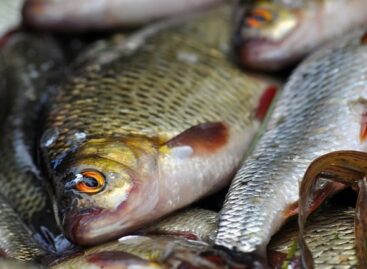
Bocskai Fishing Ltd. from Hajdúszoboszló received support to preserve the rich wildlife of the fish ponds
🎧 Hallgasd a cikket: Lejátszás Szünet Folytatás Leállítás Nyelv: Auto…
Read more >
New business areas drive growth at CECONOMY – record customer satisfaction and online share
🎧 Hallgasd a cikket: Lejátszás Szünet Folytatás Leállítás Nyelv: Auto…
Read more >
Nébih: it is safe to consume fish caught in the Sajó River
🎧 Hallgasd a cikket: Lejátszás Szünet Folytatás Leállítás Nyelv: Auto…
Read more >Related news
Hungarian consumers are saving on ham, label reading is becoming more important
🎧 Hallgasd a cikket: Lejátszás Szünet Folytatás Leállítás Nyelv: Auto…
Read more >
International food prices have risen due to the impact of the Middle East conflict on energy prices
🎧 Hallgasd a cikket: Lejátszás Szünet Folytatás Leállítás Nyelv: Auto…
Read more >
It doesn’t matter how big the egg is on the shelves: genetics, age, and the chains’ tender logic decide
🎧 Hallgasd a cikket: Lejátszás Szünet Folytatás Leállítás Nyelv: Auto…
Read more >
