
Samples of the first Hungarian space plant experiment return to Debrecen

The samples of the first Hungarian space plant experiment, the VITAPRIC program, which spent almost 203 days in space and orbited the Earth more than 3,200 times, have returned from the International Space Station to the University of Debrecen (DE), the institution’s press center informed MTI on Tuesday.

(Photo: Pixabay)
According to the statement, researchers from the university’s Faculty of Agriculture, Food Science and Environmental Management received the experimental materials of their scientific work from research astronaut Tibor Kapu on Monday at the DE Biodrome, home of the HUNOR program space plant experiment and the university’s space pepper. They recalled that the faculty’s researchers packed the radish, wheat and pepper seeds participating in the experiment a year ago, on March 17 last year. The VITAPRIC research material in the scientific portfolio of the HUNOR Hungarian Astronaut Program was launched on June 25th, as part of the Axiom-4 mission, with research astronaut Tibor Kapu and his companions from the Kennedy Space Center in Florida to the International Space Station. The university’s plant breeding, crop production and biotechnology research many years ago laid the professional background that enabled the university to join the national space program – the announcement quoted László Stündl, dean of the faculty, who expressed his hope that the results would be utilized and open up new research directions for specialists.
Tibor Kapu called the VITAPRIC program one of the most interesting experiments of the HUNOR Hungarian Astronaut Program
It showed the challenges they face when an experiment has to be carried out in space. “In an environment where seeds without gravity don’t really know where to grow in a germination chamber from which they can fall out very easily. Yet, we were able to solve it,” the research astronaut was quoted as saying, who emphasized: “we were the first in the world to be able to grow plants in the environment where we ourselves, astronauts, lived, and not in a closed, isolated, controlled environment.”
The breeding and pre-treatment of seeds participating in the HUNOR program took place between 2024-2025 in the biotechnology laboratories of the Faculty of Agriculture of the University of Debrecen
The applied procedure accelerated germination, increased the vitality of seedlings, and improved the phytochemical composition, thereby resulting in higher nutritional value. The plants grown on the International Space Station were “covered” in three steps, first the radish microgreens, then the wheatgrass and finally the pepper microgreens. The samples were placed in a freezer at minus 80 degrees Celsius and stored there until January 15, when they returned to Earth on a carrier carrying the crew of the Crew-11 mission, which was interrupted due to illness, they wrote. According to Szilvia Veres, Deputy Dean for Science and Head of the VITAPRIC Program, the samples will be compared with control plants grown in the Biodrome under similar conditions – light, temperature, carbon dioxide and humidity. The studies will include microbiome analysis of the plants, i.e. whether the VITAPRIC microgreens grown on the space station are suitable for human consumption, and how the biochemical and mineral composition of the plants changed, especially with regard to the effect of pre-treatment of the seeds with selenium in the microgravity environment.
MTI
Related news
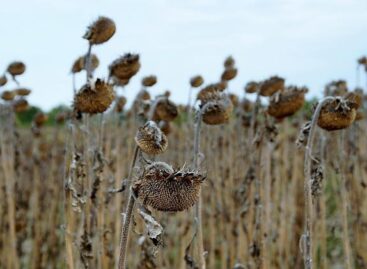
Ministry of Agriculture: At the initiative of Hungary, another EU source will help farmers affected by last year’s drought
🎧 Hallgasd a cikket: Lejátszás Szünet Folytatás Leállítás Nyelv: Auto…
Read more >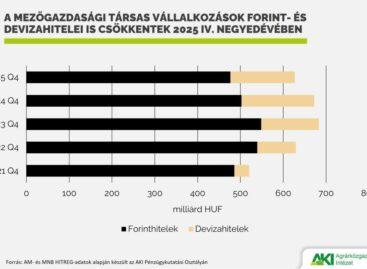
Agricultural loan portfolio decreased in 2025
🎧 Hallgasd a cikket: Lejátszás Szünet Folytatás Leállítás Nyelv: Auto…
Read more >
At the initiative of Hungary, another EU source will help farmers affected by last year’s drought
🎧 Hallgasd a cikket: Lejátszás Szünet Folytatás Leállítás Nyelv: Auto…
Read more >Related news

EY: The EU customs system is undergoing fundamental changes: the reform will affect many companies
🎧 Hallgasd a cikket: Lejátszás Szünet Folytatás Leállítás Nyelv: Auto…
Read more >
A single courier can save up to 9 liters of fuel per day – this is how online ordering changes fuel consumption
🎧 Hallgasd a cikket: Lejátszás Szünet Folytatás Leállítás Nyelv: Auto…
Read more >
Shoppers loved chocolate bars
🎧 Hallgasd a cikket: Lejátszás Szünet Folytatás Leállítás Nyelv: Auto…
Read more >
