”Bite-sized Stories: Tales Without a Leftover” – Nébih announces a story writing competition

The National Food Chain Safety Office (Nébih) has announced its first national story writing competition, the Maradék bez szélkül program, to draw attention to the problem of food waste through the creativity of young people. The office is still waiting for the works until June 1. The most outstanding works of the “Bite Stories: Stories without a Leftover” competition will also be included in a storybook collection.
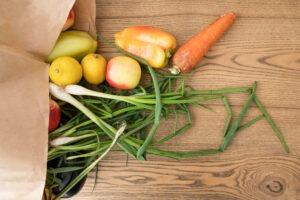 The world of fairy tales has always played an important role in developing children’s imagination, while conveying values and lessons. The Maradék bez szélkül program’s story writing competition encourages young people to express the importance of sustainability and the fight against food waste through their own stories. Food waste is a global problem: a third of the food produced globally, approximately 1.3 billion tons, ends up in the trash every year. In Hungary, households produce an average of 62 kg of food waste per person per year, 41% of which could be avoided with a little attention.
The Without Leftovers program considers it particularly important to address households with children. In families with young children, meal planning is often more difficult, as children easily get bored with food and often take snacks home, which all increases the amount of food that is thrown away unnecessarily. An encouraging sign in this regard is that, according to the data from the Nébih household waste survey, food waste among Hungarian families raising school-age children decreased by 13.5% between 2019 and 2023. In order to maintain and increase this favorable trend, it is particularly important to talk about waste prevention as much as possible at home. In addition, this should be done in the form of positive reinforcement for children, through playful tasks or even through creative writing. In this spirit, Nébih announced the story writing competition.
The call is open to submissions in three age groups: lower grades, upper grades and high school. The submitted stories will be evaluated by a professional jury, which will take into account originality, creativity of the story, consistency with sustainability and the use of storytelling tools. The authors of the best entries will receive valuable prizes, and their stories will also be published in a storybook compiled by Nébih. In addition to the winners, the most active school and the audience favorites will also be awarded.
Related news
Ministry of Agriculture has started the preparation of a new state origin certification mark
🎧 Hallgasd a cikket: Lejátszás Szünet Folytatás Leállítás Nyelv: Auto…
Read more >
Mushroom growers inspected by Nébih
🎧 Hallgasd a cikket: Lejátszás Szünet Folytatás Leállítás Nyelv: Auto…
Read more >
The Food Chain Safety Office draws attention to the dangers of counterfeit pesticides
🎧 Hallgasd a cikket: Lejátszás Szünet Folytatás Leállítás Nyelv: Auto…
Read more >Related news

Zalando is scaling up its use of AI-powered warehouse robots
🎧 Hallgasd a cikket: Lejátszás Szünet Folytatás Leállítás Nyelv: Auto…
Read more >
How will we pay for coffee in 2030, and will Europe finally get its own financial infrastructure?
🎧 Hallgasd a cikket: Lejátszás Szünet Folytatás Leállítás Nyelv: Auto…
Read more >
The government supported food industry developments with more than one thousand billion forints
🎧 Hallgasd a cikket: Lejátszás Szünet Folytatás Leállítás Nyelv: Auto…
Read more >
