
Rapid changes, adaptive path

Sales of non-alcoholic beverages have declined recently – by approximately 15%.

Istvánné Bikfalvi
secretary general
Hungarian Mineral Water,
Fruit Juice and Soft Drink
Association
This article is available for reading in Trade magazin 2025/12-2026.01
“This happened because of the inflation, rising raw material prices and more expensive packaging materials, energy and transportation – both domestically and on the global market. In addition to this, several raw materials such as fruit concentrates are sometimes in short supply”,
says Istvánné Bikfalvi, secretary general of the Hungarian Mineral Water, Fruit Juice and Soft Drink Association (MAGYÜSZ).
Environmental compliance
The current operating environment is defined by European Union and domestic environmental regulations aimed at recycling beverage packaging in a circular economy model. Plastic and glass bottles and aluminium beverage cans are suitable for returning to the raw material cycle through multiple cycles, but this requires a well-organised collection and return system. The introduction of the system affected the entire supply chain, as well as the way bottles and cans are labelled. Running the system has significant costs, which must be financed by manufacturers, thereby reducing their competitiveness.
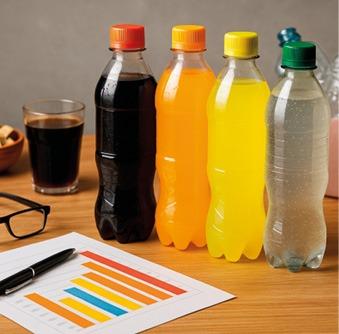
Product development in the sector is driven by the voluntary commitment to reducing sugar and calories
Consumption trends
Manufacturers continue to transform their product ranges, expanding the proportion of low-calorie and calorie-free drinks and implementing technological developments that support sustainability and energy efficiency. MAGYÜSZ was the first and to date the only one in the food manufacturing sector in Hungary to adopt a voluntary sugar and calorie reduction programme. By the end of 2024 the average sugar and calorie content per 100 millilitres of soft drinks produced/distributed by the association’s members has reduced by more than 50% overall. Today only 2-3% of the calories consumed by Hungarian consumers come from soft drinks.
Related news


A new category is emerging
🎧 Hallgasd a cikket: Lejátszás Szünet Folytatás Leállítás Nyelv: Auto…
Read more >
Related news
István Nagy: The horticulture of the future is being built in Szentes
🎧 Hallgasd a cikket: Lejátszás Szünet Folytatás Leállítás Nyelv: Auto…
Read more >
EY: The EU customs system is undergoing fundamental changes: the reform will affect many companies
🎧 Hallgasd a cikket: Lejátszás Szünet Folytatás Leállítás Nyelv: Auto…
Read more >
A single courier can save up to 9 liters of fuel per day – this is how online ordering changes fuel consumption
🎧 Hallgasd a cikket: Lejátszás Szünet Folytatás Leállítás Nyelv: Auto…
Read more >
