
The University of Debrecen did not perform honey certification tests

The University of Debrecen (DE) denies that they tested parameters that are used to taken into account in assessing honey. Takács Ferenc beekeeper from Kaposvár did not ask the university to carry out such tests – the institution's press office told MTI on Thursday.

The statement recalls that according to MTI’s news release titled “European farmers are protesting against the falsified Chinese honey” published on 22 October, Takács Ferenc, member of the Kaposvár and Area Beekeepers Association, said that the “tests carried out in the Debrecen University and tests carried out in a Bremen laboratory revealed that the flavonoids, the micro and macro elements, phenolic components that are naturally present in honey are missing from the Chinese honey.”
The communication of the University refutes the statement, and states that the University of Debrecen’s food science research lab where the measurements were made, gave the non-accredited test results for inner nutritional indicators. (MTI)
Related news
Samples of the first Hungarian space plant experiment return to Debrecen
🎧 Hallgasd a cikket: Lejátszás Szünet Folytatás Leállítás Nyelv: Auto…
Read more >
BeoBee honeys have conquered Paris too! Three Hungarian honey varieties among the best in the world
🎧 Hallgasd a cikket: Lejátszás Szünet Folytatás Leállítás Nyelv: Auto…
Read more >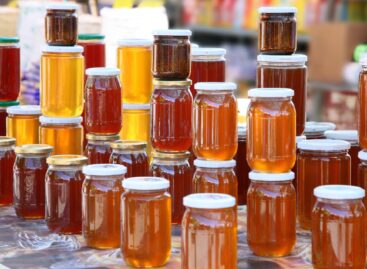
This is how we eat honey in 2026
🎧 Hallgasd a cikket: Lejátszás Szünet Folytatás Leállítás Nyelv: Auto…
Read more >Related news

What do we spread on our bread? Young people prefer butter, older people prefer margarine
🎧 Hallgasd a cikket: Lejátszás Szünet Folytatás Leállítás Nyelv: Auto…
Read more >
Products in the EU will receive a digital passport
🎧 Hallgasd a cikket: Lejátszás Szünet Folytatás Leállítás Nyelv: Auto…
Read more >
The season is coming, this is how student work can be successful in 2026
🎧 Hallgasd a cikket: Lejátszás Szünet Folytatás Leállítás Nyelv: Auto…
Read more >
