
Solar panels installed in greenhouses can make crop production more efficient

A solar panel product line is being jointly developed by Terrán Roof Tile Manufacturer Ltd., Solar Napelem Ltd. and the University of Pécs (PTE) as part of a project that enables the local production of renewable energy by reducing energy costs and dependence on fossil fuels, and provides favorable light conditions for plants through the shading effect of solar panels, thus improving crop yields. The development is being tested in a real environment, in the PTE Botanical Garden, where adaptation to different types of structures and compliance with the different shading needs of cultivated crops are also being examined.
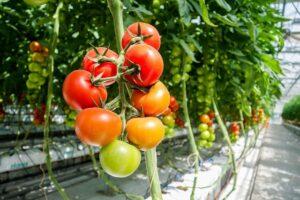 The project, which is being implemented in Pécs by a collaboration of industrial and academic actors, aims to prepare those involved in crop production for the challenges of increasingly extreme climate change by increasing the role of greenhouses. The consortium of Terrán Roof Tile Manufacturer Ltd., Solar-Napelem Ltd. and the University of Pécs successfully submitted a tender under the call of the National Research, Development and Innovation Fund 2024-1.1.1-KKV_FÓKUSZ, entitled “Development of agrophotovoltaic modules for greenhouse use – production of renewable energy over crops”. The jointly developed solar panel product line enables the reduction of energy costs and dependence on fossil fuels by producing renewable energy on site, and also provides favorable light conditions for plants through the shading effect of the solar panels, which also improves crop yields. The solar panels can be installed in existing greenhouses or installed when building new greenhouses, either as mobile or fixed units.
With the help of the 309,596,334 HUF non-refundable grant, long-term testing is being carried out on the solar modules developed during the 24-month development period in greenhouses in the Botanical Garden of the University of Pécs, including standard climate chamber and accelerated aging tests, following building energy simulation, in a real-life usage environment. During this, data characterizing both electrical and climatic and light conditions are recorded, and adaptive control technology is being developed. As a result of the development, potential customers are presented with values such as the variability of the products, which allows adaptation to different types of structures and which can also meet the different shading needs of cultivated crops. Project identifier: 2024-1.1.1-KKV_FÓKUSZ-2024-00048.
Related news
Imre Hubai: Hungarian agriculture is capable of renewal
🎧 Hallgasd a cikket: Lejátszás Szünet Folytatás Leállítás Nyelv: Auto…
Read more >
MBH Bank: crop insurance can also be taken out online on the MBH AgrárPartner Platform
🎧 Hallgasd a cikket: Lejátszás Szünet Folytatás Leállítás Nyelv: Auto…
Read more >
Hungarian agriculture is capable of renewal
🎧 Hallgasd a cikket: Lejátszás Szünet Folytatás Leállítás Nyelv: Auto…
Read more >Related news
Lidl sold nearly 100 million liters of Hungarian milk
🎧 Hallgasd a cikket: Lejátszás Szünet Folytatás Leállítás Nyelv: Auto…
Read more >
Tetra Pak wins major award
🎧 Hallgasd a cikket: Lejátszás Szünet Folytatás Leállítás Nyelv: Auto…
Read more >
AI: Help or Addiction? Recent Research
🎧 Hallgasd a cikket: Lejátszás Szünet Folytatás Leállítás Nyelv: Auto…
Read more >
