
Replanning for export markets

In Hungary the volume of wheat milling is currently around 1 million tonnes per year, compared to the pre-2022 processing level of approximately 1.2 million tonnes.
This article is available for reading in Trade magazin 2025/12-2026.01

Tímea Pikó
secretary general
Hungarian Grain and Feed Association
Exports have declined from an average of 200,000 tonnes per year in previous years to around 150,000 tonnes, with Romania and Slovakia being the main destinations. According to data from the Central Statistical Office (KSH), the total net sales revenue of the milling industry was HUF 184.7bn in 2024, while export sales revenue was HUF 40bn in 2024.
Stable production level
The domestic milling industry processes almost exclusively Hungarian wheat. Raw material costs are determined by international prices and the regional supply and demand ratio.
“In order to be able to compete on foreign markets, it is essential that the cost structure of domestic market players improves, as the costs of raw materials, energy and labour determine sales prices”,
says Tímea Pikó, secretary general of the Hungarian Grain and Feed Association. Regulations in recent years – price caps, mandatory promotions and the current margin restrictions – have primarily affected consumer prices, while having little effect on retail purchase prices.
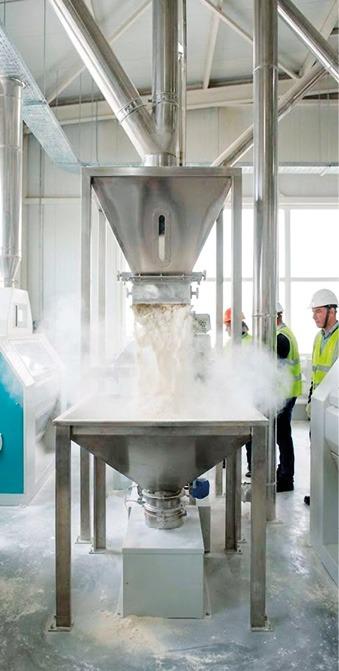
Hungary’s milling industry relies almost entirely on locally grown wheat
Developments on the horizon
Previous development projects have encouraged energy efficiency and manufacturing technology innovation, but increasing efficiency in the milling industry requires continuous investment in development. In 2024 several milling companies submitted applications for small-scale and complex food industry development grants, and keen interest is also expected in the upcoming HUF 20bn support scheme. Improving efficiency and optimising production capacity will play a key role in maintaining competitiveness.
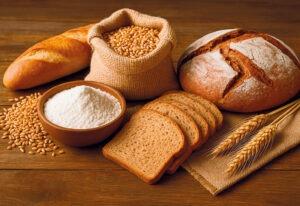
Since consumer demand shows little change, the product offering has undergone no significant structural transformation
Related news

Mihály Varga: food industry development strengthens the country’s stability
🎧 Hallgasd a cikket: Lejátszás Szünet Folytatás Leállítás Nyelv: Auto…
Read more >
Where wheat turns into flour and data: this is how the domestic milling industry is digitizing
🎧 Hallgasd a cikket: Lejátszás Szünet Folytatás Leállítás Nyelv: Auto…
Read more >Related news

EY: The EU customs system is undergoing fundamental changes: the reform will affect many companies
🎧 Hallgasd a cikket: Lejátszás Szünet Folytatás Leállítás Nyelv: Auto…
Read more >
A single courier can save up to 9 liters of fuel per day – this is how online ordering changes fuel consumption
🎧 Hallgasd a cikket: Lejátszás Szünet Folytatás Leállítás Nyelv: Auto…
Read more >
Shoppers loved chocolate bars
🎧 Hallgasd a cikket: Lejátszás Szünet Folytatás Leállítás Nyelv: Auto…
Read more >
