
New FAO publication reminds us of the finite nature of food production resources

Feeding an estimated 10 billion people by 2050 will require bold and smarter decisions about how the world manages land, soil and water, warns the Food and Agriculture Organization of the United Nations (FAO) in a new, landmark report.
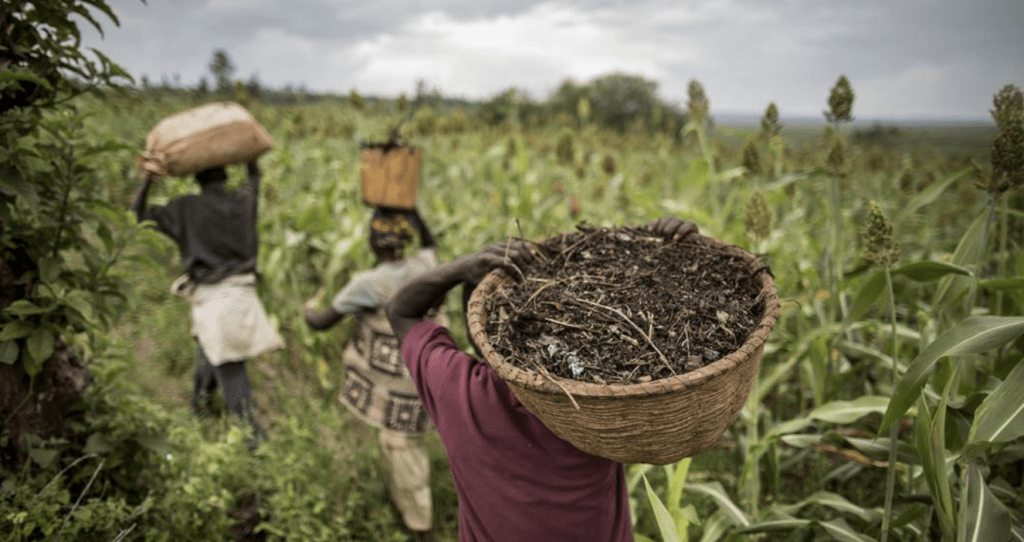 The State of the World’s Land and Water Resources for Food and Agriculture 2025 report also highlights that these essential resources are finite. Their preservation is critical to achieving global food security now and in the decades to come.
The report, with a thematic focus of “Producing More and Better,” highlights the significant, often overlooked potential of soils and water resources to support sustainable increases in food production. It presents strategies for how to produce more – and better – food for a growing population, while ensuring responsible and resilient management of land, soil and water.
An estimated 673 million people went hungry in 2024, and many regions continue to face severe and recurrent food emergencies. This pressure will increase as the world’s population approaches 9.7 billion by 2050, requiring agriculture to increase food, feed and fibre production by 50% compared to 2012, and to make 25% more freshwater available.
The main challenge: producing more with less
Over the past 60 years, global agricultural production has tripled, while the area of agricultural land has grown by only 8% – at a high environmental and social cost. Today, according to FAO data, more than 60% of human-induced land degradation is affecting agricultural land.
Expanding agricultural land is no longer an option, the report stresses. For example, deforestation or the conversion of fragile ecosystems would undermine the biodiversity and ecosystem services that agriculture needs.
Solutions exist – but urgent action is needed
The FAO publication makes science-based recommendations for the sustainable use of soil and water resources.
The report says we could feed up to 10.3 billion people by 2085, when global population is expected to peak. But that depends on how food is produced – and at what environmental, social and economic costs.
Future productivity growth must therefore come from producing smarter, not simply more. This means bridging the gap between current and potential yields; diversifying by moving towards more resilient crop varieties; and use locally-tailored, resource-efficient practices that are appropriate to specific land, soil and water conditions.
Related news
The goal is to improve the quality of life for generations: Nestlé’s summary of shared value creation has been published
🎧 Hallgasd a cikket: Lejátszás Szünet Folytatás Leállítás Nyelv: Auto…
Read more >
Just Eat Takeaway.com brings sustainable packaging range to European markets
🎧 Hallgasd a cikket: Lejátszás Szünet Folytatás Leállítás Nyelv: Auto…
Read more >
Action Results 2025: Strong Growth and Progress Sustainability Programme
🎧 Hallgasd a cikket: Lejátszás Szünet Folytatás Leállítás Nyelv: Auto…
Read more >Related news

Oat-based “feta” wins the cheese innovation competition of Lidl Germany and ProVeg
🎧 Hallgasd a cikket: Lejátszás Szünet Folytatás Leállítás Nyelv: Auto…
Read more >
The horticulture of the future is being built in Szentes
🎧 Hallgasd a cikket: Lejátszás Szünet Folytatás Leállítás Nyelv: Auto…
Read more >
Finger Food Experience
🎧 Hallgasd a cikket: Lejátszás Szünet Folytatás Leállítás Nyelv: Auto…
Read more >
