
More than 50 old genebank varieties are being tested in the “Our Daily Bread” pilot program

One of the greatest contradictions of the modern food system is that while there are tens of thousands of edible plant species on our planet, only a few plants provide the majority of our diet. Throughout the history of agriculture, humanity has used approximately 6,000-7,000 plant species as food, while today fewer than 200 play a significant role in global production. Even more striking is that 66% of all the world’s crop production is provided by just nine species (FAO). This concentration carries a serious risk, especially in our changing climate, which is why the new sample program of the National Biodiversity and Gene Conservation Center (NBGK) and the Ecological Agriculture Research Institute (ÖMKi) is significant, within the framework of which 50 gene bank grain lots will be examined together this year.
 The selection on the shelves of supermarkets is seemingly enormous: we can choose from breads, biscuits, snacks and cakes with different flavors. In fact, a significant part of these contain the same few basic plants, such as wheat, rice or corn and varieties of these plants bred for intensive conditions. True diversity, of course, can be measured not in flavors, but in the diversity of plant species and varieties. Including a variety of plant species and varieties in our diet not only makes our diet more diverse, but also strengthens food security: if one crop fails due to changing conditions, another can compensate for its deficiency.
The role of diversity in a changing climate
Industrial agriculture is often based on monocultures: a single crop species is grown over vast areas, sometimes for years. This simplifies mechanization and increases short-term yields, but at the same time increases the risks of pests, plant diseases and weather extremes. Climate change is bringing more frequent droughts, heat waves and extreme rainfall patterns. In this uncertain environment, biodiversity is a safeguard. Different plant species and varieties have different characteristics: some are more drought-tolerant, others more resistant to certain diseases. Diversified cropping patterns reduce the risk of total crop failure, improve soil health and result in a more sustainable production system.
New opportunities for ancient cereals
The role of ancient cereals is particularly important in this context: these ancient cereal species – such as emmer or sorghum – can be successfully grown on less favourable soils and under extensive conditions, without the use of pesticides. Although their yields are lower than those of modern wheat varieties in well-adapted growing areas, they are capable of competitive yields and greater crop stability under unfavourable conditions. All this may be of particular importance in an agricultural environment increasingly affected by climate change.
In recent years, there has been a surging interest in the ancient cereal landraces and old Hungarian cereal varieties preserved at the National Biodiversity and Gene Conservation Center. More and more grain growers are applying to grow such gene bank items on areas of up to several hectares. As a result, the “Our Daily Bread” program has been included among the Center’s new model programs, the purpose of which is to examine the cultivation potential of gene bank grain items under changed climatic conditions and to expand the amount of available seeds.
“The grains preserved in gene bank collections are not relics of the past, but opportunities for the future. We preserve genetic resources in them that can play a key role in preserving agricultural diversity and adapting to changing environmental conditions. In recent years, there has been increasing interest among farmers in gene bank grain varieties, which shows that producers are increasingly consciously seeking production opportunities based on more diverse genetic bases.”
– highlighted Dr. Borbála Baktay, head of the National Biodiversity and Gene Conservation Center, in connection with the “Our Daily Bread” program.
Within the framework of the program, the small-plot testing and propagation of 50 gene bank grain varieties can start from the autumn of 2026, which will be expanded to a total of 100 varieties in the coming years. The tests will be carried out by the Ecological Agricultural Research Institute in organic farming on the Csoroszlya Farm in Sári, while the National Biodiversity and Gene Conservation Center will carry out the tests in small-plot conditions on the institute’s areas in Tápiószele. Since the demand for chaff wheat varieties and landscape varieties is increasing in our country, the testing of individual varieties of the former and stubble collections is also included in the programban. In addition to their cultivability, researchers are also evaluating the nutritional values of the grains and the baking properties of the flours made from them.
The goal is not simply to preserve or recall the past, but to examine the role that diverse genetic resources can play in the adaptive crop production of the future.
What can we do as consumers?
Preserving agricultural diversity is not only the responsibility of research institutes and farmers: consumer decisions also shape what ends up in the fields and ultimately on our tables. By consciously choosing products made from old grain varieties, we contribute to the survival of these special plants not only in gene banks, but also as food.
A good opportunity to support the cause is offered by products that reach consumers as a result of research and development collaborations – such as Első Pesti Malom and the Organic Agriculture Research Institutecommon durum wheat flour.
ÖMKi has been working with ancient grains since 2015, including the domestic testing of durum wheat and einkorn durum wheat varieties from gene banks. According to their credo, in addition to producing excellent organic wheat, it is also important that the entire organic product chain, i.e. milling and packaging, is carried out by domestic companies, and that the Hungarian consumer public finds locally produced organic products. This time, the organic durum wheat from ÖMKi’s on-farm partner network, the organic farms of Mihály Földi and András Tóth, was ground into flour by the Első Pesti Malom and made it available to customers.
Related news
Old gene bank cereal varieties are being tested in a new Hungarian sample program
🎧 Hallgasd a cikket: Lejátszás Szünet Folytatás Leállítás Nyelv: Auto…
Read more >
Old genebank grain varieties are being tested in a new Hungarian pilot program
🎧 Hallgasd a cikket: Lejátszás Szünet Folytatás Leállítás Nyelv: Auto…
Read more >
The foundation stone of a new bread factory was laid in Tata
🎧 Hallgasd a cikket: Lejátszás Szünet Folytatás Leállítás Nyelv: Auto…
Read more >Related news

How will we pay for coffee in 2030, and will Europe finally get its own financial infrastructure?
🎧 Hallgasd a cikket: Lejátszás Szünet Folytatás Leállítás Nyelv: Auto…
Read more >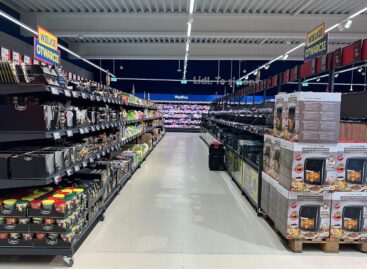
The government supported food industry developments with more than one thousand billion forints
🎧 Hallgasd a cikket: Lejátszás Szünet Folytatás Leállítás Nyelv: Auto…
Read more >
While the world changes, the shared experience is eternal: Unicum’s new commercial debuts with a journey across universes
🎧 Hallgasd a cikket: Lejátszás Szünet Folytatás Leállítás Nyelv: Auto…
Read more >
