
My love is trade marketing – Proven recipes and new waves

Three seconds on the shelf, two weeks during the Back to School season, nighttime shopping with QR codes and increasingly fragmented attention in social feeds – this is the environment in which the role of trade marketing must be rethought. The full-day online conference series of the Trade Marketing Club explored what the logic of the “coming years” means: how promotion, retail media, in-store presence and even the operating model itself are transforming.
The detailed report on the event will be published in Trade Magazin, issue 2026/4.
The event was moderated by the Club’s co-founders, Ágnes Csiby (PMS/POPAI), Zsuzsanna Hermann (Trade Magazin/POPAI) and Ildikó Kátai (PMS/POPAI). The focus was not on presenting new tools, but on how trade marketing is becoming a central element of business operations.
Retail is well known, but lacks attractiveness

Baja Sándor
In his presentation, Sándor Baja, Managing Director of Randstad, approached what FMCG and retail can expect in 2026 from a labour market perspective. According to Randstad Employer Brand data, both sectors enjoy high awareness, yet their attractiveness is below average: retail is particularly less appealing, and FMCG also shows signs of decline. In the HR Trends survey, 44% of companies expect revenue growth, while only 26% plan to increase headcount in 2026. Demand for marketing professionals is low: 7% of companies are looking for digital marketers and just 3% for traditional marketers. The most common salary increase range for white-collar roles is 4–8%, while candidate expectations are significantly higher.
Three seconds of truth
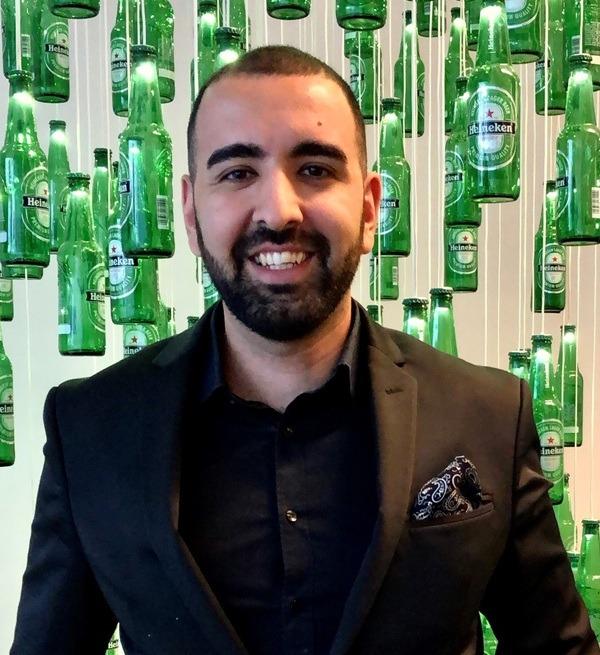
Salem Daniel
A brand’s fate is decided in-store: if you are not noticeable within three seconds, the mental availability built by ATL is lost. Salem Daniel, Global Desperados Communication Manager at The Heineken Company, showed how the brand’s “vibe” makes it to the shelf for Gen Z. Desperados, a pioneer of the beer+ category since 1995, is now present in 30+ markets. Spontaneous experiences must be consciously designed: in the short term, trade and experiential activities build brand strength more effectively than classical media. TTL-level simultaneous planning can deliver 40–100% ROI improvement compared to separately executed activities. The focus shifts from campaign-based BTL to master brand thinking, harmonised touchpoint mixes and integrated retail media.
The joker only works within a system

Mege Tímea
A promotion is not a jolly joker: it does not win the game on its own. In her presentation, Tímea Mege, Co-owner of Rewart, highlighted the role of strategic decisions. First comes defining the objective and target audience, followed by the aligned message, mechanics and platform. When targeting a new segment, the entry barrier cannot be high, and every additional data request increases drop-off. A promotion is an offer that remains invisible without communication. Strategy, target audience, UX and communication together determine effectiveness – the key difference lies in whether these operate as a coherent system rather than being placed on the table campaign by campaign.
The “teacher lady” before the checkout
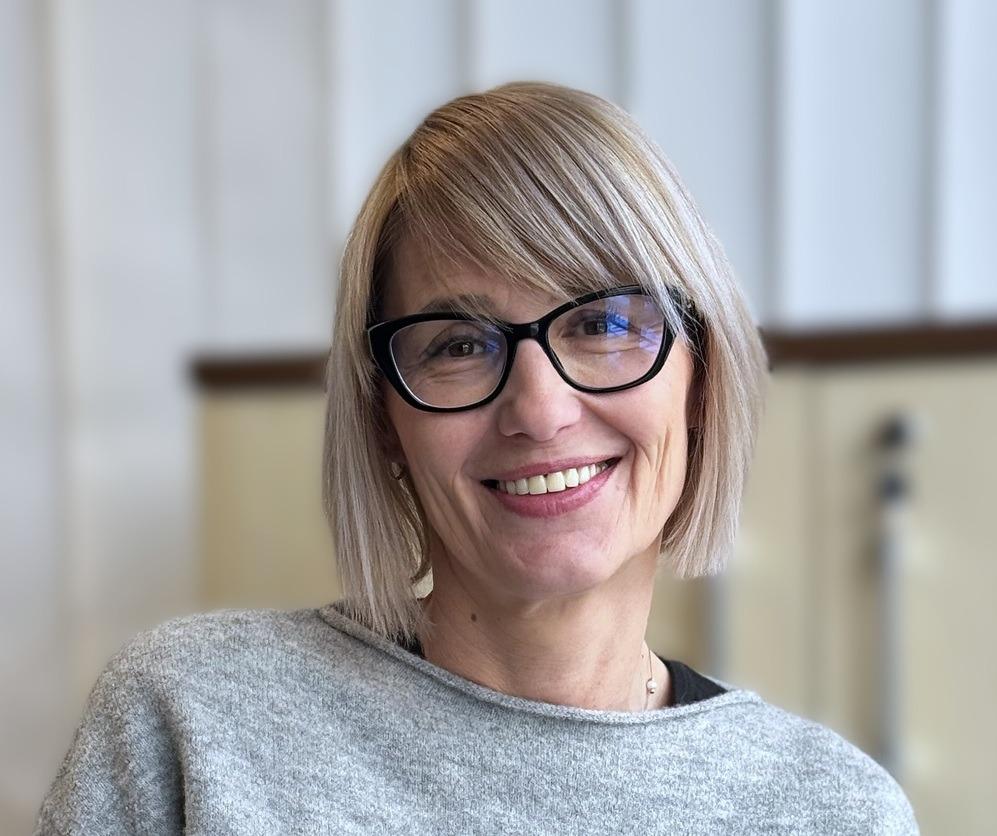
Breznai Boglárka
In the paper and stationery market, Back to School is decided within two weeks – and under significant stress. Gábor Pasztorek, Deputy CEO of ICO, and Boglárka Breznai, Key Account Manager at Herlitz, presented the “Teacher Lady” promotion running in 40 Tesco hypermarkets between 23 August and 7 September. The initiative supports shoppers at the decision point. 78% of parents arrive with a list (90% for lower primary students), and their decisions are primarily influenced by price (32%), quality (27%) and school recommendations (23%). The 85-member hostess team also conducted surveys, turning the promotion into both in-store support and a source of real shopper insights for brands and retailers. Their role was on-site orientation and product range structuring in a seasonally overloaded category.
Who owns attention in 2026?

Lévai Richárd
Who would think that Messenger is Hungary’s most popular mobile app with 4,874,444 monthly users? Or that Reddit (1,585,080) reaches nearly twice as many users as Netflix (723,588)? ChatGPT reached 1,310,836 users in January, closely following TikTok.com with 1,459,212 users. Richárd Lévai, expert at Liftup Academy, pointed out that platform usage is not declining but fragmenting; organic reach is shrinking, while AI-generated content is rapidly increasing. The relevance of follower counts is transforming: the real question today is who can build sustained attention across multiple platforms through data-driven operations.
Brand value = order

Salem Fanni
Beyond a certain scale, the risk is not lack of visibility but excessive stimuli. Fanni Salem, Brand and Marketing Communication Manager at Euronics, said trade’s task is simplifying decisions. The “Ez ennyi” platform launched in 2024 focuses on clear, no-frills communication; offline POS clean-up and selective, value-driven retail media solutions support it. The objective is consistent experience and AI-supported decision-making, as overcrowded environments hinder brand choice.
The success of the hybrid store
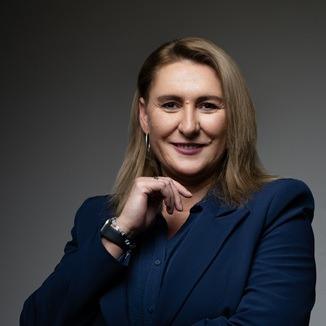
Kiss Krisztina
What made the Szeged COOP store Store of the Year 2025? The 150 m² store with 4,000 SKUs operates traditionally during the day, while after closing it switches to automated mode with QR-code entry and a sluice system. Krisztina Kiss, Deputy CEO of COOP Szeged Zrt., emphasised that the model aims not at staff replacement but extended accessibility. The traditional deli counter was replaced by an expanded vacuum-packed assortment; electronic shelf labels, AI-based camera systems and self-checkouts support operations. A dispatcher service supervises the store at night. Between 22 May and year-end, unmanned opening hours generated 20.5% additional revenue, 22% higher basket value and over 15,000 transactions.
A brand active all year round

Mészáros Andrea
Trend or genuine necessity? For Mizo, it is a business principle. Andrea Mészáros, Trade Marketing Group Leader at Bonafarm Sole-Mizo, demonstrated that the brand was able to grow in a declining dairy market while being present in 12 categories; in 2025 it launched 18 new products, implemented 4 packaging changes and introduced 8 tailor-made promotions. Across 7 retail chains, 3,608 displays, 804,000 placed units and nearly 200 tons of sales supported visibility. The strategy is portfolio-based: research-driven target setting, category-specific tool and channel prioritisation, continuous ROI measurement and feedback loops. The evolution of trade tools is also part of the approach, moving from short-lived decorations to reusable display solutions across multiple campaign cycles.
Retail media 2.0 in hypermarkets

Tamás Mónika
Auchan Retail Hungary is building a structured retail media ecosystem. Mónika Tamás, Director responsible for Financial Services, Solutions and Retail Media, presented the creation of a dedicated retail media business unit managing offline and online appearances in an integrated system. Offline tools remain dominant, while digital represents 21% of the portfolio; hypermarkets operate 2–3 digital screens positioned at key decision points. The network launched in 2025 will double in spring 2026, and new stores integrate retail media solutions already at the planning stage.
Discount, redefined

Kaibinger Tamás
HUF 1,611.3 billion turnover, nearly 14% annual growth, 217 stores, 4 logistics centres and almost 10,000 employees – scale alone does not provide the full explanation. Tamás Kaibinger, Head of Corporate Affairs at Lidl Hungary, said the “Retailer of the Year” recognition reflects standardised operations and continuous development. The chain works with nearly 500 domestic suppliers, offers 4,500 Hungarian products, supports 170 exporting partners and has committed to net zero by 2050. The discount model is built on centralised procurement, uniform store standards and controlled cost levels.

Related news

I Love Trade Marketing: the logic of the next few years
🎧 Hallgasd a cikket: Lejátszás Szünet Folytatás Leállítás Nyelv: Auto…
Read more >
“Proven recipes and new waves” – trade marketing in the coming years (online, free conference)
🎧 Hallgasd a cikket: Lejátszás Szünet Folytatás Leállítás Nyelv: Auto…
Read more >
I love trade marketing – this year too
🎧 Hallgasd a cikket: Lejátszás Szünet Folytatás Leállítás Nyelv: Auto…
Read more >Related news
István Nagy: the government’s goal is to further strengthen the competitiveness of Hungarian agriculture and place the future of domestic agriculture on a solid foundation
🎧 Hallgasd a cikket: Lejátszás Szünet Folytatás Leállítás Nyelv: Auto…
Read more >
Bulk shopping has become significantly cheaper: more than 900 products are available at much lower prices than a year ago
🎧 Hallgasd a cikket: Lejátszás Szünet Folytatás Leállítás Nyelv: Auto…
Read more >
EY: Activity increased, yet the value of the Hungarian M&A market decreased significantly
🎧 Hallgasd a cikket: Lejátszás Szünet Folytatás Leállítás Nyelv: Auto…
Read more >
