
Hungarian agriculture in the grip of extremes: damages already amount to more than 100 billion forints

In 2025, frost damage and summer drought caused more than 100 billion forints of damage together. The yield of orchards fell by 70-80 percent in several places, and arable crops decreased by 30-40 percent. The key to the future may be expertise and timely planned plant protection.
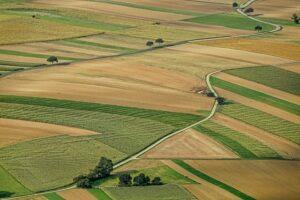 Hungarian farmers are facing a double natural disaster in 2025: in the spring, the April frosts hit agriculture, and in the summer, heat and drought hit. Fruit growers and arable farmers are struggling with crop losses and market uncertainty at the same time. According to experts, extreme weather will not be extraordinary in the future, but will become commonplace, and this requires more conscious preparation from all farmers.
“This year, producers were hit from two sides: the spring frost almost wiped out fruit production in several regions, and the summer heat caused significant losses in root crops. This clearly shows that in agriculture today, improvisation is no longer possible: expertise, foresight and conscious plant protection are needed,” emphasized Dr. Gerda Anikó, a plant specialist at Vitafer Hungária Kft.
Spring frost damage: dramatic losses in orchards
The frosts at the beginning of April this year proved to be particularly cruel: in several places -6 and -8 degrees Celsius were measured, when the fruit trees were already in full bloom. The biggest loss was for apricots, where instead of the usual 20-30 thousand tons of yield, only 2-4 thousand tons of yield were expected. This is only 10-20 percent of the average quantity, and this was also reflected in this year’s prices. Frost damage caused losses of tens of billions of forints in the entire fruit sector, affecting apples, especially early varieties, as well as peaches, sour cherries, cherries and grapes.
“As a result of climate change, buds and flowers are developing earlier and earlier, making them much more vulnerable to late frosts. Therefore, preparing for frost is no longer an extra measure, but should be an integral part of production,”
– added Dr. Gerda Anikó.

Related news
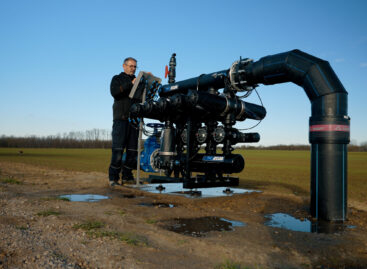
An irrigation project that is outstanding at a European level was implemented in Mezőfalva
🎧 Hallgasd a cikket: Lejátszás Szünet Folytatás Leállítás Nyelv: Auto…
Read more >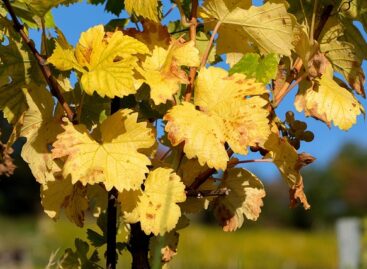
The role of vine destruction in the control of golden yellows of grapes
🎧 Hallgasd a cikket: Lejátszás Szünet Folytatás Leállítás Nyelv: Auto…
Read more >
Nébih: Grape growers can do a lot against golden yellows in spring
🎧 Hallgasd a cikket: Lejátszás Szünet Folytatás Leállítás Nyelv: Auto…
Read more >Related news

Green light for SPAR’s new acquisition in Austria
🎧 Hallgasd a cikket: Lejátszás Szünet Folytatás Leállítás Nyelv: Auto…
Read more >
Hungarian vegan label helps conscious consumers
🎧 Hallgasd a cikket: Lejátszás Szünet Folytatás Leállítás Nyelv: Auto…
Read more >
Andre Agassi lett a Lidl Ireland Silvercrest márkájának új arca
🎧 Hallgasd a cikket: Lejátszás Szünet Folytatás Leállítás Nyelv: Auto…
Read more >
