
Hundreds of thousands would work more outside of traditional frameworks: it’s not the lack of motivation, but the lack of flexibility

 Giggle’s comprehensive analysis conducted between September 2025 and March 2026 – based on the responses of nearly 1,400 employees and data from hundreds of thousands of shifts – rewrites everything we thought about flexible (gig) work so far.
Economic lifeline: Daily survival and the portfolio career
The stereotype has been broken: They are qualified and want to work more
A common misconception is that those who work flexible hours are low-motivated casual workers, suitable only for tasks that do not require qualifications, or students. The numbers clearly refute this:
-
84% of those who take up work on the platform have at least a secondary education (19% have a degree)
-
Almost half of them (48.3%) speak English and have a “B” category driving license
-
65.8% of respondents have a full-time job (full or part-time)
-
Although many are already active, 72% of respondents would like to work at least as much as they currently do and would take on an average of 10 extra hours per week: in practice, this amounts to 3-5 completely untapped hours per month working day per employee, which is a huge opportunity for companies struggling with labor shortages.
“The gig economy is not an escape from work, but a modern tool for diversifying income. In the West, the »portfolio career« is already common, where people build their salary from multiple sources in parallel. Our data also shows that 7 out of 10 employees have a long-term goal of maintaining flexible working”
What do employers gain? People in minutes instead of weeks
-
On the Giggle platform, an average of 8 applicants are received for an advertised shift
-
The first application arrives on average within 50 minutes
-
By involving flexible labor, companies do not pay for idle time: compared to traditional, in-house or hired labor – taking into account the recruitment costs incurred – they can achieve cost savings of up to 15-22%.
“We constantly hear from companies that there are simply no people, or what is even more common: that they have run out of good workers. However, our data proves that quality and motivated workers are indeed on the market, but they are invisible to them within the traditional, rigid framework. The company that is willing to think in shifts today and tra
Related news

When you have to do it all at once: answers to the challenges of the sandwich generation
🎧 Hallgasd a cikket: Lejátszás Szünet Folytatás Leállítás Nyelv: Auto…
Read more >
Cautious optimism among Hungarian companies: more are planning to expand their workforce, but uncertainty has increased
🎧 Hallgasd a cikket: Lejátszás Szünet Folytatás Leállítás Nyelv: Auto…
Read more >
Generation Z: They’re not job hoppers, they just know what they want
🎧 Hallgasd a cikket: Lejátszás Szünet Folytatás Leállítás Nyelv: Auto…
Read more >Related news

Green transition on the air conditioning market
🎧 Hallgasd a cikket: Lejátszás Szünet Folytatás Leállítás Nyelv: Auto…
Read more >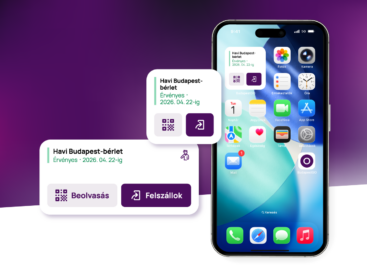
BudapestGO continues to develop: the March application update brings more convenient use
🎧 Hallgasd a cikket: Lejátszás Szünet Folytatás Leállítás Nyelv: Auto…
Read more >
Why does the rabbit lay eggs at Easter?
🎧 Hallgasd a cikket: Lejátszás Szünet Folytatás Leállítás Nyelv: Auto…
Read more >
