
Old genebank grain varieties are being tested in a new Hungarian pilot program

More than 50 old genebank cereal varieties are being examined in a joint pilot program of the Ecological Agricultural Research Institute (ÖMKi) and the National Biodiversity and Gene Conservation Center (NBGK). The project, titled “Our Daily Bread“, aims to increase food security and agricultural diversity.
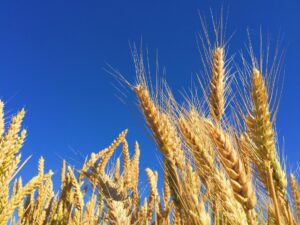 The ÖMKi statement points out that a significant contradiction in the modern food industry is that while there are tens of thousands of edible plant species, only a few plants provide the majority of humanity’s diet. According to the Food and Agriculture Organization of the United Nations (FAO), 66 percent of the world’s crop production is accounted for by just nine species, which poses a serious risk in changing climate conditions.
Experts emphasize that the abundance on store shelves is often apparent, as most processed products contain the same few basic crops, such as wheat, rice or corn, and varieties of these crops bred for intensive conditions. The real variety lies in the diversity of plant species and varieties, which not only makes nutrition healthier, but also strengthens food security: if one crop performs less well due to changed conditions, another can compensate for its deficiency.
The announcement also mentions that the monoculture cultivation typical of industrial agriculture – although it increases yields in the short term and simplifies mechanization – makes production vulnerable to pests, diseases and weather extremes.
As they write, in an uncertain environment due to climate change, biodiversity is a guarantee, since different plant species and varieties have different properties: some are more tolerant to drought, others are more resistant to certain diseases. Diversified cropping patterns reduce the risk of total crop failure, improve soil health, and result in a more sustainable production system.
The announcement draws attention to the role of ancient cereals. As they write, these ancient cereal species – such as einkorn or sorghum – can be successfully grown on less favorable soils and under extensive conditions, without the use of pesticides. Although their yield is lower than that of modern wheat varieties in well-adapted growing areas, they are capable of competitive yields and greater crop stability under unfavorable conditions. All this may be of particular importance in an agricultural environment increasingly affected by climate change.
According to the announcement, interest in the ancient cereal landraces and old Hungarian cereal varieties preserved at the National Biodiversity and Gene Conservation Center has increased dramatically in recent years. More and more grain growers are applying to grow such gene bank items on areas of up to several hectares. As a result, a new pilot program will be launched this year, the aim of which is to examine the growability of genebank grain varieties under changed climatic conditions and to expand the available seed quantity.
In the program called Our Everyday Bread, the small-plot testing and propagation of 50 genebank grain varieties will begin in the fall of 2026, which will expand to a total of 100 varieties in the coming years. In addition to their cultivability, the researchers evaluate the nutritional values of the grains and the baking properties of the flours made from them.
“The goal is not simply to preserve or evoke the past, but to examine the role that diverse genetic resources can play in the adaptive crop production of the future” – they emphasize.
A free downloadable recipe collection has also been created for those who would like to experiment with the use of ancient grains. The compilation is available at https://biokutatas.hu/kiadvany/osbuza-receptgyujtemeny/.

Related news

We will protect the safety of Hungarian food by all means.
🎧 Hallgasd a cikket: Lejátszás Szünet Folytatás Leállítás Nyelv: Auto…
Read more >
Organic Agricultural Research Institute: Hungarian apples are safe
🎧 Hallgasd a cikket: Lejátszás Szünet Folytatás Leállítás Nyelv: Auto…
Read more >
Producers are being attacked without reason – Hungarian apples are healthy and safe
🎧 Hallgasd a cikket: Lejátszás Szünet Folytatás Leállítás Nyelv: Auto…
Read more >Related news

Green transition on the air conditioning market
🎧 Hallgasd a cikket: Lejátszás Szünet Folytatás Leállítás Nyelv: Auto…
Read more >
BudapestGO continues to develop: the March application update brings more convenient use
🎧 Hallgasd a cikket: Lejátszás Szünet Folytatás Leállítás Nyelv: Auto…
Read more >
Why does the rabbit lay eggs at Easter?
🎧 Hallgasd a cikket: Lejátszás Szünet Folytatás Leállítás Nyelv: Auto…
Read more >
