
In addition to their wallets, Hungarians are also worried about unexpected expenses

A broken-down car, a heating failure or a bicycle shed have not proven to be safe – unplanned expenses like these not only strain Hungarians financially but also mentally. According to recent research by Cofidis, those affected mostly felt anxiety, helplessness and anger, but some also experienced sleep disturbances. Yet such cases occur relatively often: nearly two-thirds of the population have already suffered serious unexpected expenses, up to several hundred thousand forints, in the past year, and many have trouble paying for them on their own – the majority, on the other hand, would feel ashamed if they had to borrow money from loved ones.
 According to a national, representative study by Cofidis1, six out of ten Hungarians have faced at least one large unexpected expense in the past 12 months, and nearly a quarter of them have encountered at least two such critical situations. The most common causes of difficulty were sudden breakdowns of a car or household appliance, but unexpected medical expenses, unexpected expenses related to the home, such as water damage or heating failure, and the breakdown or theft of electronic devices were also common.
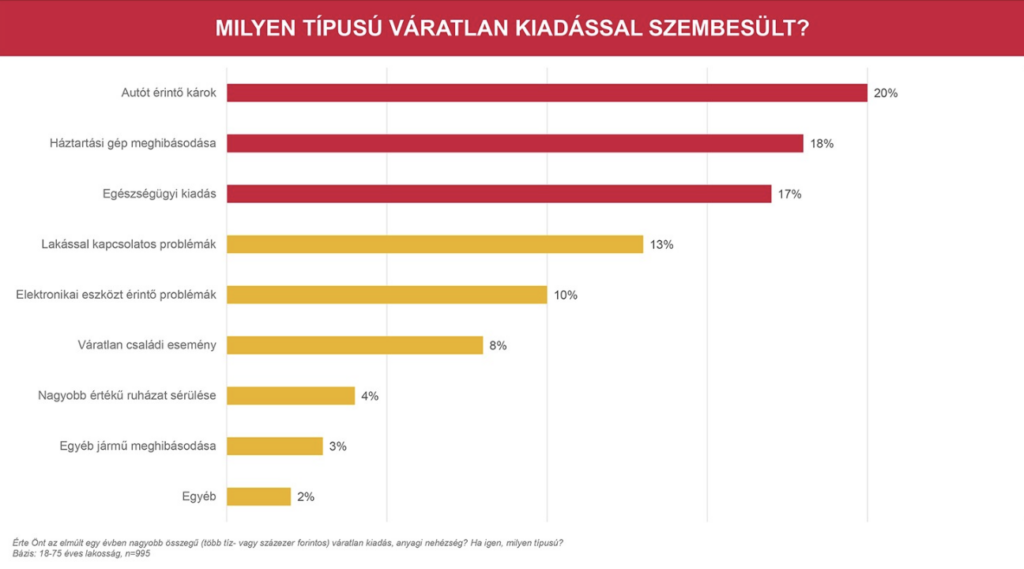
In six out of ten cases, the amount of sudden expenses exceeded 100 thousand forints, and in one fifth of the problems, the respondents had to pay more than 300 thousand forints. For three quarters of those affected, this unexpected item seriously burdened the family budget, and most of them needed at least 1-2 months to get back on their feet financially.
Nerve-wracking burden
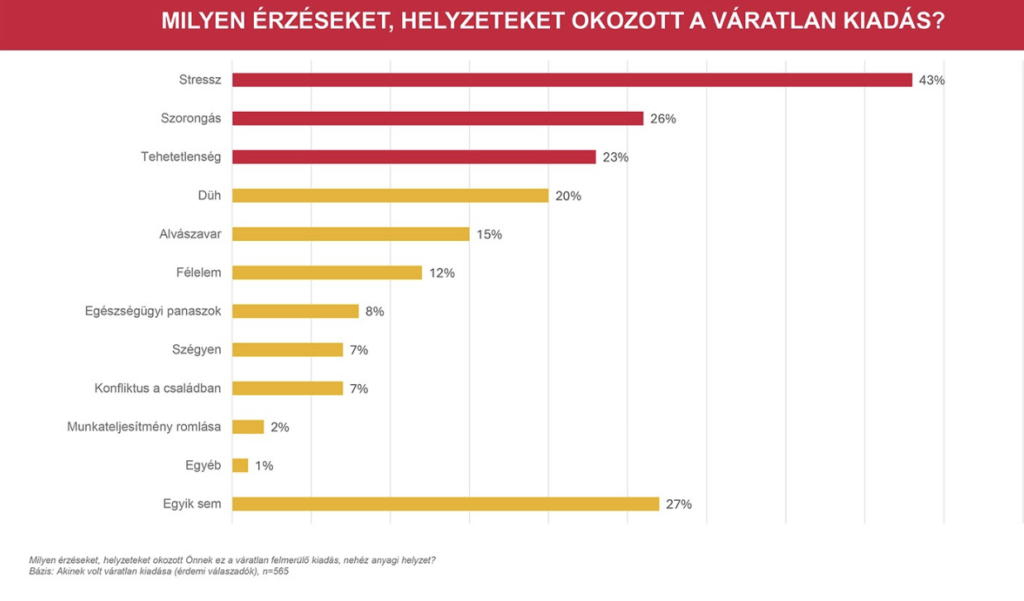
For three quarters of those faced with unexpected expenses, this meant a serious burden not only financially, but also psychologically. The victims mostly felt stress, anxiety, helplessness and anger, but some of them had trouble sleeping (15%). According to the results of the survey, women were more mentally affected by what happened than men: 82% of women reported some kind of negative feeling or conflict in connection with the unexpected situation, while this rate for men was only 64%. Those from rural areas, those with lower education, and those without savings were more likely to be tested by the sudden expense.
The mental burden is further aggravated by the taboo surrounding the situation. 4 out of 10 of those who faced unexpected expenses in the past year were unable to cover these costs from their own resources. In such cases, they most often asked for a loan from a family member or friend, but this often involves psychological compromises. Nearly two-thirds of respondents feel ashamed when asking for financial support from a friend or relative, and four out of ten would rather turn to a bank or financial institution for a loan than from their loved ones – this is true for every second person over the age of sixty.
Is preparation the key to security?
The research also showed that two-thirds of respondents are worried about their future financial situation. Although reserves can help a lot in dealing with unexpected situations, the majority believe that they have less savings than would give them a proper sense of security. In general, this would mean a smaller amount for younger people, and a larger amount for older people. According to their own admission, 60 percent of Hungarians have enough money saved to live on for at most 1-2 months, but the majority would feel reassured by having enough reserves for more than half a year.
According to Cofidis experts, the stress associated with financial uncertainties can be reduced if we prepare in advance what solutions we can consider in an unexpected life situation. In addition to mapping out possible loan options, it is particularly important that the employees of the responsible financial institution are empathetic and help with the decision in an understandable, transparent manner.
1 The research by NRC and Cofidis was conducted by interviewing 995 people in March 2026. The sample is representative of the Hungarian internet population aged 18-75 based on gender, age group, education, type of residence and region.
Related news


It’s time to redefine work – AI can help
🎧 Hallgasd a cikket: Lejátszás Szünet Folytatás Leállítás Nyelv: Auto…
Read more >
Research: Hungarian female entrepreneurs and managers are overworked and suffer from a lack of time
🎧 Hallgasd a cikket: Lejátszás Szünet Folytatás Leállítás Nyelv: Auto…
Read more >Related news

Big shopping begins, trade is prepared
🎧 Hallgasd a cikket: Lejátszás Szünet Folytatás Leállítás Nyelv: Auto…
Read more >
Nearly one and a half kilograms of ham and two dozen eggs: this is how Hungarians prepare for Easter
🎧 Hallgasd a cikket: Lejátszás Szünet Folytatás Leállítás Nyelv: Auto…
Read more >
The goal is to improve the quality of life for generations: Nestlé’s summary of shared value creation has been published
🎧 Hallgasd a cikket: Lejátszás Szünet Folytatás Leállítás Nyelv: Auto…
Read more >
