
Organic farming on a growth trajectory, the size of the eco-area is now stable at over 300 thousand hectares

The size of the areas included in domestic organic farming has further increased, now stably exceeding 300 thousand hectares. According to the Organic Seed Working Group of the Seed Association Interprofessional Organization and Product Council, the domestic Eco Action Plan (officially the National Action Plan for the Development of Organic Farming 2022-2027) represents a sufficient incentive for the share of eco-areas to double by the end of the decade, which would also drive the demand for organic seeds.
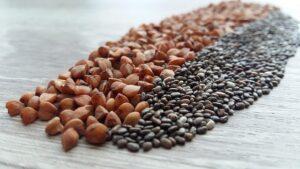
“Thanks to the support incentives of the European Union and the new five-year domestic support program launched in 2025, the Hungarian organic sector is developing dynamically, the size of the areas covered by certification has already stably exceeded 300 thousand hectares, while we are among the catching-up member states in the European Union with our 6.3% organic area ratio compared to the EU average of 10.5%. However, in terms of fruit plantations, Hungary is above the EU average”, explained Dr. Péter Mikó, Chairman of the Organic Seed Working Group of the Hungarian Seed Association. As he explained: in our country, meadows and pastures dominate among organic areas (55%). This is followed by arable land (36%), then dynamically growing organic fruit plantations (7%). The average domestic organic farm is smaller in size (12 ha) than the European average, but more than half of the organic areas are managed by farms larger than 300 hectares. Among arable organic crops, alfalfa and other green fodder crops, cereals (wheat, rye, barley), corn and sunflowers, and peas are the most significant crops. Among vegetables, root vegetables – onions, beets, potatoes – and popular kitchen garden species, tomatoes, peppers, and squashes and salads are the best-selling. Among fruits, organic farmers prefer to work with species that are most resistant to diseases (e.g. apples, sour cherries, elderberries). The main cereals are processed in the domestic food industry, and sunflowers and soybeans, as well as peas, alfalfa, and corn, are also significant among oilseed crops. Plants that do not require processing are sold primarily on the domestic fresh market, while most of the cereals and industrial crops that ensure mass production are exported.
What do the consumer, the producer, and the environment gain?
Certified organic products provide consumers with food with high nutritional value and free from chemical residues. Producers also preserve the fertility of their soil in the long term, while avoiding chemical inputs and developing a more sustainable farming system. Organic farming strengthens biodiversity, reduces water pollution and the ecological footprint of agriculture, and the sustainable soil management used here produces a higher organic matter content in the soils. The growth of the domestic organic sector continues to be hampered by the underdevelopment of the processing industry, the fluctuating market and price competition with imported products. The manual and mechanical labor requirements in organic farming are much higher, while yields are often lower, which puts serious pressure on farmers’ profitability. The area used for organic seed production is currently small, as farmers use almost exclusively conventional undressed seeds in addition to controlled seeds. Not only farmers, but also seed distributors could improve this situation: by diversifying the supply side, farmers have a greater chance of finding the organic seed of the desired variety. The variety supply is currently considered scarce even for those species that have been regularly found in the Organic Seed Database operated by NÉBIH for years. Research on organic farming in our country has shown extraordinary development in the past decade. During research and breeding, answers are sought to the real needs and challenges of organic farmers, such as selecting and breeding varieties that adapt to their growing conditions.
The Organic Seed Working Group of the association has been working for more than half a decade to improve the use of organic seeds and encourage the use of metal-sealed seeds. The working group has two goals: on the one hand, to encourage organic farmers to use metal-sealed organic seeds, and on the other hand, to involve seed companies that primarily produce for export in the domestic organic seed distribution. The greatest achievement of the VSZT Organic Seed Working Group is that it launched the organic post-registration variety tests, the results of which are widely published year after year, in order to encourage farmers to make conscious variety choices. These experiments, coordinated by ÖMKi, started with winter cereals (wheat, spelt; more recently triticale and barley) in the fall of 2020, in addition to which there have been spring-sown sweet corn, soybean experiments and winter pea experiments in several years. As a result of the stimulating effect of the work of the working group, domestic breeding has also found its future vision in the sector, and two organically bred winter wheat candidate varieties were announced this year.
A decade left for the organic transition
“The domestic Eco Action Plan represents a sufficient incentive to double the share of our organic areas by 2030, which will also entail an increase in the demand for seeds. In addition, we only have 10 years until 2036, when the mandatory use of organic seeds in the organic sector will be introduced – the possibility of applying for a derogation to use unbleached conventional seeds will be eliminated – therefore a dynamic recovery of the organic seed sector can be forecasted”, emphasized Dr. Péter Mikó. According to the chairman of the working group, it is also important to improve the technology of seed production by using precision farming, regenerative farming, and sensor-based forecasting systems. In addition to the cultivation of newer, eco-friendly varieties, the development of seed processing can make production more cost-effective and reduce the premium compared to conventional seeds, and together these would provide a significant incentive for the increase in the use of organic seeds.
Seed Association
Related news
Agricultural loan portfolio decreased in 2025
🎧 Hallgasd a cikket: Lejátszás Szünet Folytatás Leállítás Nyelv: Auto…
Read more >
At the initiative of Hungary, another EU source will help farmers affected by last year’s drought
🎧 Hallgasd a cikket: Lejátszás Szünet Folytatás Leállítás Nyelv: Auto…
Read more >
Strengthening the pig sector continues with support for breeding sow farmers
🎧 Hallgasd a cikket: Lejátszás Szünet Folytatás Leállítás Nyelv: Auto…
Read more >Related news

Oat-based “feta” wins the cheese innovation competition of Lidl Germany and ProVeg
🎧 Hallgasd a cikket: Lejátszás Szünet Folytatás Leállítás Nyelv: Auto…
Read more >
Finger Food Experience
🎧 Hallgasd a cikket: Lejátszás Szünet Folytatás Leállítás Nyelv: Auto…
Read more >
KPMG: Easter boom: the season is exploding for families, retail and the chocolate industry
🎧 Hallgasd a cikket: Lejátszás Szünet Folytatás Leállítás Nyelv: Auto…
Read more >
