
Large Generation Z research conducted: They are sensitive to overload

An uncertain future, conscious young people, and the question of how the world of education and work is preparing for it.
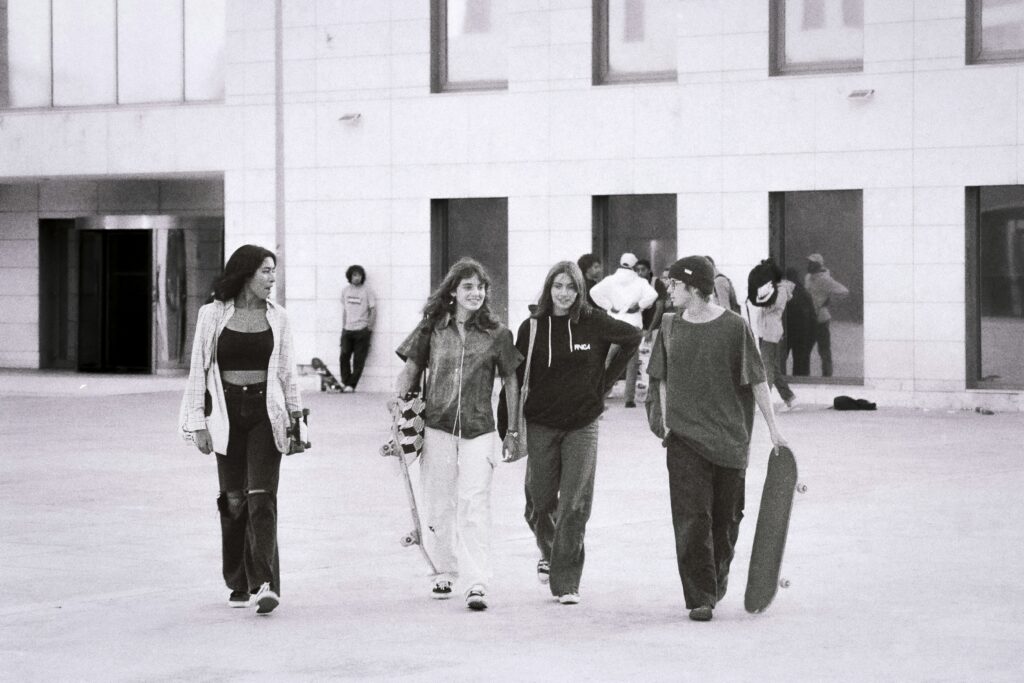 Uncertainty is almost a natural state in the lives of today’s young people. According to a recent study examining the future vision of Generation Z, conducted by graduate sociology students at the Károli Gáspár Reformed University, housing, political and economic uncertainty is an everyday experience for young people aged 18–25, while they increasingly seek security, predictability and mental well-being at work.
These trends not only affect young people directly, but also the leaders who are shaping the next generation today in schools and companies. But are these two worlds talking to each other? And do those responsible for the education and employment of young people learn from each other?
This is the question that the new initiative of the Heroes’ Space Foundation, the Heroes’ Space Tandem Program, seeks to answer, pairing school principals and business leaders to help each other make leadership decisions related to the next generation in a structured, honest dialogue. At the business breakfast organized by the Hősök Tere Company, social psychologist Zsuzsa Szvetelszky presented the results of the latest research on Generation Z, which made it clear: young people are entering the threshold of adult life as a more uncertain but more conscious generation, and this requires a new kind of leadership thinking in both education and the business sphere.
According to the research, young people’s attitude towards the future is strongly determined by financial and existential uncertainty, housing difficulties, the unpredictability of the political environment and climate change. As a result of all this, they are more cautious and less optimistic than previous generations, but at the same time they think much more consciously about their own life path.
For Generation Z, autonomy and self-realization, as well as security, stability and mental well-being, are simultaneously a high value. Young people take a pragmatic approach to learning and career: in their decisions about further education, their own interests, expected income and the fit between their individual abilities are more important than the prestige of the university, and in many of them, a degree is more of a tool than an end in itself.
When it comes to employment, salary, predictable operations, flexible work schedules and a supportive work environment have become primary considerations. They are sensitive to overload and do not rigidly insist on being employed in their studied profession. Caution also prevails when it comes to starting a family: the majority only consider this step realistic if stable living conditions are provided.
However, the dialogue about the future has narrowed: young people primarily discuss their plans with their friends and family members, while the role of teachers and mentors is declining, which indicates a decrease in formal guidance and a growing need for personal support. Digitalization is fundamentally evaluated positively – mainly due to information acquisition, administration and time efficiency – while they are politically informed, but distrustful of traditional institutions and prefer issue-based, online or alternative forms of social participation.
Overall, the picture emerges of a generation that is simultaneously burdened with uncertainties and a strong internal compass. And that expects new types of answers from the world of education and work.
Related news

Although the business benefits of using AI are clearly visible, half of companies are still lagging behind
🎧 Hallgasd a cikket: Lejátszás Szünet Folytatás Leállítás Nyelv: Auto…
Read more >
Recent research examined young people’s career choices
🎧 Hallgasd a cikket: Lejátszás Szünet Folytatás Leállítás Nyelv: Auto…
Read more >
Profession.hu: It takes less time to find a job today than a year ago
🎧 Hallgasd a cikket: Lejátszás Szünet Folytatás Leállítás Nyelv: Auto…
Read more >Related news
Oat-based “feta” wins the cheese innovation competition of Lidl Germany and ProVeg
🎧 Hallgasd a cikket: Lejátszás Szünet Folytatás Leállítás Nyelv: Auto…
Read more >
The horticulture of the future is being built in Szentes
🎧 Hallgasd a cikket: Lejátszás Szünet Folytatás Leállítás Nyelv: Auto…
Read more >
Finger Food Experience
🎧 Hallgasd a cikket: Lejátszás Szünet Folytatás Leállítás Nyelv: Auto…
Read more >
