
MATE researchers have found a solution for the utilization of mycotoxin-contaminated corn

In recent years, due to the increasingly intensive spread of fungal pathogens (e.g. Aspergillus species) due to climate change, corn production has faced not only quantitative but also qualitative problems. Where plant protection is not implemented properly, aflatoxin B1 concentrations in grains that significantly exceed the permitted limit values can occur. Researchers at the Hungarian University of Agricultural and Life Sciences (MATE) have been looking for a solution to the problem plaguing agriculture that can also be integrated into circular farming.
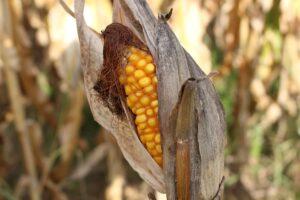
(Photo: Pixabay)
Based on the results of a previous MATE proof of concept application, the staff of the MATE Institute of Aquaculture and Environmental Safety investigated how to utilize batches contaminated with fungal toxins according to their original function, as feed. As is known, aflatoxin B1 is one of the strongest natural carcinogens, which is dangerous for both humans and farm animals, therefore contaminated grain foods can no longer be used for food or feed purposes, i.e. they become waste. The MATE researchers started their study from the assumption that although contaminated crops can no longer be used in the feeding of classic farm animals, some insects that can be used as feed are specifically resistant to the toxin. In their studies, the institute’s researchers utilized contaminated corn with the help of the larvae of the mealworm (Tenebrio molitor): they prepared insect meal from larvae raised on toxin-contaminated corn, which was used to feed carp fry. Based on the analytical studies, the aflatoxin B1 content of insects raised on contaminated corn remained well below the relevant contamination limit, while it proved to be an excellent feed ingredient due to its high fat and protein content. Based on the study, no relevant differences were observed in either mortality or fish size in the individual groups when feeding carp fry, regardless of whether the insect meal they consumed was raised on corn contaminated with fungal toxins.
The researchers analyzed not only the efficiency of the feed, but also the aflatoxin content and toxicity of the residual (frass) left after the insects
The results of the research are outstanding because they may offer a solution to a problem currently plaguing Hungarian agriculture that can also be integrated into circular farming. Detailed information about the experiments can be found in the article published in the scientific journal International Journal of Molecular Sciences.
MATE
Related news

The horticulture of the future is being built in Szentes
🎧 Hallgasd a cikket: Lejátszás Szünet Folytatás Leállítás Nyelv: Auto…
Read more >
The cereals commodity group accounted for the majority of Hungary’s agricultural balance in 2025
🎧 Hallgasd a cikket: Lejátszás Szünet Folytatás Leállítás Nyelv: Auto…
Read more >
Every penny counts – Nébih launches new public thematic subpage to curb grapevine golden yellow disease
🎧 Hallgasd a cikket: Lejátszás Szünet Folytatás Leállítás Nyelv: Auto…
Read more >Related news

Oat-based “feta” wins the cheese innovation competition of Lidl Germany and ProVeg
🎧 Hallgasd a cikket: Lejátszás Szünet Folytatás Leállítás Nyelv: Auto…
Read more >
The horticulture of the future is being built in Szentes
🎧 Hallgasd a cikket: Lejátszás Szünet Folytatás Leállítás Nyelv: Auto…
Read more >
Finger Food Experience
🎧 Hallgasd a cikket: Lejátszás Szünet Folytatás Leállítás Nyelv: Auto…
Read more >
