
MBH AgrárTrend Index: Hungarian agriculture faces significant changes in 2026

Due to the serious challenges experienced in recent years and at the beginning of 2026, the Hungarian agriculture sector is facing significant changes. In addition to the essential change in attitude, the financial decisions being made now may also set new directions in increasing the efficiency and competitiveness of the sector, pointed out the experts of MBH Bank’s Agricultural and Food Business Unit, presenting the bank’s latest quarterly analysis. Agriculture is currently facing difficulties mainly in the milk and pork markets, and in the longer term it must also find a response to the negative effects of climate change, although the current colder, wetter winter weather has had a positive impact on the prospects of arable crop growers.
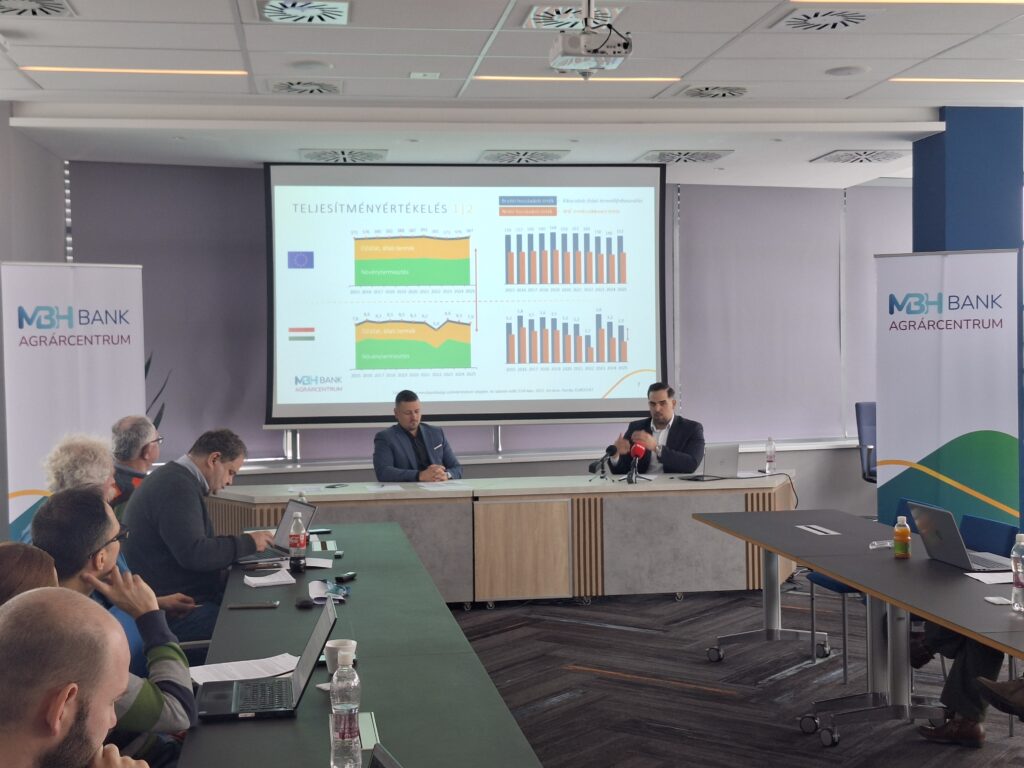
“Agriculture is a slowly changing sector, but the market challenges of recent years and the negative effects of climate change have made it clear that uncertainties can become permanent, which has a significant impact on the production, planning and financial environment of agricultural enterprises. In order for the sector to be competitive in today’s rapidly changing world, structural changes must take place”
– said Dávid Hollósi, Managing Director of the Agricultural and Food Business Unit of MBH Bank, highlighting that as many competitive developments as possible are needed to achieve this.
“The implementation of the Common Agricultural Policy investment program, which is now starting, affects all sectors, from arable crop production to animal husbandry and horticulture to the food industry, and provides opportunities and resources that may never return to increase the efficiency of Hungarian agriculture. Minimizing risks – through business and strategic thinking, as well as the financial decisions being made now – can give a new direction to the development of the entire sector”
– emphasized Dávid Hollósi. He added that, as buyers and shapers of foreign trade relations, large food companies will determine the direction of agricultural production in the long term.
The picture in Hungarian agriculture is mixed at the beginning of 2026
The MBH AgrárTrend Index, an agri-food industry confidence indicator prepared based on the situation assessment of clients, inter-professional organizations and the bank’s analysts and preceding official statistics, showed 31.9 points on a 48-point scale at the beginning of 2026, thus moving slightly further away from the 35 points considered the equilibrium level: after the quarter ending in September last year, it decreased by a further 0.4 points in the last three months of 2025. The value was last at a similarly low level at the end of 2023, but then it was mainly due to the weak price level in the crop market, while now the decline was primarily due to challenges in the milk and pork markets.
According to Csaba Héjja, strategic analyst at MBH Bank’s Agricultural and Food Business Unit, the two major animal product sectors are experiencing difficulties in sales, but in addition to producers, the market environment is currently less favorable for processors as well. The crop-growing sectors, however, are somewhat more optimistic, primarily due to the fact that the winter weather has been favorable for them so far, so overall there is even an improvement compared to the post-harvest period.
Arable crop growers can count on a better harvest
This year’s colder, wetter weather had a positive effect on crop expectations in arable crop production, which forms the backbone of Hungarian agricultural output, but due to the high supply level, prices are at a moderate level. According to the bank’s survey, the prices of input materials have only increased slightly, and in some cases they have stagnated, which is closely related to the strong exchange rate of the forint. The area of autumn-sown crops continued to grow following the trends experienced in previous years, while in the case of spring-sown crops, the main question is whether the sunflower’s rise will continue or whether favorable winter weather will increase confidence in corn. “The fate of arable crop production and the product paths based on it will actually be decided in the period from April to June,” said Csaba Héjja, adding that due to the less favorable price environment, one can rather rely on a good harvest. At the same time, despite the snowfall, the soil is lacking a significant amount of water, 75 millimeters across the entire country.
Poultry and eggs are in a good position, the milk market may stabilize towards the end of the year
On the animal product front, poultry had a strong year in 2025 despite the bird flu epidemic, and the sector’s prospects are good for broilers and turkeys, and the waterfowl sectors also had a more favorable year than in previous years. 2025 was also a successful year for egg producers, and some price drops were only visible at the beginning of the year due to the seasonal pattern.
Related news

Turkish food company Dogus Cay is establishing its first plant outside Turkey in Orosháza, creating 440 jobs
🎧 Hallgasd a cikket: Lejátszás Szünet Folytatás Leállítás Nyelv: Auto…
Read more >
Turkish food company Dogus Cay is establishing its first plant outside Turkey in Orosháza, creating 440 jobs
🎧 Hallgasd a cikket: Lejátszás Szünet Folytatás Leállítás Nyelv: Auto…
Read more >
Deteriorating foreign trade balance: causes and prospects
🎧 Hallgasd a cikket: Lejátszás Szünet Folytatás Leállítás Nyelv: Auto…
Read more >Related news

EY: The EU customs system is undergoing fundamental changes: the reform will affect many companies
🎧 Hallgasd a cikket: Lejátszás Szünet Folytatás Leállítás Nyelv: Auto…
Read more >
A single courier can save up to 9 liters of fuel per day – this is how online ordering changes fuel consumption
🎧 Hallgasd a cikket: Lejátszás Szünet Folytatás Leállítás Nyelv: Auto…
Read more >
Shoppers loved chocolate bars
🎧 Hallgasd a cikket: Lejátszás Szünet Folytatás Leállítás Nyelv: Auto…
Read more >
