
It turns out which online food ordering platform websites are the most sustainable

Hungarian startup Carbon.Crane, which focuses on reducing online carbon footprints, conducted seasonal research: it examined the eight most popular food ordering websites from a sustainability perspective. Their measurements reveal the energy and water requirements of the well-known platforms, and the differences are obvious: while a click on one website requires only a few drops of water, the water requirement measured on another could be a toast.
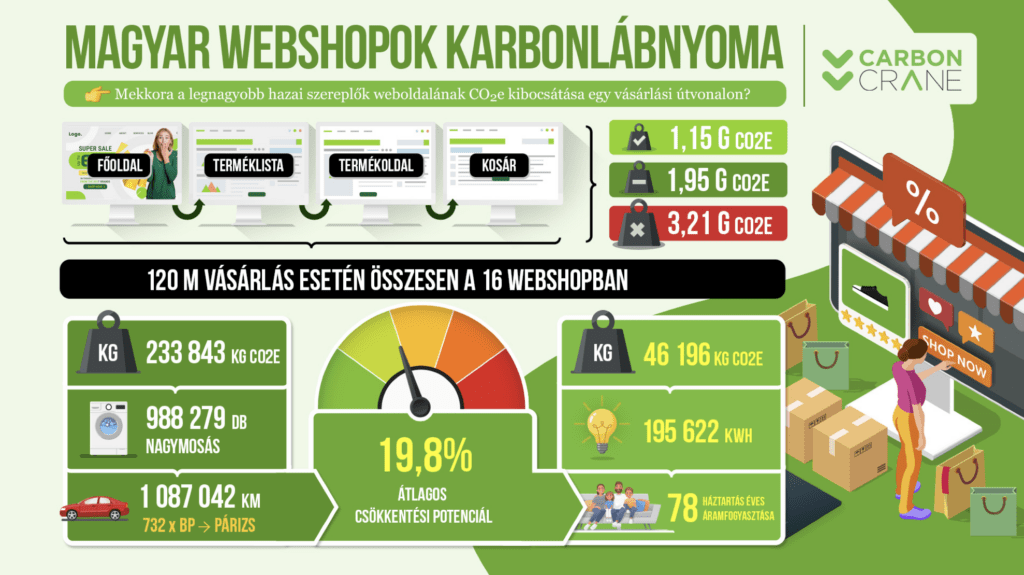
There can be up to a five-fold difference between individual companies
During the Christmas preparations, every minute counts, so it is not surprising that online shopping is even more popular during this period. Although it is of course a great help that we can save even several hours with home delivery, it is important to highlight that all internet activities involve emissions: in addition to the carbon footprint, the energy and water requirements of servers are also not negligible. The Carbon.Crane team aims to draw the attention of both service providers and consumers to this phenomenon, thereby facilitating optimization on the corporate side and making the most environmentally conscious decision for users.
During the measurement, the main page, seasonal product list, and ten different product pages of the eight most popular platforms were examined. Seasonality and variety also played a role in the selection of products: both basic foods and premium category products were included in the research. In each case, the measurement makers followed the same route, so they got the following result for the carbon footprint:
- Kifli: 15.75 grams
- Ecofamily: 20.81 grams
- Auchan: 20.95 grams
- Foodora: 30.77 grams
- Wolt: 33.76 grams
- GRoby Online: 34.36 grams
- Aldi: 34.55 grams
- Tesco: 73.00 grams
The numbers show that almost five (4.63) sample purchases could be ordered before we emit as much carbon as we do with a single purchase on the Tesco platform.

(Not) a drop in the ocean
Few people know that websites also need water and energy, since the content visible in the online space is invariably run on physical server parks, and the computers located there need to be operated and cooled. Therefore, it is important to emphasize that although there is some difference, the carbon, energy and water footprint of websites almost go hand in hand: the most polluting sites consume an exceptionally high amount of energy and water, while the best optimized ones minimize both. Despite the fact that we are talking about grams and milliliters in terms of emissions, these are not negligible quantities, since, for example, last year, almost six tons of confectionery sugar were purchased on the Kifli site alone before Christmas. 1
The figures prove, among other things, that the same shopping on the Tesco website requires three times more water (38.38 milliliters) than on Ecofamily (11.51 ml). The reasons for the huge differences in all indicators are to be found in the optimization and background systems. At Tesco, the scripts running in the background are responsible for 80% of the carbon emissions, and on the main seasonal pages during this period, large GIFs are used, which increases the environmental load several times over, even with the otherwise relatively well-optimized product pages. However, if anything, optimizing the main pages would be really important, since almost all users start their purchases from here. In contrast, Kifli, Wolt and Auchan can serve as an example to industry players, as these three websites were the most outstanding in terms of optimization. Interestingly, Tesco’s other pages are also well optimized and have a relatively small footprint: out of the 73-gram shopping path, the main and seasonal pages are responsible for 52 grams of emissions.

Related news
We gained 4,500 years back in six years – this is how Kifli.hu changed shopping
🎧 Hallgasd a cikket: Lejátszás Szünet Folytatás Leállítás Nyelv: Auto…
Read more >
In addition to regular food order, the renewed Wolt app also facilitates shopping
🎧 Hallgasd a cikket: Lejátszás Szünet Folytatás Leállítás Nyelv: Auto…
Read more >
Milk vs. plant-based drinks: big differences in carbon footprint and water requirements
🎧 Hallgasd a cikket: Lejátszás Szünet Folytatás Leállítás Nyelv: Auto…
Read more >Related news

What do we spread on our bread? Young people prefer butter, older people prefer margarine
🎧 Hallgasd a cikket: Lejátszás Szünet Folytatás Leállítás Nyelv: Auto…
Read more >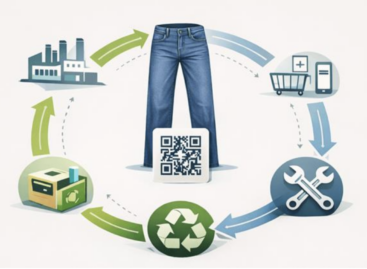
Products in the EU will receive a digital passport
🎧 Hallgasd a cikket: Lejátszás Szünet Folytatás Leállítás Nyelv: Auto…
Read more >
The Hungarian sports drink manufacturer has launched three new functional drinks
🎧 Hallgasd a cikket: Lejátszás Szünet Folytatás Leállítás Nyelv: Auto…
Read more >
