
Hard clearance vs. Brand outlet: A closer look at Lidl’s international non food outlet formats
Non-food is becoming a strategic pillar in Lidl’s store concept. Outlet formats reveal how differently Lidl handles overstock and brand perception. Germany and Czechia illustrate two contrasting paths from clearance to concept.

Sebastian Rennack
international retail analyst
Aletos Retail
Lidl is turning non-food from a tactical clearance problem into a strategic lever, testing radically different outlet models in Germany and the Czech Republic. The discounter’s store concept has evolved beyond food toward a stronger emphasis on non-food logic. Parkside private label ranges have become the base for a third non food axis in the store layout, making seasonal goods a visible element of the retailer’s brand perception. Other non food worlds such as Crivit for sporting goods and Livarno Home for household goods are in the making.
Seasonality remains a core mechanic to drive footfall, creating strong magnetism while simultaneously increasing forecasting complexity and residual stock risk. This strategic sharpening has gained importance as Lidl intensifies its challenge to Aldi’s price leadership. Aldi’s withdrawal from online non food in Germany and tests of a less non-food-driven store concept in Switzerland support the importance of non food as a strategic pillar for the Schwarz discounter. At the same time, pressure from specialized non food discounters such as Action, Tedi, and Woolworth is increasing, with many of these locations operating in close proximity to Lidl stores.
Residual stock handling has therefore become a strategic issue for Lidl, especially given the limited in-store flexibility in Germany, where a large share of the estate consists of older, smaller legacy stores. The response to overstock varies by country, as illustrated by two non food outlet concepts we visited on the ground.
In Germany, Lidl applies a hard-clearance logic. In Berlin Neukölln, a permanent non food outlet operates in one of the lowest-income districts of the capital. What started as time-limited weekend clearance tied to expiring lease agreements has evolved into a recurring format. Since October last year the store opens on Fridays and Saturdays, and the in-store setup prioritizes speed, volume, and cost efficiency over branding considerations.
Lidl in the Czech Republic follows a different approach – emphasizing shopping experience. In Olomouc, Lidl positioned its outlet within a retail park, after the first outlet opened at the beginning of 2025 in Prague and moved here middle of the year. The outlet concept offers a noticeably higher level of interior appeal and an atmosphere closer to a branded outlet store. Instead of permanence, the model relies on rotation, with locations so far changing every half year and a new opening planned for Ostrava in spring. Initial footfall reportedly reached around 10,000 customers per week before stabilizing, highlighting the declining novelty effect in the absence of weekly in-out rotation. Relocation itself becomes the impulse trigger.
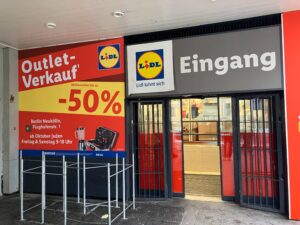
Lidl’s only semi-permanent German outlet in Berlin-Neukölln operates exclusively on Fridays and Saturdays
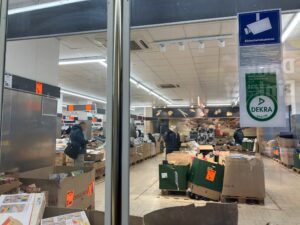
The outlet occupies a former Lidl food discounter with an active rental contract
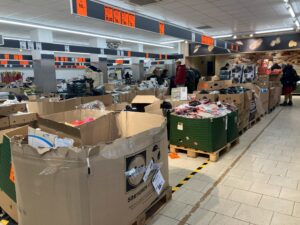
Overstock is merchandised in a classic bargain-bin setup on mono pallets
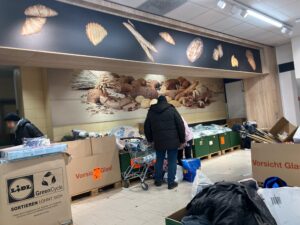
Wall elements still remind of the former in-store bakery department
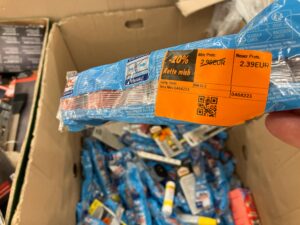
Individual items are marked down using expiry-style reduction stickers
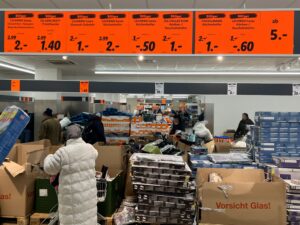
Deep discounts and round pricing draw shopper traffic toward the back of the store
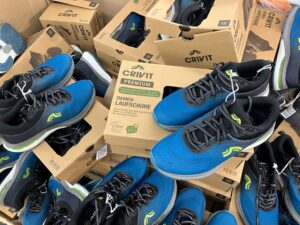
Residual stock of newly launched private label Crivit premium sports shoes appear here
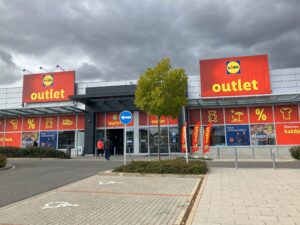
In the Czech Republic, Lidl’s Olomouc outlet is located in a retail park with clear exterior ‘Lidl Outlet’ branding and operates throughout the week
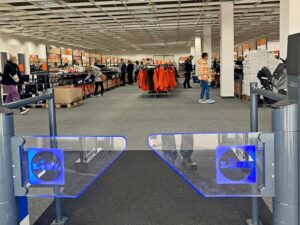
The Czech outlet features a modern, carpeted interior that creates a more upscale, brand-outlet-like experience
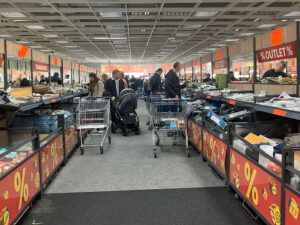
Merchandise is presented on standard Lidl non food promotional tables
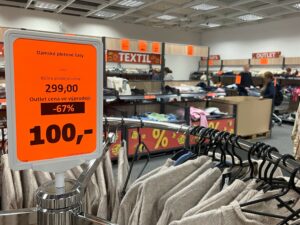
Textiles account for the majority of the assortment
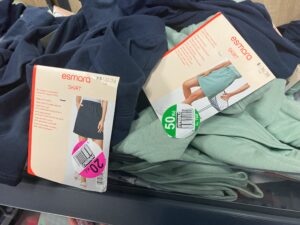
Alongside clearance pricing, selected items carry standardized markdown stickers with dedicated barcodes and PLUs
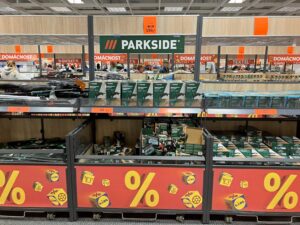
A separate area is dedicated to carryover seasonal Parkside products
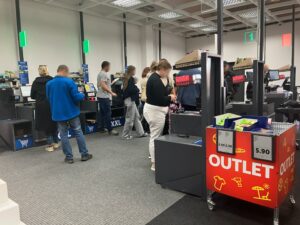
The outlet combines self-checkouts with traditional cash desks to speed up the checkout process
Related news
Lidl Romania To Accelerate Expansion With €285m Investment
🎧 Hallgasd a cikket: Lejátszás Szünet Folytatás Leállítás Nyelv: Auto…
Read more >
Lidl’s mobile store is on the road again
🎧 Hallgasd a cikket: Lejátszás Szünet Folytatás Leállítás Nyelv: Auto…
Read more >
Record amount of ham sold at Easter: Lidl sales increased by nearly 20 percent last year
🎧 Hallgasd a cikket: Lejátszás Szünet Folytatás Leállítás Nyelv: Auto…
Read more >Related news
István Nagy: the government’s goal is to further strengthen the competitiveness of Hungarian agriculture and place the future of domestic agriculture on a solid foundation
🎧 Hallgasd a cikket: Lejátszás Szünet Folytatás Leállítás Nyelv: Auto…
Read more >
Good Friday is in a week: the Easter shopping season has begun
🎧 Hallgasd a cikket: Lejátszás Szünet Folytatás Leállítás Nyelv: Auto…
Read more >
ENAG Innovation BootCamp for the Development of Women Agribusiness Entrepreneurs in Hungary Successfully Ended
🎧 Hallgasd a cikket: Lejátszás Szünet Folytatás Leállítás Nyelv: Auto…
Read more >
