
How to protect foods that require refrigeration during a power outage

The National Food Chain Safety Authority (Nébih) Education Program provides useful practical advice for protecting food requiring refrigeration during power outages and reducing food safety risks. Power outages can occur at any time, whether due to a storm, a technical failure, or scheduled maintenance by the service provider, so it is worth knowing what the most practical steps are in these situations.
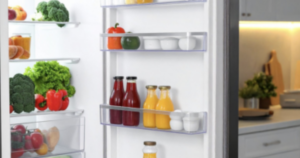 With some simple preparations and following the appropriate rules, you can often prevent food stored in the refrigerator or freezer from having to be thrown out due to a power outage. It is useful to keep a thermometer in the refrigerator to accurately monitor the internal temperature. It is worth keeping some ice packs in the freezer, which can be moved to the refrigerator if necessary in the event of a power outage, to help maintain a lower temperature. It is advisable to store food in a block in the freezer, close to each other, so that it warms up more slowly. If a power outage is expected in advance, it is recommended to prepare fully charged water bottles or ice packs in the freezer section, which also contribute to keeping things cold.
The most important rule during a power outage is to open the refrigerator and freezer doors only when absolutely necessary, so that the cold air stays inside longer. It is also worth noting the time the power outage began. A general guideline is the so-called “4-hour rule”: a refrigerator with the door closed can maintain the correct temperature range for about four hours. Freezers can keep things cold for even longer: a fully loaded freezer can maintain the correct temperature for up to 48 hours, while a half-loaded freezer can maintain the correct temperature for about 24 hours.
Once the power is restored, the first step is to check the temperature of the refrigerator. If it remains below 4°C, the food is safe to eat. However, if the temperature has risen above 4°C and has been this way for at least two hours, the food may be at risk.
An important rule is to never judge the safety of food by tasting it, especially for perishable products. If you notice any unusual odor, smell or discoloration, the safest solution is not to eat the food. Do not refreeze thawed food, but use it as soon as possible.
By being prepared and following basic rules, you can keep your refrigerated food safer even in the event of a power outage. This will not only reduce the risk of foodborne illness, but also reduce food waste.
Related news

István Nagy: the Ministry of Agriculture has started the preparation of a new state origin certification mark
🎧 Hallgasd a cikket: Lejátszás Szünet Folytatás Leállítás Nyelv: Auto…
Read more >
Important deadline: annual nitrate data reporting due by March 31
🎧 Hallgasd a cikket: Lejátszás Szünet Folytatás Leállítás Nyelv: Auto…
Read more >
The bible of food safety
🎧 Hallgasd a cikket: Lejátszás Szünet Folytatás Leállítás Nyelv: Auto…
Read more >Related news

TUTTI turns 40 – a defining Hungarian family company with development spanning generation
🎧 Hallgasd a cikket: Lejátszás Szünet Folytatás Leállítás Nyelv: Auto…
Read more >
The message of Hungarian business leaders for 2026: Consolidation instead of revolution
🎧 Hallgasd a cikket: Lejátszás Szünet Folytatás Leállítás Nyelv: Auto…
Read more >
ALDI will be on Sziget again this year
🎧 Hallgasd a cikket: Lejátszás Szünet Folytatás Leállítás Nyelv: Auto…
Read more >
