
Investment dumping is coming in the food industry

Hundreds of billions of forints worth of value-adding investments are underway in the domestic food industry. The process is also being supported by the advance payments and preferential loans available for CAP subsidies. The future of the Common Agricultural Policy remains uncertain, which is why the National Chamber of Agriculture recommends that food processors take advantage of the opportunities provided by the subsidies and implement the planned investments in this cycle.
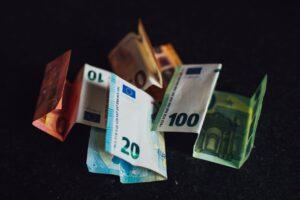 The assessment of food industry applications is taking place at an accelerated pace; in the case of the call for proposals for smaller-scale investments, which was announced with a budget of approximately 50 billion forints, all applications that meet the formal and eligibility requirements will be given a positive assessment. While in the case of complex food industry tenders announced with a budget of 150 billion forints, with a certain degree of selection, but with the reallocation of funds, a much larger amount of support is available – it was said at the meeting of the Food Industry Department of the National Chamber of Agriculture. The aim is to support those tenders that have a real, long-term and sustainable food industry development intention behind them, and the winning enterprises are able to implement the planned investment.
So far, 223 projects have received support contracts in the complex tender in the amount of 254 billion forints, and further support decisions are expected to be made in the coming months, thanks to which food industry developments can be implemented with approximately 500 billion forints of support. In the case of the small food industry tender, support decisions were made in 601 cases out of 860 applications submitted. A period of 24-36 months is available for implementation, so Hungary’s largest food industry development program to date can be implemented by December 2029.
The call for proposals entitled Support for the Development of Food Industry and Processing Plants, which opened on November 27 of this year and supports smaller-scale investments, also serves the development of the sector. The criteria for this call have also changed, the scope of eligible activities has changed, and the amount of support that can be awarded has been increased to HUF 100 million. Support decisions are expected in the spring of next year regarding the submitted applications.
The implementation of food industry investments is also helped by the fact that, thanks to changes in EU regulations, it has become possible to pay advances at a higher rate, and in part in a simplified manner. Thus, the beneficiaries can receive the first 25 percent of the amount awarded without providing collateral, while the winners can access the second 25% advance amount against a bank guarantee. In addition, while previously the client had to present proof of self-sufficiency when applying for the advance, this is no longer necessary. Since bank financing can be solved on a market basis with high-interest loans, the government has put together an interest-subsidized loan structure: if someone has a winning KAP application, they can take out a preferential, forint-based loan, which can be used up to 10 percent of the support intensity of the project they want to implement.
The current KAP plan lasts until December 31, 2027, after which there are 2 more years available for the implementation and settlement of projects. Our country has initiated the extension of the settlement period by one year until 2030, so that an additional year would be available for the implementation of projects and final settlements.
However, the next support cycle is still surrounded by great uncertainty, as according to the current plans, the food industry would practically be excluded from the scope of the Common Agricultural Policy and would not be able to benefit from the fund’s support. The National Chamber of Agriculture therefore advises all food industry players who have a winning application to implement their planned investment, as it is not certain that they will be able to apply for support for developments in the next cycle. NAK will of course continue to fight in all European Union forums to preserve the two-pillar system of the CAP and to prove to EU decision-makers that the food industry and agriculture cannot be separated: support for the sector can be provided much better if it remains within the CAP.
The department meeting also discussed the expected legislative changes affecting the food industry, including the EUDR regulation, the reduction of nitrite and nitrate limits, the removal of silver from the list of additives, the amendment of breakfast directives and the mandatory removal of smoke flavourings.
Related news
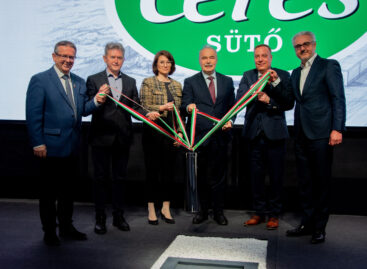
An outstanding investment project is launched in Hungary, also at the Central and Eastern European level
🎧 Hallgasd a cikket: Lejátszás Szünet Folytatás Leállítás Nyelv: Auto…
Read more >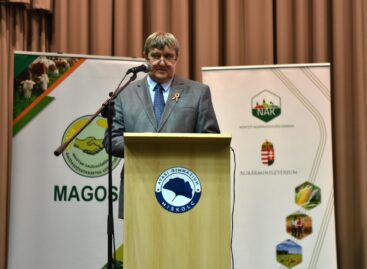
Supporting farmers is the foundation of Hungarian agricultural policy
🎧 Hallgasd a cikket: Lejátszás Szünet Folytatás Leállítás Nyelv: Auto…
Read more >
NAK announces digitalization competition for food producers and traders
🎧 Hallgasd a cikket: Lejátszás Szünet Folytatás Leállítás Nyelv: Auto…
Read more >Related news
What do we spread on our bread? Young people prefer butter, older people prefer margarine
🎧 Hallgasd a cikket: Lejátszás Szünet Folytatás Leállítás Nyelv: Auto…
Read more >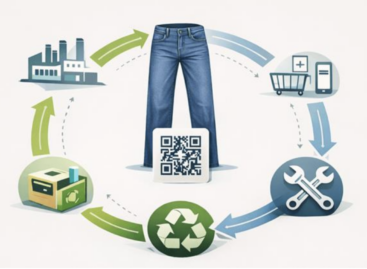
Products in the EU will receive a digital passport
🎧 Hallgasd a cikket: Lejátszás Szünet Folytatás Leállítás Nyelv: Auto…
Read more >
The Hungarian sports drink manufacturer has launched three new functional drinks
🎧 Hallgasd a cikket: Lejátszás Szünet Folytatás Leállítás Nyelv: Auto…
Read more >
