
Hungarians view smart homes as an investment – MediaMarkt research

We can forget the image that the smart home is a toy for the rich, where the electricity is turned on by clapping. By 2026, technology will be pure mathematics for the Hungarian population: how to cut down on utility bills and gain 30 minutes of free time a day? According to recent, representative research by MediaMarkt, the market has reached a watershed: a significant portion of Hungarians no longer buy gadgets, but solutions, and when it comes to reducing bills, they are willing to reach deep into their pockets.
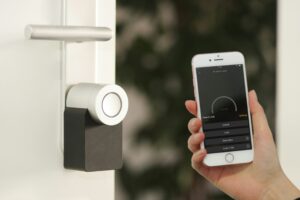 If one word had to describe the domestic smart home market at the beginning of 2026, it would be awareness. While mood lighting and musical refrigerators were the hits a few years ago, priorities have now shifted. According to a survey conducted among the Hungarian population aged 18-59, the largest proportion of respondents (28.8%) would buy smart devices to save energy.
Money is not an obstacle if it pays off
Although Hungarian buyers are price-sensitive, the research revealed a surprising turn of events: we are happy to spend if it is a rational investment.
- 37 percent of those surveyed would spend more than 50 thousand forints on a smart device that reduces energy costs without thinking.
- Every sixth Hungarian (15%) would also cross the psychological threshold of 100 thousand forints if the return on investment.
“We are seeing a change in perspective: customers no longer look at the price tag alone, but at the cost over the entire life cycle. A smart heating control or an energy-saving washing machine that can be controlled from an app is no longer a luxury item, but a means of protecting the household budget. The current cold weather has only reinforced this: those who have been putting off replacing their thermostats will now definitely think about why precision control is worth it” – said Gábor Szilágyi, Managing Director of MediaMarkt.
However, there is still a gap between intention and reality: although everyone would like to save money, only 20 percent of households currently have smart heating control. The potential is therefore enormous.
We are not afraid of technology, but of installation
Why doesn’t everyone get smart right away? The answer is prosaic: fear of the new. The research showed that nearly a quarter of Hungarians (23%) do not dare or do not want to install these devices on their own. They are afraid that they will break something, the system is not compatible, or they simply do not have time to mess with cables. This is a clear message for the market: a boxed product is no longer enough, the service (setup, consulting) has become at least as important as the hardware itself.
Generation Z needs a gamer cave, grandma needs a robot helper
One of the most entertaining results of the research is how different age groups imagine the “perfect” smart home.
- Twenty-year-olds (Gen Z): For them, a smart home is about entertainment. Nearly 30 percent of them dream of a high-end gaming room or home theater system. They are the ones who are driven by comfort and time-saving.
- Seniors (60+): They see technology as a “caring helper.” Nearly 40 percent of the age group would like to have a fully autonomous “robot maid” that would take all the burden of housework off their shoulders.
Not only our homes, but also our bodies are getting smarter
The wearable devices market has also reached a new level: we no longer only count steps, but also change our lifestyle with the help of gadgets. According to the research, for those who wear a smart device (watch, bracelet), half (49%) of those who wear it have a specific impact on their lives:
- 21% reported that the data has helped them start exercising regularly or sleeping better.
- And for 28%, the device on their wrist is a daily motivation.
And what’s the next big thing? The smart ring. Although most people are only just getting to know the concept, it is already starting to “explode” among young people: nearly 20 percent of 16-29 year-olds already want it, because they consider it more discreet and convenient than a watch – especially for sleep monitoring.

Related news
It’s time to redefine work – AI can help
🎧 Hallgasd a cikket: Lejátszás Szünet Folytatás Leállítás Nyelv: Auto…
Read more >
Research: Hungarian female entrepreneurs and managers are overworked and suffer from a lack of time
🎧 Hallgasd a cikket: Lejátszás Szünet Folytatás Leállítás Nyelv: Auto…
Read more >Related news

KSH: in February the foreign trade surplus for goods was 665 million euros, the volume of exports was 2.3 percent lower, and that of imports was 6.7 percent higher than in the same period of the previous year
🎧 Hallgasd a cikket: Lejátszás Szünet Folytatás Leállítás Nyelv: Auto…
Read more >
REGIO Játék: Families spend a maximum of ten thousand forints on Easter gifts
🎧 Hallgasd a cikket: Lejátszás Szünet Folytatás Leállítás Nyelv: Auto…
Read more >
Péter Szijjártó: the domestic food industry is further strengthened with the investment of SUGO FOOD Kft. in Baja
🎧 Hallgasd a cikket: Lejátszás Szünet Folytatás Leállítás Nyelv: Auto…
Read more >
