
The key to spring weed control is proper timing

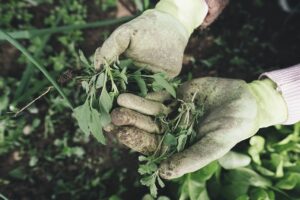
Most autumn-sown stands have poor weed suppression, despite the fact that winter precipitation helps them grow rapidly in spring. We cannot ignore the fact that precipitation and warming weather have a positive effect not only on crops, but also on weeds. In fact, they adapt to extreme climatic conditions faster and more efficiently than crops. Therefore, choosing the optimal time for control is essential to minimize competition for nutrients, water and light.
(Photo: Pixabay)
First, we can expect the appearance of T1 and T2 weeds, which are also problematic in autumn. Although the importance of dogwood, sticky sedge and small sedges has decreased, the coverage of henbane, veronica and water nettles has also increased due to the one-sided use of herbicides. In addition, the occurrence of field acacia, field sedge and buckwheat has also increased. In recent years, the importance of large windbreak has been increasing, becoming one of the most important cereal weeds. In rapeseed fields, poppy, wound-welding sedge and Serbian thistle species are causing an increasing problem.
The basis for successful weed control in any case is knowledge of the weed flora of the given area, but the treatment is also significantly influenced by the development of the cultivated plant and the weed
Taking these into account, the appropriate technology must be chosen so that the control is effective and economical. In spring, the use of agrotechnical methods is limited, only rolling, hoeing and weed combing can be used. Chemical control is the most common. When choosing a product for post-emergence treatment, the weather parameters, the maximum number of treatments and the mechanism of action of the herbicide used during autumn control must be taken into account. It should also be borne in mind that some active ingredients may have restrictions on the subsequent crop. If overgrown, waxy-leaved weeds are also present in the area, then for the sake of efficiency, it is recommended to apply a combination of active ingredients using an adhesion promoter. Before treatment, it is worth checking the authorization document of the pesticide on the authority’s website. It is advisable to involve experts from the Hungarian Chamber of Plant Protection Engineers and Phytopathologists in the work processes.
NAK

Related news

Tens of thousands of producers to receive agricultural support in the coming days – Ministry of Agriculture helps farmers with accelerated payments
🎧 Hallgasd a cikket: Lejátszás Szünet Folytatás Leállítás Nyelv: Auto…
Read more >
Hungarian agriculture is capable of renewal
🎧 Hallgasd a cikket: Lejátszás Szünet Folytatás Leállítás Nyelv: Auto…
Read more >
Agrometeorology: autumn sowing is in great need of precipitation
🎧 Hallgasd a cikket: Lejátszás Szünet Folytatás Leállítás Nyelv: Auto…
Read more >Related news

SPAR renovated three of its stores with an investment of 880 million forints
🎧 Hallgasd a cikket: Lejátszás Szünet Folytatás Leállítás Nyelv: Auto…
Read more >
The government is helping dairy farmers with another 7 billion forints
🎧 Hallgasd a cikket: Lejátszás Szünet Folytatás Leállítás Nyelv: Auto…
Read more >
Vál-Völgye Bakery won ten awards at the 22nd International Bread Competition
🎧 Hallgasd a cikket: Lejátszás Szünet Folytatás Leállítás Nyelv: Auto…
Read more >
