
Hungarian agriculture is capable of renewal

Hungarian agriculture, which is based on family foundations, is capable of renewal, adapting to the challenges of the 21st century, and is capable of creating world-class technology in Hungary – stated the State Secretary for Agriculture of the Ministry of Agriculture in Kiskunhalas on Thursday.
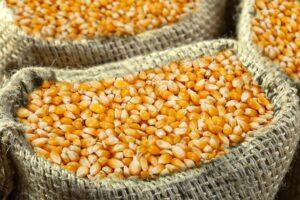
At the handover of the seed plant of the corn breeder and corn seed distributor Pannon Genetic Kft., which was built at a cost of more than 2 billion forints, Imre Hubai emphasized that the investment “not only expands capacity, but also builds knowledge.” He added that the breeding work taking place here – the testing of thousands of new hybrids every year – creates a solid foundation for future generations and strengthens the technological background of Hungarian agriculture. “This plant not only processes, but also shapes the future,” he said, adding that it is no coincidence that the development won the Agricultural Investment of the Year award. This recognition is confirmation that a truly outstanding facility serving competitive activities by European standards has been established here – he said. According to the Secretary of State, we are in a period when agriculture is simultaneously confronted with climate change, market uncertainties and increasing production expectations. In this environment, the responses of crisis-resistant agriculture are clearly innovation, efficiency and sustainability. This investment is exemplary in all three areas – he added.
It would be important to use seeds with Hungarian genetics
Csaba Gyuricza, rector of the Hungarian University of Agricultural and Life Sciences, speaking about the situation of the seed sector, highlighted that within Hungarian agriculture, the production value of crop production is approximately 2,000 billion forints per year, of which the seed sector represents approximately 200 billion forints, 70-75 percent of which goes to international multinational companies. He added: “Overall, it can be said that we use non-Hungarian genetics on domestic lands in about 80 percent.” The proportion of Hungarian genetics in winter wheat has decreased from 78 percent to 45 percent in recent decades, and has practically disappeared in sunflower and rapeseed, while in corn, 95 percent of the market is dominated by nine multinational companies, and the share of domestic genetics is only 5 percent, he indicated. The latter is owned by three players, including Pannon Genetic. The rector warned: in the absence of change, Hungarian genetics may completely disappear from the fields within 10-15 years, which is not only an economic issue, but also an issue of food safety and national security. As he said, in order to reverse the unfavorable processes, state involvement, targeted breeding programs and the application of the most modern technologies are necessary. “One of the most important tasks of the next period is to put the seed sector in Hungary on a development path by working together – in cooperation with economic players -,” he emphasized.
Family business deals with seed breeding
Rádi Feríz, one of the managing directors of Pannon Genetic, said that their family has been involved in seed breeding for three generations, and with this investment, he and his brother, Rádi Martin, are also paying tribute to the memory of their grandfather. As he recalled, they have reorganized their breeding activities in recent years and are now working with world-class technology. They currently have 35 hybrids recognized in the European Union, 21 of which were created by his younger brother as their own developments. He added that they have modernized their field production capacities and technologies, further improved hybrid production, and the plant that has just been handed over is the final element of this development process. He named brand building and market expansion as the most important tasks for the next period. As he emphasized, the seed sector, which is based on Hungarian genetics, can only be set on a sustainable growth path through professional cooperation. At the end of the award ceremony, the Hungarian University of Agricultural and Life Sciences and Pannon Genetic Kft. confirmed their cooperation and announced the establishment of a joint innovation workshop.
AM/MTI
Related news
The processing sales price of chicken legs has decreased
🎧 Hallgasd a cikket: Lejátszás Szünet Folytatás Leállítás Nyelv: Auto…
Read more >
The producer price of slaughter cows increased by 30 percent
🎧 Hallgasd a cikket: Lejátszás Szünet Folytatás Leállítás Nyelv: Auto…
Read more >
István Nagy: The horticulture of the future is being built in Szentes
🎧 Hallgasd a cikket: Lejátszás Szünet Folytatás Leállítás Nyelv: Auto…
Read more >Related news

Aldi, Auchan, Lidl, PENNY, SPAR, Tesco: in 2024 they paid more than 710 billion into the budget, while closing with a loss
🎧 Hallgasd a cikket: Lejátszás Szünet Folytatás Leállítás Nyelv: Auto…
Read more >
OKSZ: Household consumption cannot keep up with the growth rate of real wages
🎧 Hallgasd a cikket: Lejátszás Szünet Folytatás Leállítás Nyelv: Auto…
Read more >
KSH: retail turnover in February exceeded the same period of the previous year by 3.8 percent and the previous month by 0.4 percent
🎧 Hallgasd a cikket: Lejátszás Szünet Folytatás Leállítás Nyelv: Auto…
Read more >
