
Organic products really do have fewer pesticide residues!

Last week, the results of the research by the non-governmental organization PAN Europe on pesticide residues in European apples caused a stir. The results of Hungarian-produced apples purchased from domestic supermarkets in particular stirred up the mood, with one sample containing residues above the maximum permissible limit (MRL).
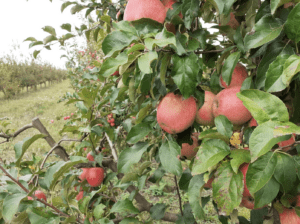 Four of the remaining elements from a total of five apple samples were found to contain residues below the permissible limit, but with multiple residues. The article highlights that apples from organic (or in other words, bio) farming have fewer or no detectable residues, and their consumption is therefore recommended, especially for groups more sensitive to pesticide exposure, such as infants, children and the sick. The published results have sparked a wide-ranging debate in professional circles and in public life alike. We consider it important to inform the public factually on issues related to organic farming, because during the debate in recent days, several erroneous statements have come to light, which can be misleading. Furthermore, our goal is to make it easier to choose between products, since – according to the results of our current consumer survey – domestic consumers often do not recognize organic products, including organic apples. We have formulated our position in a simple question-and-answer format, marking the more extensive background materials as references.
- What does the Pan Europe research say, and does it have a reason to exist?
In our opinion, the Pan Europe research correctly highlights, using the example of apples, that the EU (and thus Hungary’s) food safety regulations currently ignore the fact that conventionally produced (non-organic) vegetables and fruits usually contain residues of several types of pesticide active ingredients. The resulting so-called cocktail effect is not taken into account when setting the maximum permissible limits for pesticide residues. The limit value is set by the authorities on the basis of the current scientific evidence available; these values are primarily based on individual exposure to certain active ingredients and short- and medium-term toxicity studies. So, no authority has examined or is examining the long-term burden of the 4-5 types of residues found in fruits and vegetables that do not reach the maximum permitted limit but are demonstrably present on our bodies (especially in the case of children, the elderly and the sick)! In our opinion, it is advisable to minimize the burden caused by pesticide residues and, based on the precautionary principle, the low-dose, but long-term “cocktail effect”. We see this as particularly justified for vulnerable groups, such as children, the elderly and those suffering from diseases.
- Then are apples available in stores unsafe?
Domestic producers comply with the current maximum residue limits (MRLs) in most cases (in the PAN Europe study, 1 domestic apple sample had pesticide residues above the maximum permitted limit, and the NÉBIH study of 278 apple samples between 2023 and 2025 found no contamination exceeding the limit out of 87,361 residue test measurements.) Domestic products therefore comply with the requirements of the currently valid food hygiene regulations and are therefore considered safe. Unprocessed foods produced in the European Union countries also remained within the applicable maximum residue levels in 96.3% of cases, according to the 2023 database of the European Food Safety Authority (EFSA).
- If I buy organic (organic) vegetables or fruit, can I really reduce my pesticide residue load?
Yes, organic vegetables and fruits, or as they are commonly known, have much lower pesticide residue levels than conventional ones. Their pesticide content often remains below the detection limit (LOD), or in other words, they are “chemical-free”. This is due to the production technology of organic farming, which excludes the use of synthetic chemical pesticides. Numerous clinical studies and scientific meta-analyses support the fact that consuming organic products can significantly reduce the presence of pesticide degradation products in our bodies, even in the short term.
Related news
New directions are needed for the further expansion of organic production
🎧 Hallgasd a cikket: Lejátszás Szünet Folytatás Leállítás Nyelv: Auto…
Read more >
When organic becomes mainstream: A glimpse of what awaits food retail in Central & Southeast Europe
🎧 Hallgasd a cikket: Lejátszás Szünet Folytatás Leállítás Nyelv: Auto…
Read more >
High-value shopping basket and more conscious shoppers: growing demand for domestic and healthy products
🎧 Hallgasd a cikket: Lejátszás Szünet Folytatás Leállítás Nyelv: Auto…
Read more >Related news

Shoppers loved chocolate bars
🎧 Hallgasd a cikket: Lejátszás Szünet Folytatás Leállítás Nyelv: Auto…
Read more >
Nestlé hunts for clues to 12-ton chocolate theft with ‘Stolen KitKat Tracker’
🎧 Hallgasd a cikket: Lejátszás Szünet Folytatás Leállítás Nyelv: Auto…
Read more >
Using SZÉP card benefits has become easier
🎧 Hallgasd a cikket: Lejátszás Szünet Folytatás Leállítás Nyelv: Auto…
Read more >
