
By 2050, every second person could be nearsighted – spring especially intensifies hidden vision problems

The World Health Organization (WHO) predicts that by 2050, nearly half of the world’s population could be nearsighted. Modern lifestyles, prolonged close focus, and the increasing use of digital devices significantly affect eye function, and research has linked them to the risk of myopia.
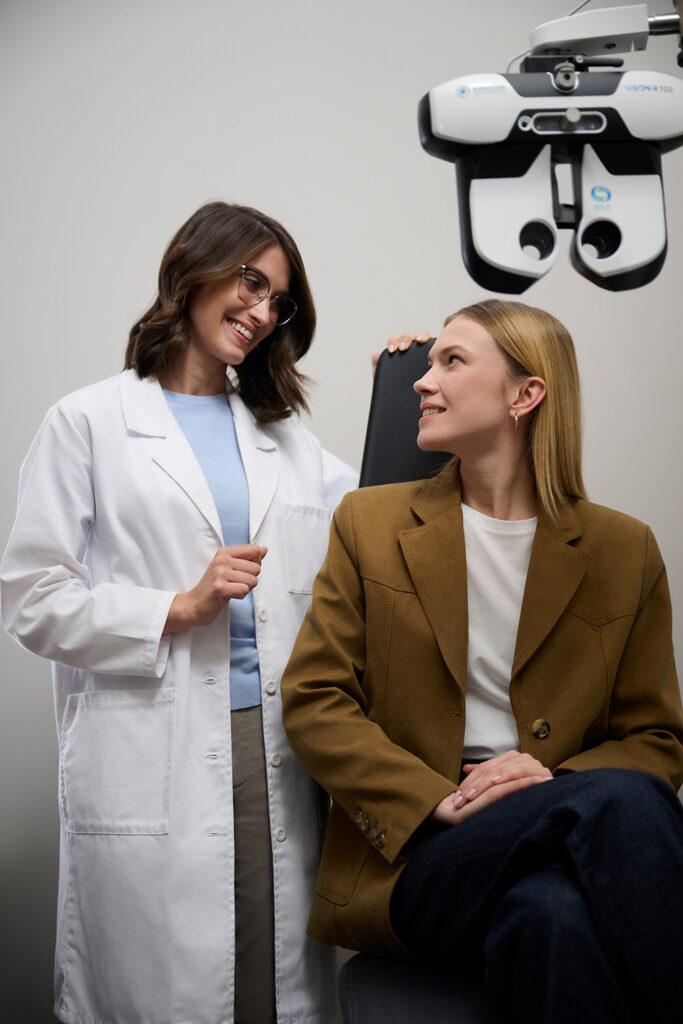 In an evolutionary sense, the “basic mode” of our eyes is optimized for distance vision, while today’s lifestyle – whether it’s work, study or leisure – is typically based on close focus. According to the NMHH1, Hungarians spend an average of 4.2 hours a day in front of various screens (TV, phone, computer), which accounts for a significant part of their waking hours. People aged 16-35 spend almost 4 hours on their smartphones, and this increases to 5 hours for those aged 16-19. Focusing on a fixed distance for long periods of time, blinking less frequently and intense concentration can all contribute to eye strain, the symptoms of which can appear in a wide range of people: from working adults to older people. Eye fatigue, blurred vision, headaches or difficulty with rapid contrast changes are often the first warning signs of inadequate correction or prolonged near-field strain. In spring, when we spend more time outdoors, natural light is stronger and we look into the distance more often, this can be experienced especially often.
Spring light conditions: why do we notice problems better at this time?
As As the weather gets brighter, the sun gets stronger and outdoor activity increases, the eye has to re-adapt to higher contrasts and more distant focal points. At this time, it may turn out that a previously barely noticeable diopter difference actually significantly affects the quality of vision, for example, distant signs become sharper later, evening or street lights appear brighter and more diffuse, and rapid focus changes (e.g. when cycling or driving) are slower or more uncertain. According to experts, this is often not the fault of the sunglasses, but the result of outdated or inappropriate diopters.
Neglecting the health of our eyes and the ever-increasing screen time do not bode well for us in the future. According to the World Health Organization, WHO, by 2050, every second person could be affected by myopia.
“Vision is not a static condition, but a dynamically changing function. When our lifestyle changes, more driving, more sports, more outdoor activities, our eyes also have to recalibrate themselves.”
“Vision is not a static condition, but a dynamically changing function. When our lifestyle changes, more driving, more sports, more outdoor activities, our eyes also have to recalibrate themselves.” Optometrist of Optometrist.
Inadequate correction can also cause headaches and increased eye fatigue, which further impairs concentration and attention. Therefore, the quality of vision is not only a matter of comfort, but also a concrete safety factor for drivers, cyclists, and motorcyclists alike.
In traffic, reaction time, contrast perception, and correct judgment of distances are essential safety factors. A slight vision defect that is not noticeable in a closed space can pose a serious risk in dynamic traffic situations. Poorly corrected vision can cause particularly dangerous situations on the roads: we notice pedestrians, vehicles, and road markings later, distance and speed estimation is much more uncertain, and there is a greater chance of incorrect maneuvers. Inadequate correction can also cause headaches and increased eye fatigue, which further impairs concentration and attention.
Related news

SPAR Austria Advances Sugar Reduction In Own-Brand Products
🎧 Hallgasd a cikket: Lejátszás Szünet Folytatás Leállítás Nyelv: Auto…
Read more >
Tobacco product prices continue to rise – another wave of price increases in retail
🎧 Hallgasd a cikket: Lejátszás Szünet Folytatás Leállítás Nyelv: Auto…
Read more >
Broccoli is already in your head, but it’s a long way to the plate
🎧 Hallgasd a cikket: Lejátszás Szünet Folytatás Leállítás Nyelv: Auto…
Read more >Related news

Good Friday is in a week: the Easter shopping season has begun
🎧 Hallgasd a cikket: Lejátszás Szünet Folytatás Leállítás Nyelv: Auto…
Read more >
Seed sampling in focus: VSZT and Nébih held a training day
🎧 Hallgasd a cikket: Lejátszás Szünet Folytatás Leállítás Nyelv: Auto…
Read more >
This is how the construction industry will change in 2026
🎧 Hallgasd a cikket: Lejátszás Szünet Folytatás Leállítás Nyelv: Auto…
Read more >
