2026 could be the year of the circular economy: are we ready for the turnaround?

The transition to a circular model is now not only an environmental option, but also a guarantee of economic survival. As the effects of global raw material shortages and the climate crisis worsen, the unsustainability of the linear economy is becoming increasingly obvious. Will 2026 really bring the long-awaited breakthrough? In its annual launch compilation, Körkörös.hu presents the expected legislative, regulatory and systemic changes that could contribute to the shift towards a circular economy this year.
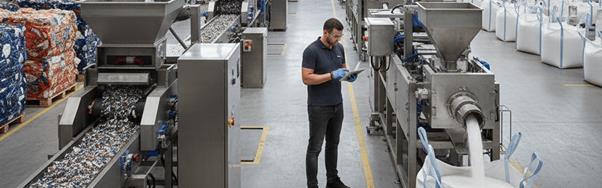 According to experts, 2026 could be the year when sustainability becomes a mandatory element of corporate operations. The European Union’s policy on the circular economy could reach the point by then where strategic objectives are replaced by specific, legally enforceable regulations.
One of the most important such legislative measures is the European Union’s Ecodesign for Sustainable Products Regulation (ESPR), which prohibits large companies from destroying unsold textile and footwear products from July 2026. The aim of the regulation is to ensure that surplus stocks are not waste but rather a reusable or recyclable resource in the economy. This step fundamentally questions the fast fashion business model and encourages manufacturers to build reuse, repair and secondary sales channels.
As reported by Körkörös.hu on several occasions, the digitalization of waste management in Hungary will be complete by 2026 under the concession system operated by MOHU Zrt. Electronic consignment notes, smart container identification and digital records aim to transparently track the path of waste from generation to processing, while reducing the possibility of uncontrolled or undocumented material movements.
In parallel with digital waste control, the Extended Producer Responsibility (EPR) system is also entering a new phase, becoming truly decisive for companies by 2026, when data reporting obligations, payment of fees and inspections will together start to affect product design. The system is gradually becoming not only a financial issue, but also a strategic factor influencing the choice of materials and the life cycle of products.
In addition, the European Union’s Waste Shipment Regulation (WSR) will eliminate the possibility of exporting plastic waste to non-OECD countries. This means that waste generated in the EU must be treated or processed within its own territory. The regulation will place a significant burden on the waste management infrastructure in the short term, but in the longer term it may stimulate the development of the domestic recycling industry and the strengthening of the secondary raw materials market. The practice of “outsourcing” environmental responsibility will gradually cease.
The cessation of waste exports is not only an environmental but also an economic policy turning point. Amidst uncertainties in the energy and raw materials markets, the role of secondary raw materials is becoming more valuable, especially in those sectors where import dependence poses a risk. Waste is increasingly becoming a strategic resource.
The Digital Product Passport (DPP) will be gradually introduced from July 2026. The digital database, accessible via QR code, contains information on the material composition, reparability and recyclability of products. The system aims to reduce information asymmetry and improve the verifiability of sustainability claims, which could be a significant step in curbing greenwashing.
The Digital Product Passport is not only a new source of information for consumers. The uniform data structure will allow recyclers and waste managers to get an accurate picture of the material composition and dismantlement at the beginning of treatment. This is the basis of the data infrastructure.
Related news

Deteriorating foreign trade balance: causes and prospects
🎧 Hallgasd a cikket: Lejátszás Szünet Folytatás Leállítás Nyelv: Auto…
Read more >
The goal is to improve the quality of life for generations: Nestlé’s summary of shared value creation has been published
🎧 Hallgasd a cikket: Lejátszás Szünet Folytatás Leállítás Nyelv: Auto…
Read more >
Just Eat Takeaway.com brings sustainable packaging range to European markets
🎧 Hallgasd a cikket: Lejátszás Szünet Folytatás Leállítás Nyelv: Auto…
Read more >Related news
Oat-based “feta” wins the cheese innovation competition of Lidl Germany and ProVeg
🎧 Hallgasd a cikket: Lejátszás Szünet Folytatás Leállítás Nyelv: Auto…
Read more >
The horticulture of the future is being built in Szentes
🎧 Hallgasd a cikket: Lejátszás Szünet Folytatás Leállítás Nyelv: Auto…
Read more >
Finger Food Experience
🎧 Hallgasd a cikket: Lejátszás Szünet Folytatás Leállítás Nyelv: Auto…
Read more >
