
István Nagy: Hungarian agriculture and food industry will be Europe’s top by 2030
Hungarian agriculture and food industry will be Europe’s top by 2030, productivity will increase by one and a half times, added value will double, and the sector’s exports will increase from 10 billion euros to 16 billion euros by the end of the decade – said István Nagy, Minister of Agriculture, on Wednesday in Siófok.
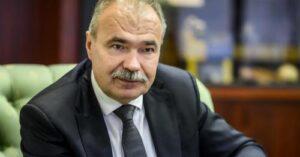
(Photo: drnagyistvan.hu)
The politician added at the Portfolio Agricultural Sector 2025 conference: in 2025, 546 billion forints reached the sector’s players through a unified application, 163 billion forints more than last year, and decisions were made on investment support worth more than 500 billion forints, which also envisages rapid development. The government is supporting the work of those working in the sector with favorable interest-rate working capital loans, an interest subsidy system, a loan moratorium and a loan guarantee system – he added. “Hungarian farmers can count on the national government now and in the future,” said István Nagy. He recalled that the Hungarian government made a historic decision by setting the national co-financing rate for new European Union funds to a maximum of 80 percent, which meant that the amount of funds that can be used for investments tripled, with Brussels providing twenty for every hundred euros and the national government providing eighty. More than three thousand billion forints can be used for investments, he added.
According to the minister, Hungarian agriculture has undergone spectacular development in the past 15 years.
The machinery park has been renewed, new buildings, modern glass and foil houses, new plantations have been created, agrotechnology has developed, and precision farming has come to the fore. The performance of Hungarian agriculture has also grown significantly in EU comparison since 2010, he explained. Output in 2024 was 4,142 billion forints, which is a 28 percent increase even at constant prices, the 6th best result among the 27 member states. Territorial productivity increased by 53 percent, with Hungary being the 7th best among EU countries. Development and investment worth 669 billion forints were implemented last year, 45 percent more than in 2010. Animal husbandry accounted for 40 percent of total agricultural output, the highest rate since our accession to the EU. Between 2004 and 2010, the performance of animal husbandry decreased by 14 percent, and between 2010 and 2024 it increased by 22 percent, he indicated. According to the Minister, it is good news that Hungary is no longer a primary producer and exporter of raw materials, the proportion of processed products within exports has increased from 62 percent to 74.2 percent, and the volume of food production has increased by 39 percent in the past 15 years. He announced that a decision has been made that pig farmers will once again receive a sow subsidy of 20,000 forints per head, and that the opening of a 100 percent interest-subsidized Széchenyi Card agricultural loan is also in progress. He mentioned that milk prices have “collapsed” across Europe, processors are reluctant to conclude contracts, trade is looking for cheap imports, and therefore negotiations have been initiated with traders, producers and processors. According to his announcement, the import registration decree will be supplemented with liquid milk, Edam cheese and butter, which does not mean an import ban, but only a notification obligation. “We want to do everything we can to ensure that Hungarian products are put on the shelves of retail chains in greater volume,” he stressed.
The minister also informed that a 50 billion forint credit line is being allocated for dairy processors under the Demján Sándor program.
16.5 billion forints have been paid out so far under the title of dairy cow support, and they want to provide 7.5 billion forints to farmers this year. He said he hopes that the government will decide on a one-year loan moratorium for farmers, and that an agricultural microcredit program will be launched for the smallest enterprises. István Nagy highlighted that most of the resources were spent on drought protection, which resulted in the retention of one and a half billion cubic meters of water, and the trend of releasing more water from the country than it receives has been reversed. The consequence of this is that while in 2022 one and a half million hectares were affected by drought, in 2025, after the hottest summer, 500 thousand hectares were affected. Among the foreign challenges facing Hungarian agriculture, he mentioned that when planning the EU budget after 2027, a more than twenty percent reduction in agricultural policy resources is envisaged, and agricultural subsidies would go into a common fund. We need to find allies and partners in order to prevent this, he stressed. He pointed out that in addition to the EU’s free trade agreement with Ukraine, an EU-Mercosur agreement with South American countries is also planned. The Hungarian government is determined not to support the agreement, he said. “If the two come together, it will have an impact on the EU internal market that will fundamentally shake the entire European agriculture. It is important that we can act against it unitedly, seeking allies,” István Nagy stressed.
MTI
Related news
AM: Government helps farmers with a loan moratorium
🎧 Hallgasd a cikket: Lejátszás Szünet Folytatás Leállítás Nyelv: Auto…
Read more >
More than 100 Hungarian farmers also demonstrated in Brussels
🎧 Hallgasd a cikket: Lejátszás Szünet Folytatás Leállítás Nyelv: Auto…
Read more >
NAK: Domestic producers await customers with an ample supply of all pine species
🎧 Hallgasd a cikket: Lejátszás Szünet Folytatás Leállítás Nyelv: Auto…
Read more >Related news

The New Year’s Eve fireworks fair is back: temporary sales will start in department store parking lots at the end of December
🎧 Hallgasd a cikket: Lejátszás Szünet Folytatás Leállítás Nyelv: Auto…
Read more >
The first Eastern European non-alcoholic beer turns 50
🎧 Hallgasd a cikket: Lejátszás Szünet Folytatás Leállítás Nyelv: Auto…
Read more >
Sausage: pork prices are already going down, but they won’t be cheaper in stores – a significant correction may come in the spring at the earliest
🎧 Hallgasd a cikket: Lejátszás Szünet Folytatás Leállítás Nyelv: Auto…
Read more >
