
VOSZ Barometer: SMEs are not organized for growth, but for survival – and meanwhile the “sharp” era of generational change is approaching
Based on the VOSZ Barometer 2025 Q4 report and the presentation by Ákos Kozák (VOSZ Co-Chair, Eyensúly Intézet), there has been a persistent caution in the SME sector since 2023, rather than a trend reversal: entrepreneurial sentiment has remained in the pessimistic range, and the focus has shifted from growth expectations to risk minimization and adaptation.
 In terms of short-term economic prospects, the majority (54%) considered the next quarter to be more dangerous in 2025 – in other words, the fear of a “shock-like deterioration” has diminished, but the difficult-to-plan environment seems permanent in the eyes of entrepreneurs.
The problem map has been rearranged: fewer “classic crises”, more unpredictability. According to the presentation, by 2025, the importance of mentioning inflation/energy prices/exchange rates has decreased dramatically, while structural factors that impair planability have come to the fore: unpredictability, high tax burdens, economic policy, impoverishment and labor shortages have become more prominent.
More stable payment morale, shrinking reserves – the price of discipline is room for maneuver. The assessment of payment morale remained basically stable between 2023 and 2025, with a slight improvement.
At the same time, one of the hard signs of financial adjustment is that the proportion of companies with reserves has decreased significantly (from 60% to 47%, according to the presentation), while payment and tax discipline has improved – in other words, many maintain stability with disciplined operations, with shrinking buffers.
Investments: the intention is also decreasing, the implementation is even more so. Investment activity has declined in several dimensions since 2023 (fewer new business opportunities, declining investment intentions), and the proportion of actually implemented investments also lags behind previous levels.
Ákos Kozák highlighted in his presentation: the implementation of planned developments was around “less than 50%” in 2025, while two years earlier it was still around 70% – this indicates a contraction in investment dynamics that can also be felt at the national economic level.
Workforce: they are not thinking about layoffs – rather about retention. According to the presentation, the proportion of those planning layoffs has decreased in three years, and company managers are more focused on retention due to the difficulty of replacing skilled labor; the improving trend reflects adaptation rather than optimism.
Generation change: it is not about “technologicalization”, but about recruitment and motivation. The message of the generational change block of the report is that the classic implementation/technical obstacles (legal, tax, financial details) appear with less weight; the main difficulties are much more the lack of a suitable successor and the motivation of the younger generation. According to the study, generational change is not relevant for half of the entrepreneurs, not current for 20%, but for nearly a third it is already underway, has been completed, or is expected within 2–3 years (the attitude questions were conducted on a subsample of N=187).
Related news
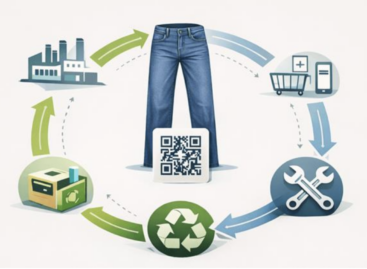
Products in the EU will receive a digital passport
🎧 Hallgasd a cikket: Lejátszás Szünet Folytatás Leállítás Nyelv: Auto…
Read more >
Henkel achieved organic growth in 2025, profitability improved thanks to innovation and increased efficiency
🎧 Hallgasd a cikket: Lejátszás Szünet Folytatás Leállítás Nyelv: Auto…
Read more >
The chamber will take over the registration of more than 640 thousand individual entrepreneurs from 2027
🎧 Hallgasd a cikket: Lejátszás Szünet Folytatás Leállítás Nyelv: Auto…
Read more >Related news
Lidl sold nearly 11 million liters of Hungarian milk
🎧 Hallgasd a cikket: Lejátszás Szünet Folytatás Leállítás Nyelv: Auto…
Read more >
Tetra Pak wins major award
🎧 Hallgasd a cikket: Lejátszás Szünet Folytatás Leállítás Nyelv: Auto…
Read more >
AI: Help or Addiction? Recent Research
🎧 Hallgasd a cikket: Lejátszás Szünet Folytatás Leállítás Nyelv: Auto…
Read more >
