
Seed Alliance: Organic farming on a growth trajectory

The areas included in domestic organic farming have continued to grow, now stably exceeding 300 thousand hectares. By the end of the decade, the share of organic areas could double, which would also drive the demand for organic seeds, the Seed Association Interprofessional Organization and Product Council (VSZT) told MTI on Monday.
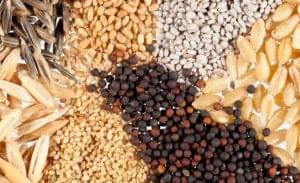 Péter Mikó, chairman of the VSZT organic seed working group, highlighted in the statement: with EU support incentives and the new five-year domestic support program launched in 2025, the Hungarian organic sector is developing dynamically, and the size of the areas covered by certification already exceeds 300 thousand hectares. At the same time, Hungary is among the catching-up member states in the EU with a 6.3 percent organic area ratio compared to the EU average of 10.5 percent.
However, in the case of fruit orchards, Hungary is above the EU average – explained Péter Mikó, adding: meadows and pastures dominate among organic areas with 55 percent, followed by arable land (36 percent), and then dynamically growing organic fruit orchards (7 percent).
According to the analysis, the main cereals are mostly processed in the domestic food industry, in addition, among oilseed crops, sunflower and soybean, as well as the processing of peas, alfalfa, and corn are also significant. Plants that do not require processing are primarily sold on the domestic fresh market, while most of the cereals and industrial plants that ensure mass production are exported.
Organic farming strengthens biodiversity, reduces water pollution and the ecological footprint of agriculture, and the sustainable soil management used here produces a higher organic matter content in the soils – the announcement drew attention.
According to the seed association, the growth of the domestic organic sector continues to be hampered by the underdevelopment of the processing industry, the fluctuating consumer market and price competition with imported products. The manual and mechanical labor requirements in organic farming are much higher, while yields are often lower, which puts serious pressure on farmers’ profitability, they noted.
The VSZT highlighted that the area used for organic seed production is currently small, as farmers use almost exclusively conventional unseeded seeds in addition to the restricted seeds. The variety supply is currently considered scarce even for those species that have been regularly found in the Organic Seed Database operated by Nébih for years.
Péter Mikó emphasized that the Hungarian Organic Action Plan represents a sufficient incentive to double the share of organic areas by 2030, which will entail an increase in demand for seeds. In addition, there are only 10 years until 2036, when the mandatory use of organic seeds in the organic sector will be introduced – the possibility of applying for a derogation to use unbleached conventional seeds will be eliminated, therefore a dynamic recovery of the organic seed sector can be forecasted, he underlined.
Related news
Seed sampling in focus: VSZT and Nébih held a training day
🎧 Hallgasd a cikket: Lejátszás Szünet Folytatás Leállítás Nyelv: Auto…
Read more >
Variety trial: the best varieties received awards
🎧 Hallgasd a cikket: Lejátszás Szünet Folytatás Leállítás Nyelv: Auto…
Read more >
NAK: new variety trial data helps corn producers
🎧 Hallgasd a cikket: Lejátszás Szünet Folytatás Leállítás Nyelv: Auto…
Read more >Related news

Oat-based “feta” wins the cheese innovation competition of Lidl Germany and ProVeg
🎧 Hallgasd a cikket: Lejátszás Szünet Folytatás Leállítás Nyelv: Auto…
Read more >
The horticulture of the future is being built in Szentes
🎧 Hallgasd a cikket: Lejátszás Szünet Folytatás Leállítás Nyelv: Auto…
Read more >
Finger Food Experience
🎧 Hallgasd a cikket: Lejátszás Szünet Folytatás Leállítás Nyelv: Auto…
Read more >
