
From danger to strength: how does climate resilience create value?

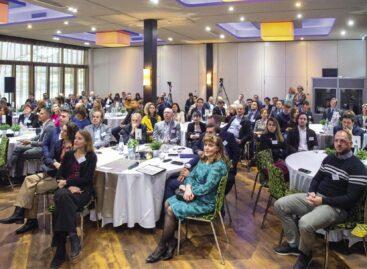
The world to which we have adapted our companies, business models, and systems no longer exists. Climate change-induced extremes and the associated physical risks are increasing rapidly and pose a significant threat to businesses. Immediate action is also needed in the area of climate resilience. – said the Hungarian Business Council for Sustainable Development (BCSDH) at its business breakfast and professional forum held on March 24, 2026, which focused on resilience.
 The cost of inaction is enormous – without urgent action to decarbonise and strengthen resilience, current estimates suggest that physical risks could significantly impact companies’ financial performance by 2050, reducing earnings (EBITDA) by up to 25% globally in critical industries. (Source: WBCSD) Emission reduction remains key, but rapid action on adaptation is also essential to maintain the resilience of the workforce, supply chains, communities and natural ecosystems that support businesses.
“Companies are already aware of the risk, but so far only 25 percent of leading domestic companies identify, assess and manage climate change-related risks and incorporate them into the company’s risk management and decision-support processes. Managing uncertainty and identifying appropriate solutions that fit corporate goals is not easy, but proactive investments in adaptation and resilience promise significant returns. Every $1 we invest in resilience means savings of up to $4 in avoiding health and productivity losses.” – said Attila Chikán Jr., President of BCSDH, in his opening remarks. – “More resilient companies are also more attractive to investors, customers and regulators, which strengthens their long-term viability in an increasingly unpredictable climate environment. It is important that resilience moves from being a defensive concept to a strategic driver for sustainable, long-term value creationand risk-adjusted performance,” he added.
According to the latest ESG survey by BCSDH, 70 percent of leading companies agree that climate change is a threat to their operations and 80 percent believe that climate adaptation makes business sense.
“Climate resilience is the ability of ecosystems, communities, companies and infrastructures to anticipate, prepare for, respond to and recover from climate-related shocks – such as extreme weather events. It involves developing adaptive capacity, diversifying systems, and implementing forward-looking and precautionary strategies to ensure that basic operations are maintained in crises and that systems can evolve in innovative ways.” – explained Dr. János Zlinszky, associate professor and member of the advisory board of the Institute of Balance. – “It is not worth waiting for major shocks to transition to new, more resilient systems.” – he added.[EC1]
Climate change has a direct and indirect impact on health, and this is reflected in environmental, social and public health factors.
In line with the IPCC reports, domestic studies also support that extreme temperature events (heat waves) currently represent the most important health risk in the Carpathian Basin. In 2024, the average daily temperature in Hungary reached 25 degrees Celsius on an exceptionally high number of days, 36 days on average, and the longest heat wave lasted 27 days.
Over the past ten years, daily mortality during heat wave days has increased by an average of approximately 15% on a national basis.
“Climate change also has a significant impact on human health, which can be directly, for example, injuries or deaths caused by extreme weather events, heat-related illnesses due to rising temperatures, or indirectly, for example, a decrease in work intensity, deterioration of mental health. In addition, respiratory diseases caused by changes in the spatial and temporal distribution of pollen-producing plants, or diseases spread by ticks and other insects due to climate change, may also increase.” – said Dr. Anna Páldy, Chief Physician, Consultant at the National Center for Public Health and Pharmacy, in her presentation. – “Companies must be part of the solution. It is important to ensure healthy indoor air quality, protect the mental health of workers, and reduce the risk of outdoor work.
Related news
Circular Economy Summit: global circularity rate drops to 6.9%
🎧 Hallgasd a cikket: Lejátszás Szünet Folytatás Leállítás Nyelv: Auto…
Read more >
BCSDH membership is expanding, the number of committed companies is increasing, Péter Noszek has become a new member of the presidency
🎧 Hallgasd a cikket: Lejátszás Szünet Folytatás Leállítás Nyelv: Auto…
Read more >
ESG: the majority don’t ask for postponement, preparedness level is increasing
🎧 Hallgasd a cikket: Lejátszás Szünet Folytatás Leállítás Nyelv: Auto…
Read more >Related news

International food prices have risen due to the impact of the Middle East conflict on energy prices
🎧 Hallgasd a cikket: Lejátszás Szünet Folytatás Leállítás Nyelv: Auto…
Read more >
It doesn’t matter how big the egg is on the shelves: genetics, age, and the chains’ tender logic decide
🎧 Hallgasd a cikket: Lejátszás Szünet Folytatás Leállítás Nyelv: Auto…
Read more >
We know what is healthy, but we are seduced
🎧 Hallgasd a cikket: Lejátszás Szünet Folytatás Leállítás Nyelv: Auto…
Read more >
