
The GVH is investigating the market for over-the-counter medicines.

The anti-competitive conduct and abuse of dominant position of certain market players may contribute to the high prices of over-the-counter medicines – this is what the Hungarian Competition Authority (GVH) suspects. The GVH has therefore launched two competition supervision proceedings simultaneously, involving a pharmaceutical wholesaler, a pharmacy chain operator and several pharmaceutical manufacturers.
 The investigation of the anti-competitive conduct is aimed at shaping the pharmacy shelf image, focusing on popular over-the-counter painkillers. The suspicion of abuse of dominant position affects more than 100 settlements in Hungary. Speaking about the interventions of the national competition authority, Csaba Balázs Rigó, President of the Hungarian Competition Authority, stated: “The aim of the GVH investigations is to protect Hungarians from price increases and to check whether the shelf image and product placement regulations restrict competition.” In an interview published in the September 24, 2025 issue of Magyar Nemzet, Csaba Balázs Rigó, President of the Hungarian Competition Authority, indicated that the GVH is conducting investigations into Hungarian pharmaceutical wholesalers. The President of the GVH stated that “It has emerged that pharmaceutical wholesalers have established a pharmacy cooperation system that could limit competition in the pharmaceutical procurement market.” This investigation is currently ongoing, but the GVH has also initiated new competition supervision proceedings, this time in the market for over-the-counter medicines.
The GVH is investigating the definition of the so-called pharmacy shelf layout, as well as the conduct of the pharmacies within the scope of the pharmaceutical wholesaler Phoenix Pharma Zrt. and the pharmacies within the scope of the BENU Magyarország Zrt. group, in the market for over-the-counter, so-called systemic painkillers. The national competition authority suspects that Phoenix Pharma Zrt. and BENU Magyarország Zrt., as well as three pharmaceutical manufacturers/distributors – SANOFI-AVENTIS Zrt., Opella Healthcare Commercial Kft. and Haleon Hungary Kft. – may engage in anti-competitive market conduct by excluding from retail pharmacy sales of over-the-counter systemic analgesics offered by other pharmaceutical manufacturers/distributors – which may be more affordable and contain the same active ingredient – from pharmacy retail sales. Pharmacy shelf display requirements may reduce market competition, which may lead to higher prices. The competition authority’s investigation is aimed at examining these exclusionary effects.
In addition to the above, the GVH also considers it probable in another proceeding that in several settlements where a pharmacy or pharmacies affiliated with Phoenix Pharma Zrt. and BENU Magyarország Zrt. are the only ones present, they are likely to have an economic dominant position. According to the information in the possession of the GVH, this may affect more than 100 settlements across the country. Since, according to the available information, Phoenix Pharma Zrt. and BENU Magyarország Zrt. significantly determine many aspects of the operation of the pharmacies affiliated with them (e.g. procurement, promotions, image), other pharmaceutical wholesalers may be forced out of these local markets. The abuse of dominant position by the companies concerned may also result in higher prices for consumers.
The initiation of competition supervision proceedings does not mean that the undertakings have committed the infringements. The proceedings are aimed at clarifying the facts and thereby proving the alleged infringements. The period provided for conducting the proceedings is six months, which may be extended twice, each time by a maximum of six months. The GVH draws attention to the fact that, according to the Competition Act, the period from the request to the client to provide the data necessary to clarify the facts until its fulfillment is not included in the administrative deadline.
According to data from the Central Statistical Office (KSH), the price of over-the-counter medicines in Hungary increased significantly between 2020 and 2025. In the case of certain popular products – such as some cold remedies, nasal sprays and painkillers – the price increase reached 40-50%. To offset the significant price increase, as of July 2025, voluntary price and margin restrictions were introduced for 34 high-volume over-the-counter medicines as a result of consultations between the government and professional actors. The GVH welcomed the voluntary price restrictions. Csaba Balázs Rigó said at the time: “It is good for consumers and patients if players in the pharmaceutical market show restraint and compete downwards with prices.”
Related news

The mineral water bottling company made significant commitments as a result of the GVH proceedings
🎧 Hallgasd a cikket: Lejátszás Szünet Folytatás Leállítás Nyelv: Auto…
Read more >
The GVH and the NKFH checked the price display practices of online stores in a European investigation
🎧 Hallgasd a cikket: Lejátszás Szünet Folytatás Leállítás Nyelv: Auto…
Read more >
The mineral water bottling company made significant commitments as a result of the GVH proceedings
🎧 Hallgasd a cikket: Lejátszás Szünet Folytatás Leállítás Nyelv: Auto…
Read more >Related news
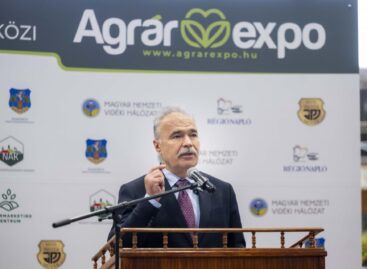
István Nagy: the government’s goal is to further strengthen the competitiveness of Hungarian agriculture and place the future of domestic agriculture on a solid foundation
🎧 Hallgasd a cikket: Lejátszás Szünet Folytatás Leállítás Nyelv: Auto…
Read more >
Bulk shopping has become significantly cheaper: more than 900 products are available at much lower prices than a year ago
🎧 Hallgasd a cikket: Lejátszás Szünet Folytatás Leállítás Nyelv: Auto…
Read more >
EY: Activity increased, yet the value of the Hungarian M&A market decreased significantly
🎧 Hallgasd a cikket: Lejátszás Szünet Folytatás Leállítás Nyelv: Auto…
Read more >
