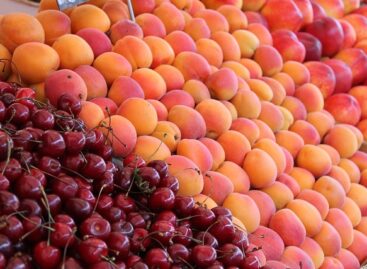
Increasingly serious structural and production problems characterize Hungarian fruit production, which directly affect not only the players in the sector, but also retail supply and consumer prices. According to the Agrarszektor, the domestic fruit sector is struggling with outdated plantations, the consequences of climate change, labor shortages and lack of investments. As a result, self-sufficiency is deteriorating, import dependence is increasing, and domestic supply is becoming increasingly unpredictable.
 Nearly half of the approximately 80 thousand hectares of Hungarian fruit plantations are now considered outdated and uncompetitive, while another 25–30 percent would only be sustainable with significant developments. Only a quarter of the stock can be considered modern. Several crops that require high expertise, capital and live labor have practically disappeared from the country: the cultivation of raspberries, blackberries, blackcurrants and gooseberries has now become marginal. In the case of apples, pears and peaches, the area under cultivation and the yield have both decreased by more than 50 percent in recent years.
The effects of climate change are hitting the sector particularly hard. Spring frosts are increasingly followed by drought, followed by severe thunderstorms, hailstorms and heat waves that cause serious damage. This season, 80–90 percent of the apricot, peach and cherry harvest was destroyed, which meant a loss of tens of billions of forints. On average, nearly 40 percent of the domestic fruit crop has been lost due to weather-related reasons over the past five years.
The problem is further exacerbated by the fact that 70–75 percent of the plantations are still unirrigated, while only a few thousand hectares have an effective frost or ice protection system. According to experts, fresh market fruit production can only be maintained in the long term with comprehensive technological protection – irrigation, frost and ice protection, and intensive cultivation.
All of this also has a direct impact on retail trade. Due to the decline in domestic production, the import ratio is increasing, the market position of Hungarian fruits is deteriorating, and supply uncertainty is increasingly common for seasonal products. This may not only be reflected in rising prices, but also in a narrowing of the selection and fluctuations in quality.
According to the players in the sector, in addition to the current processes, the strategic importance of Hungarian fruit production may also be at risk. The question is no longer just whether there will be enough domestic fruit on store shelves, but also to what extent Hungary will become permanently dependent on imports in this basic food category in the coming years.