
Sugar tax back on the agenda in Germany – health and economic arguments in favor of its introduction

The issue of sugar tax has come to the fore again in Germany, after the Prime Minister of Schleswig-Holstein, Daniel Günther, publicly initiated the introduction of a nationwide tax on products with a high sugar content after the Christmas period. According to the Christian Democrat politician, the measure is long overdue both politically and economically, primarily due to the health burden caused by obesity and excessive sugar consumption.
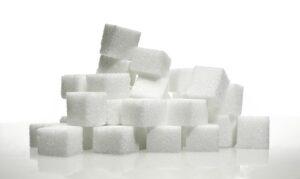 In an interview with Die Welt, Günther emphasized that curbing sugar consumption is not only a health policy issue, but also a serious social and budgetary issue. According to his formulation, excessive sugar intake carries significant health risks that place a serious burden on the healthcare system in the long term. On this basis, the state leader plans to submit his proposal for the introduction of the tax to the Bundesrat, the upper house of the German parliament, early next year.
Schleswig-Holstein has already taken action: in mid-October, the state parliament voted for a special tax on soft drinks and energy drinks with a particularly high sugar content. However, the initiative can only move forward at the national level if the Bundesrat launches an appropriate legislative process. Günther has indicated that he intends to put the issue on the agenda of his party, the CDU, at its congress in February.
The planned tax could cover not only drinks but also a wider range of foods with a high sugar content. The proposal also has professional support: the German doctors’ advocacy organization, the Marburger Bund, has already called on the government to introduce a sugar tax.
According to an April study commissioned by Greenpeace, excessive sugar consumption generates nearly 12 billion euros in healthcare costs in Germany every year. The research concluded that a targeted tax could significantly reduce the consumption of products with a high sugar content, thereby reducing the risk of chronic diseases.
Experts cite diabetes, high blood pressure, as well as tooth decay and periodontal disease as the main health consequences of excessive sugar consumption. The debate is expected to intensify at the national level in early 2026, especially since the food industry and retail are affected.
Related news

Germans reluctant to trust AI with their purchases
🎧 Hallgasd a cikket: Lejátszás Szünet Folytatás Leállítás Nyelv: Auto…
Read more >
When organic becomes mainstream: A glimpse of what awaits food retail in Central & Southeast Europe
🎧 Hallgasd a cikket: Lejátszás Szünet Folytatás Leállítás Nyelv: Auto…
Read more >
dm Tests QR-Code Checkout Technology in Selected German Stores
🎧 Hallgasd a cikket: Lejátszás Szünet Folytatás Leállítás Nyelv: Auto…
Read more >Related news

István Nagy: the government’s goal is to further strengthen the competitiveness of Hungarian agriculture and place the future of domestic agriculture on a solid foundation
🎧 Hallgasd a cikket: Lejátszás Szünet Folytatás Leállítás Nyelv: Auto…
Read more >
Bulk shopping has become significantly cheaper: more than 900 products are available at much lower prices than a year ago
🎧 Hallgasd a cikket: Lejátszás Szünet Folytatás Leállítás Nyelv: Auto…
Read more >
EY: Activity increased, yet the value of the Hungarian M&A market decreased significantly
🎧 Hallgasd a cikket: Lejátszás Szünet Folytatás Leállítás Nyelv: Auto…
Read more >
