
New tachograph regulations – groupage could be a solution

From July 1st, a new EU regulation is expected to significantly change the transport market in Hungary. Similar to trucks, the use of a tachograph and compliance with rest periods will be mandatory for vans exceeding 2.5 tons of gross vehicle weight. DACHSER experts have analyzed the expected market situation in light of the new regulation and expect a restructuring: loss of capacity, price increases and increasing transit times in the case of van transport, as well as increasing interest in groupage services.
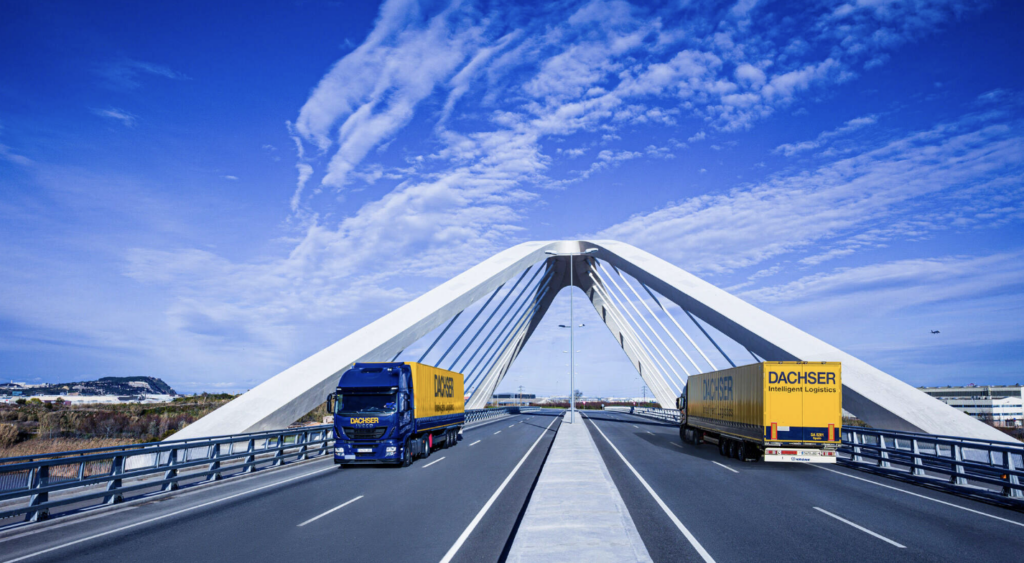
groupage transport is not affected by the legislative changes, as trucks have been operating in compliance with these regulations for a long time, so they can represent a stable, reliable, predictable alternative to versus van transport.
The new regulation
From July 1, 2026, according to the European Union Mobility Package, the use of the second generation tachograph (G2V2) and compliance with rest periods in international transport will also be mandatory for light commercial vehicles with a total weight of more than 2.5 tons, i.e. vans. Drivers will therefore be able to drive a maximum of 9 hours per day and a maximum of 56 hours per week, with 45-minute breaks every 4.5 hours, and must take at least 9 consecutive hours of rest every day.
The European Union’s Mobility Package aims to make roads safer for road users and improve working conditions for those working in the logistics sector. The new tachograph regulation can ensure this.
In parallel, administrative burdens are increasing. Entrepreneurs using light commercial vehicles will be subject to the same rules that previously applied to vehicles with a gross vehicle weight of 7.5 tonnes and above – including 40-tonne combinations, for example:
- Tachograph data must be downloaded and stored at appropriate intervals.
- The company must apply for an operator card, which locks and manages the tachograph data.
- Drivers must manually record activities at the beginning and end of each working day.
- Business documentation (waybills, employment contracts, etc.) will be required to be stored at the company’s headquarters, where the transport authority can inspect them at any time.
- The company must prove annually that it has sufficient capital – 1,800 euros for the first vehicle, 900 euros for each additional vehicle.
- Route planning that takes into account time constraints, scheduling working hours according to the new system, and realistically estimating the volume of shipments to be handled can be a challenge even for highly experienced transport companies.
Disappearing capacities, increasing transit times, rising costs
Today, a van can travel from Hungary to Hamburg in one day, to Gothenburg in 2 days, To Dublin in 2-3 days. From July 1, it will be able to do this in 2, 3, or 4-5 days, observing the mandatory rest periods.
“Our analyses show that the transit time of van transport may even double in the future, depending on the distance”
– said Ákos Brandhuber, DACHSER Hungary’s operations manager.
“Before the Mobility Package, vans could travel 1,000 kilometers, and in extreme cases 1,500 kilometers, in a day. After July, according to our calculations, this will decrease to approximately 600-700 kilometers per day, and their rotation speed will also decrease due to mandatory rest periods. Van carriers will therefore realistically be able to complete 20-30 percent fewer transport tasks per month. This means a significant loss of capacity within the sector.”
The increasing administrative burden for fewer transportsThere will be a structural burden, and their current costs will not decrease: drivers’ wages and vehicle costs (leasing, insurance, tolls, fuel) will remain the same or continue to increase. The difficulties are further exacerbated by the fact that from July, the authorities will be checking international freight forwarders with vans on public roads and at sites with the same rigor as heavy vehicles, and the fines will be similar in amount, ranging from 500 to 5,000 euros.
The solution: groupage
“Van transport was chosen over groupage primarily by those customers who were looking for a fast and flexible solution and were willing to pay a significantly higher price, up to 40-50 percent, for a delivery time of up to 1-2 days shorter, even over longer distances within Europe.”
– says Ákos Brandhuber.
“We see that the Mobility Package could even result in a price explosion in the van market, while the time advantage either disappears or its retention makes the service even more expensive.”
According to the expert, the solution to the situation is groupage transport provided by network logistics service providers. This area is not affected by the change in legislation. The trucks used here have been operating according to these regulations for quite some time. The groupage market therefore represents a stable logistical background for its customers in the future as well.
“The DACHSER European Logistics’ road groupage service operates with fixed schedules and clockwork precision, with flights departing at the same time every day to the destination. DACHSER services are present in all European countries, with more than 200 locations ensuring the reliable and predictable operation of the network”
– says Ákos Brandhuber.
“In groupage transport, the freight cost is divided between the goods of several clients, which results in a much more favorable cost level at the customer level than that of smaller vans that operate on a case-by-case basis and often transport only one client’s goods. Moreover, the use of larger vehicles also significantly reduces the environmental impact per pallet. DACHSER’s entire network uses a uniform, self-developed IT system that provides real-time tracking, which allows not only the transport vehicle but also the position and status of the given shipment to be tracked.”
The European Union’s Mobility Package aims to make roads safer for transport participants and to improve the safety of those working in the logistics sector. working conditions. The new tachograph regulation can ensure this. From July, it will be the turn of the transport market players to find the solutions that best suit them, in line with the regulations.

Related news

Customs authorities handle half a million packages a day, e-commerce is booming
🎧 Hallgasd a cikket: Lejátszás Szünet Folytatás Leállítás Nyelv: Auto…
Read more >
Are humanoid robots the future of logistics?
🎧 Hallgasd a cikket: Lejátszás Szünet Folytatás Leállítás Nyelv: Auto…
Read more >
Major management change at Poland’s leading logistics operator: Piotr Zborowski joins Rohlig SUUS Logistics
🎧 Hallgasd a cikket: Lejátszás Szünet Folytatás Leállítás Nyelv: Auto…
Read more >Related news

Spring renewal: interest in surprising products increased in spring
🎧 Hallgasd a cikket: Lejátszás Szünet Folytatás Leállítás Nyelv: Auto…
Read more >
Rossmann celebrated women’s successes as the main sponsor
🎧 Hallgasd a cikket: Lejátszás Szünet Folytatás Leállítás Nyelv: Auto…
Read more >
Hungarians order with one sentence: this is how we shop with the help of AI
🎧 Hallgasd a cikket: Lejátszás Szünet Folytatás Leállítás Nyelv: Auto…
Read more >
