
African swine fever continues to spread in the domestic wild boar population

The African swine fever (ASF) epidemic situation in wild boars in Baranya County is deteriorating significantly. For this reason, the national chief veterinarian has ordered the expansion of the infected and high-risk areas. Preventing the spread of the disease to domestic pigs and full compliance with disease control regulations by livestock keepers remains of paramount importance. Our domestic pig population is free of the disease.
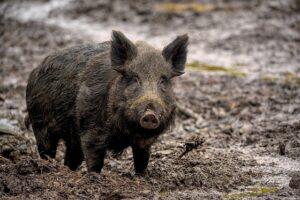
(Photo: Pixabay)
In recent weeks, the ASP epidemiological situation in Baranya County has deteriorated significantly and the disease is spreading rapidly among wild boars – primarily due to the high density of wild boars. In the past six weeks, the disease was detected most frequently in this county, and more than half of the cases came from dead wild boars. The national chief veterinarian therefore declared sixteen game management units in Baranya County and five in Somogy County as infected. Furthermore, he reclassified the areas of ten game management units in Baranya County and sixteen in Somogy County as high-risk. In addition, in order to slow down the spread of the epidemic, he initiated the closure of game crossings on the M60 and M6 motorways and other landmarks that allow wild boars to pass through.
It is important to emphasize that African swine fever is not dangerous to humans
The disease cannot be cured and there is no vaccine against it. Its importance is due to the economic damage it causes, which results, on the one hand, from the killing of sick animals and, on the other hand, from trade restrictions. It is of utmost importance to prevent the further spread of the epidemic to domestic pigs, for which it is essential for livestock keepers to fully comply with the disease control regulations. Nébih asks animal keepers to notify their veterinarian within 24 hours if they notice a sudden fever, death, or bleeding symptoms in their pig herd.
Nébih
Related news
The processing sales price of chicken legs has decreased
🎧 Hallgasd a cikket: Lejátszás Szünet Folytatás Leállítás Nyelv: Auto…
Read more >
The producer price of slaughter cows increased by 30 percent
🎧 Hallgasd a cikket: Lejátszás Szünet Folytatás Leállítás Nyelv: Auto…
Read more >
István Nagy: The horticulture of the future is being built in Szentes
🎧 Hallgasd a cikket: Lejátszás Szünet Folytatás Leállítás Nyelv: Auto…
Read more >Related news

Aldi, Auchan, Lidl, PENNY, SPAR, Tesco: in 2024 they paid more than 710 billion into the budget, while closing with a loss
🎧 Hallgasd a cikket: Lejátszás Szünet Folytatás Leállítás Nyelv: Auto…
Read more >
OKSZ: Household consumption cannot keep up with the growth rate of real wages
🎧 Hallgasd a cikket: Lejátszás Szünet Folytatás Leállítás Nyelv: Auto…
Read more >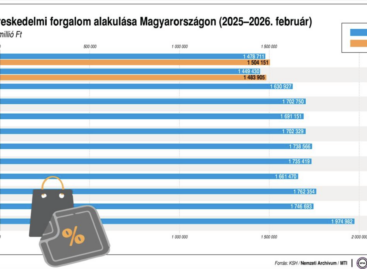
KSH: retail turnover in February exceeded the same period of the previous year by 3.8 percent and the previous month by 0.4 percent
🎧 Hallgasd a cikket: Lejátszás Szünet Folytatás Leállítás Nyelv: Auto…
Read more >
