
A change of perspective in forest management

Protected forest habitats are being destroyed – while two-thirds of the wood cut down and burned in power plants is not used to heat homes, but rather to heat the streets and the environment as a loss. Several organizations have pointed out the shortcomings of the systemically bad logging and wood use practices in a logging area in the middle of the Bükk National Park.
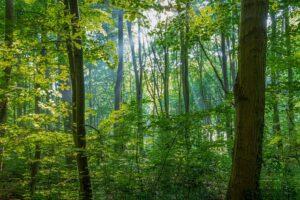 In Hungary, timber production is taking place on about 95% of forest areas, including protected and Natura 2000 areas. The biggest victims of the practice of primarily using timber in forests are Hungary’s national parks. Despite the existence of the Bükk National Park for almost half a century, logging areas are still created in a significant part of its area every year. Oak and beech forests that are 140 to 150 years old and home to a rich biodiversity often fall victim to logging. These forests are irreplaceable habitats – home to, for example, the highly protected white-backed woodpecker, the golden eagle, the eagle owl, the lynx or the mountain jay – and play a key role in mitigating the effects of climate change.
More than half of the wood harvested is also not used sustainably: out of 100 trees cut down, 62 are burned, 20 of which are used in biomass power plants. This amounts to 1.4 million m³ of firewood per year, which would fill nearly four Puskás Arenas to the brim with logs, including the playing field and the audience area. About 60% of the firewood comes from our valuable, natural forests.
In addition to their wasteful use, these power plants cover only 2.7% of Hungary’s electricity consumption. In a balanced mix of solar and wind energy, the amount of biomass used annually could be replaced by just 41 modern, properly located wind turbines and 570 MW of additional solar power capacity. This would mean a barely 7% expansion of the current domestic solar power plant capacity.
The current situation is not only the result of the decisions of individual actors, but also of a forest management and wood utilization system that has long prioritized wood production over ecological aspects.
The professional knowledge and experience are available – the question is what approach and what incentives will be used. Although forestry departments act in accordance with the law, the current system is still unable to guarantee the protection of our most valuable forests. Despite talking about national parks, in practice, nature conservation considerations often fall behind economic interests during forest planning processes and professional consultations.
A clear state and legal decision would be needed for this to change: it should be stated that the only goal in national parks and highly protected areas can be the preservation of nature. Currently, negotiations are often forced bargains, where nature conservation can only achieve symbolic modifications to logging plans, while the original function and wildlife of the forest are damaged. Thus, even if an intervention is “regular”, it often not only does not help the renewal of nature, but also directly contradicts it.
Forests are not just fuel, but complex ecological systems. They cool the air, evaporate, provide shade, dampen the wind, and balance out extreme weather effects. The larger and more connected a forest is, the stronger this protective effect. If we cut them up or remove them with logging areas, these functions will cease – and we will all feel the consequences.
The Forest Love Association, Greenpeace Hungary, the Hungarian Ornithology and Nature Conservation Association, the Hungarian Nature Conservation Association and WWF Hungary spoke out in Lillafüred on February 4th in order to protect our protected forests and against poor logging and firewood use practices.
According to the organizations, it is our common task to stop the further exploitation of forests. We need to curb resource waste, adopt more environmentally friendly forest management and management practices, and use more efficient methods. They pointed out that if we cut down just as many trees as are currently used in biomass power plants, the volume of timber extraction would already be reduced by one fifth, so that our most valuable protected areas – including the most valuable old-growth forests of national parks – could become largely undisturbed habitats instead of areas for timber production.
A change in attitude is not a theoretical question. In a small part of the country’s forest area, management methods that ensure continuous forest cover are already in place, which both protect habitats and provide timber in the long term. The knowledge and experience are available – now is the time to make decisions.
Related news

Two million hours in the wild, 800 protected livestock – we monitored domestic large predators for three years
🎧 Hallgasd a cikket: Lejátszás Szünet Folytatás Leállítás Nyelv: Auto…
Read more >
Earth Hour in the shadow of the energy crisis
🎧 Hallgasd a cikket: Lejátszás Szünet Folytatás Leállítás Nyelv: Auto…
Read more >
Water retention and ecological water replenishment: from now on, every idea will go into your pocket
🎧 Hallgasd a cikket: Lejátszás Szünet Folytatás Leállítás Nyelv: Auto…
Read more >Related news

EWG report: Spinach leads the “Polluted Twelve,” pineapple tops the “Clean Fifteen”
🎧 Hallgasd a cikket: Lejátszás Szünet Folytatás Leállítás Nyelv: Auto…
Read more >
Lidl treats employees to a vegan breakfast
🎧 Hallgasd a cikket: Lejátszás Szünet Folytatás Leállítás Nyelv: Auto…
Read more >
István Nagy: the pig sector has received further assistance
🎧 Hallgasd a cikket: Lejátszás Szünet Folytatás Leállítás Nyelv: Auto…
Read more >
