
Stagflation and structural erosion in transportation: the profit recession of the Hungarian SME transportation sector has been going on for nine quarters

Based on the latest sector analysis, the DigiLog Consulting KFX report, NiT Hungary draws attention to the fact that the domestic road freight transport sector, which provides a significant share of GDP, has reached a critical turning point. While macroeconomic data shows the stability of transit traffic, profitability in the sector has been in negative territory for nine quarters now.
Cost shock and competitiveness scissors
At the beginning of 2026, the sector will face unique cost pressure. Based on DigiLog Q4 data and NiT Hungary’s internal measurements, the cost of international transport increased by an average of 8.8%, while the increase in freight rates did not follow this dynamic.
- The “financing trap”: The nearly 40% increase in leasing interest rates and 30-35% in financing costs is hitting Hungarian SMEs with limited capital the hardest, while foreign (mainly Romanian and Bulgarian) competitors are taking advantage of the Schengen benefits and are carving out an ever-increasing slice of the domestic market.
- Solvency is deteriorating: As their profits increase, businesses are getting closer to the liquidity threshold, thus reducing the number of investments, the extent of developments and the continuous income correction.
The “Toll Paradox” and the Concession Model
NiT Hungary’s analysis points to a systemic contradiction: the current 35% toll increase planned for the sector (which the government has opened until February 15 renegotiation), would not improve the living conditions of the population, but could destroy thousands of Hungarian businesses.
“We propose to reduce the negative impact of transportation on the population by diverting transit traffic. It is a reasonable expectation that only trucks whose destination and transport task truly require it should travel through populated areas. At the same time, we should not burden the entire transport society with an extremely high toll increase”
– emphasized Ferenc Lajkó, Executive Secretary General of NiT Hungary.
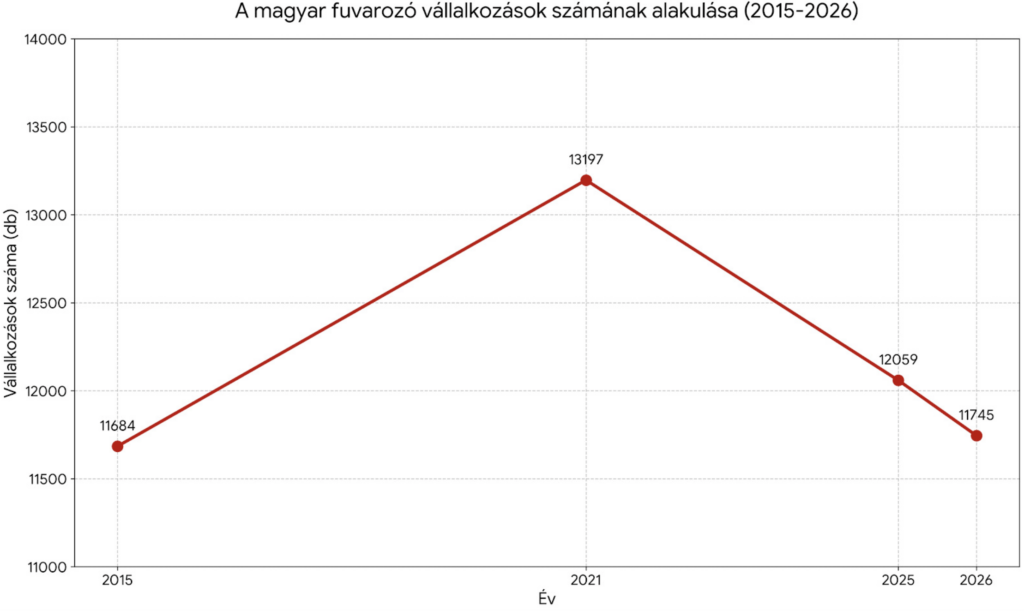
Structural erosion: 1,400 companies have disappeared The statistical data is alarming: the number of businesses has decreased by 11% since the peak of the sector in 2021. This is not simple market consolidation, but erosion that threatens the security of the Hungarian supply chain. According to NiT Hungary data, 314 family businesses closed down last year alone.
“As a professional organization, we have been working for 36 years to ensure that the number of domestic businesses does not decrease and that their competitiveness is maintained”
– added Ferenc Lajkó, the executive secretary general of NiT Hungary.

Related news

KSH: in February the foreign trade surplus for goods was 665 million euros, the volume of exports was 2.3 percent lower, and that of imports was 6.7 percent higher than in the same period of the previous year
🎧 Hallgasd a cikket: Lejátszás Szünet Folytatás Leállítás Nyelv: Auto…
Read more >
The domestic SME sector is characterized by declining digitalization and weak efficiency
🎧 Hallgasd a cikket: Lejátszás Szünet Folytatás Leállítás Nyelv: Auto…
Read more >
GKI: High base rate, low inflation?
🎧 Hallgasd a cikket: Lejátszás Szünet Folytatás Leállítás Nyelv: Auto…
Read more >Related news

Big shopping begins, trade is prepared
🎧 Hallgasd a cikket: Lejátszás Szünet Folytatás Leállítás Nyelv: Auto…
Read more >
Nearly one and a half kilograms of ham and two dozen eggs: this is how Hungarians prepare for Easter
🎧 Hallgasd a cikket: Lejátszás Szünet Folytatás Leállítás Nyelv: Auto…
Read more >
The goal is to improve the quality of life for generations: Nestlé’s summary of shared value creation has been published
🎧 Hallgasd a cikket: Lejátszás Szünet Folytatás Leállítás Nyelv: Auto…
Read more >
