
Hungarian sheep farmers can expect stable demand

Hungarian sheep farmers can expect stable demand, foreign markets would also absorb more exports – the executive director of the Sheep and Goats Sector Inter-Provincial Organization told MTI.
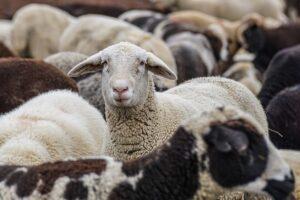
Dávid Mezőszentgyörgyi explained: In Hungary, 7-8 thousand farmers keep a total of approximately 680 thousand ewes. Many of them only have a few animals, while the largest farms have a herd of 10 thousand. The average is between 50 and 100, but this is only enough for a supplementary activity. To maintain a family farm, a much larger herd is usually needed, according to their calculations, about 1,000 individuals. About 20 percent of sheep farmers make a living exclusively from this activity, and even among the largest ones there are those who deal with other animals or crop production.
Domestic consumption remains low, at around 0.2 kilograms per capita per year
Lamb is more popular at Easter, and demand for sheep is less seasonal. The director pointed out that consumption in Hungary was not significantly boosted by the boom in hospitality and tourism, but sales do not cause problems, because Hungarian sheep and lamb are sought-after export items in Western Europe and the Middle East, as well as in some North African Muslim-majority countries. The average EU consumption per capita is 1.3 kilograms per capita per year, higher in the southern EU countries. The majority of the goods produced in Hungary, around 95 percent, are exported, demand has stabilized at a high level, and even increased somewhat last year, with an increase of around 10 percent in both volume and sales compared to 2024. Exports consist of two separate categories, explained Dávid Mezőszentgyörgyi. Small lambs, weighing up to 30 kilograms in live weight, are mainly exported to the southern EU states, mainly to Italy and Croatia. So, anyone who eats roast lamb on a summer beach holiday is likely to be eating meat produced in Hungary, he noted. Larger animals are mainly transported to Western Europe and sold to Muslim communities in Austria, Germany and the Netherlands. In the Middle East, Israel and Saudi Arabia are also among the most important buyers.
The head of the interest group does not expect market difficulties in the foreseeable future
Purchase prices have stabilized at a high level, and demand is continuous, because the EU is not self-sufficient. Good news for sheep farmers is that direct subsidies for small ruminants are also considered important in the next draft EU agricultural policy, so they may remain in the future, and grazing livestock may also receive additional incentives. As part of the adaptation to weather conditions, the role of grassland and pasture-based utilization may increase in Hungary as well, the 600-650 thousand commodity base can be increased to 1 million – said Dávid Mezőszentgyörgyi. In his opinion, a larger volume could be sold, which would not only result in higher export revenue, but could also strengthen the domestic processing industry. According to the announcement on the website of the Interprofessional Organization for the Sheep and Goat Sector, sheep farming contributes to biodiversity through grazing. Anyone who buys or orders lamb meat can not only consume valuable food that can be prepared in a variety of ways, but also helps social and environmental sustainability – it can be read on the barihus.hu website, where recipes and educational content are also published.
MTI
Related news
Hungarian development can improve animal welfare and efficiency in dairy farms
🎧 Hallgasd a cikket: Lejátszás Szünet Folytatás Leállítás Nyelv: Auto…
Read more >
Turkish food company Dogus Cay is establishing its first plant outside Turkey in Orosháza, creating 440 jobs
🎧 Hallgasd a cikket: Lejátszás Szünet Folytatás Leállítás Nyelv: Auto…
Read more >
The horticulture of the future is being built in Szentes
🎧 Hallgasd a cikket: Lejátszás Szünet Folytatás Leállítás Nyelv: Auto…
Read more >Related news
Hungarian consumers are saving on ham, label reading is becoming more important
🎧 Hallgasd a cikket: Lejátszás Szünet Folytatás Leállítás Nyelv: Auto…
Read more >
International food prices have risen due to the impact of the Middle East conflict on energy prices
🎧 Hallgasd a cikket: Lejátszás Szünet Folytatás Leállítás Nyelv: Auto…
Read more >
It doesn’t matter how big the egg is on the shelves: genetics, age, and the chains’ tender logic decide
🎧 Hallgasd a cikket: Lejátszás Szünet Folytatás Leállítás Nyelv: Auto…
Read more >
