
Roland Berger: we need to rethink urban freight transport

Urban logistics, i.e. the transportation of goods within the city and delivery to customers, creates many challenges. As a result of the pandemic, the number of online orders has increased, and logistics providers have been forced to switch to a segmented approach that meets the needs of consumers. The biggest challenge is the implementation of a sustainable and efficient transport system in the urban environment, however, according to Roland Berger experts, it is necessary to move away from the current fragmented transport process.

Consumers demand fast and cost-effective delivery
Consumers increasingly expect the ordered products to be delivered as quickly and affordably as possible: around 56 percent of online shoppers between the ages of 18 and 34 demand that they receive the products the same day. Global e-commerce sales have boomed, and the market is expected to continue to grow at around 9 percent per year in the coming years. In order to meet these demands, logistics providers have “atomized” deliveries (i.e. orders are fulfilled one by one), which, in addition to increasing complexity and cost, also leads to overloading of urban infrastructure and increased emissions.
“E-commerce currently accounts for around 20 percent of global retail sales and shows no signs of slowing down. Moreover, the challenges are not limited to B2C markets, in B2B e-commerce, business customers expect the same speed and flexibility that they receive in their private transactions. This poses a serious challenge to the areas involved in the sector, such as logistics and infrastructure. According to Roland Berger, a long-term solution will require sustained collaboration between stakeholders, which can ease the pressure on city infrastructure while ensuring that customer needs are met in a timely and sustainable manner.”
– said Frigyes Schannen, Hungarian partner of Roland Berger.
Related news
Kifli.hu expands its delivery area by forty settlements
🎧 Hallgasd a cikket: Lejátszás Szünet Folytatás Leállítás Nyelv: Auto…
Read more >
Kifli.hu is expanding eastward
🎧 Hallgasd a cikket: Lejátszás Szünet Folytatás Leállítás Nyelv: Auto…
Read more >
Already a reality in Prague, Budapest next? – foodora tested robot delivery
🎧 Hallgasd a cikket: Lejátszás Szünet Folytatás Leállítás Nyelv: Auto…
Read more >Related news
TUTTI turns 40 – a defining Hungarian family company with development spanning generation
🎧 Hallgasd a cikket: Lejátszás Szünet Folytatás Leállítás Nyelv: Auto…
Read more >
The message of Hungarian business leaders for 2026: Consolidation instead of revolution
🎧 Hallgasd a cikket: Lejátszás Szünet Folytatás Leállítás Nyelv: Auto…
Read more >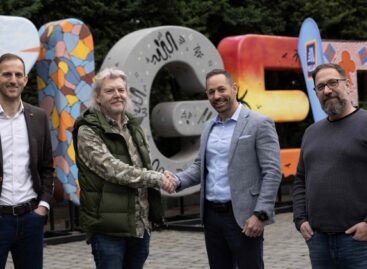
ALDI will be on Sziget again this year
🎧 Hallgasd a cikket: Lejátszás Szünet Folytatás Leállítás Nyelv: Auto…
Read more >
