Hidden imports in the European food chain – how is the EU internal market changing?

If someone walks through the fruit and vegetable section of any Hungarian supermarket today, they can easily feel like they have visited all the corners of the world before reaching the checkout. Moroccan peppers, Egyptian strawberries, Turkish tomatoes – the volume of imports breaks records year after year. And behind processed foods, Ukrainian corn or Brazilian chicken are increasingly common.
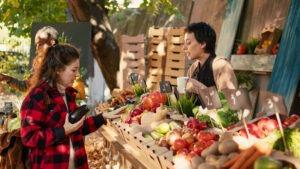 The wide range of goods on the shelves of European stores is, at first glance, proof of well-functioning trade. But more and more professional voices are asking: Are we really still consuming European products?
We are strong in exports – but from what raw materials?
The EU’s food trade balance closed with a surplus of nearly 27 billion euros in the first half of this year. The continent’s exports are mainly based on highly processed products: chocolate, dairy products, wines, biscuits, and baked goods.
However, behind the good results is increasing import dependence.
About 30% of total agricultural imports come from two countries: Brazil and Ukraine.
-
70% of Ukrainian grain is purchased by Spain to supply its pig industry.
-
90% of the EU’s sunflower oil comes from Ukraine.
-
Ukrainian poultry meat has grown by 130% in three years under.
-
More than 80% of the soy used is of South American origin.
That is, while the EU is a strong food exporter, raw materials increasingly come from other continents.
Free trade – open doors, new risks
The trend is further accelerated by two recent trade directions:
-
the EU-Ukraine agreement with higher duty-free quotas,
-
the EU-Mercosur agreement, which will allow approx. 80% of the customs duties will be reduced or eliminated.
The consequences are already visible in the stores:
-
Turkish paprika imports have increased by 300% in 10 years,
-
Moroccan tomatoes and Egyptian strawberries are also breaking records.
Meanwhile, European producers have to contend with competitors who are not subject to the strict EU standards (plant protection product use, GMO restrictions, animal welfare, etc.). This creates a significant price and cost advantage – resulting in a European disadvantage.
What does the consumer see in this? Often: nothing.
The consumer side is one of the most critical points. Even if we make a conscious decision, it is not certain that there is a way.
According to current EU regulations, the country of origin of the raw material must be indicated on the packaging, but the place of processing.
Related news
PrepWorld Expands Fresh-Fruit Activities To France
🎧 Hallgasd a cikket: Lejátszás Szünet Folytatás Leállítás Nyelv: Auto…
Read more >
New, sustainable corrugated board box from Dunapack – a modern solution for fruit and vegetable packaging
🎧 Hallgasd a cikket: Lejátszás Szünet Folytatás Leállítás Nyelv: Auto…
Read more >
Belarusian price ceiling for vegetables and fruits, with centralized winter storage
🎧 Hallgasd a cikket: Lejátszás Szünet Folytatás Leállítás Nyelv: Auto…
Read more >Related news

Aldi, Auchan, Lidl, PENNY, SPAR, Tesco: in 2024 they paid more than 710 billion into the budget, while closing with a loss
🎧 Hallgasd a cikket: Lejátszás Szünet Folytatás Leállítás Nyelv: Auto…
Read more >
OKSZ: Household consumption cannot keep up with the growth rate of real wages
🎧 Hallgasd a cikket: Lejátszás Szünet Folytatás Leállítás Nyelv: Auto…
Read more >
KSH: retail turnover in February exceeded the same period of the previous year by 3.8 percent and the previous month by 0.4 percent
🎧 Hallgasd a cikket: Lejátszás Szünet Folytatás Leállítás Nyelv: Auto…
Read more >
