
Fodder fruit sold as a premium: double quality in Romania, reputational risk in the region

The Romanian National Consumer Protection Authority (ANPC) has drawn attention to an increasingly serious market and consumer protection problem: poorer quality citrus fruits regularly appear in Romanian retail, which according to the EU classification could only be sold for processing or as animal feed, yet they end up on the shelves of hypermarkets as first-class citrus fruits, writes Economyx.
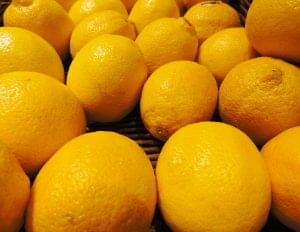 According to Paul Anghel, CEO of ANPC, there is a systematic misclassification, especially in the case of small lemons and oranges, which are weak in taste and content. EU trade standards clearly establish the difference between fruit for consumption and industrial use, but in practice these dividing lines are blurred.
Supply chain: feed on paper, premium in the store
According to the authority’s experience, the problem is not caused by isolated abuses, but a systemic practice has developed along the import-wholesale-retail axis. A significant part of the items imported for paper processing or animal feed end up in the fresh produce sections, while goods that have already been discarded in Western European markets are being sold in Eastern Member States.
The strong price sensitivity of the Romanian market, combined with incomplete or inconsistent official controls, encourage retail chains to offer lower-priced, lower-quality fruit with a “first-class” label. Meanwhile, higher-quality items are mainly found in Western Europe.
Dual quality: an old debate, in a new guise
The phenomenon is not without precedent. Several Eastern European member states – including Hungary earlier – have urged action at the EU level against dual quality of food. As a result, EU consumer protection regulations state that it is an unfair commercial practice to market products of significantly different quality under the same brand name without justification.
However, in the case of citrus fruits, the problem is more difficult to detect, as it is not a matter of different recipes of identical brands, but manipulation of quality classification. This poses a more complex challenge from a legal and regulatory perspective.
Risks for trade
The practice may bring cost advantages to chains in the short term, but in the longer term it carries serious reputational and regulatory risks. The damage to consumer confidence, the possibility of regulatory tightening, and possible EU-level action are all factors that could affect the entire supply chain.
According to experts, the situation can only be addressed with a two-pronged approach: on the one hand, more consistent regulatory controls are needed, and on the other hand, consumer awareness needs to be strengthened. As long as price remains the primary decision-making criterion, there will be a market for lower-quality products – even with a premium label.
The Romanian example is a warning to the region as a whole: the issue of food quality is not only a consumer protection issue, but also a competitiveness and trust issue for Central and Eastern European retail.
Related news
Schwarz Group Gets Approval For Acquisition Of La Cocoș In Romania
🎧 Hallgasd a cikket: Lejátszás Szünet Folytatás Leállítás Nyelv: Auto…
Read more >
Fruit prices in Serbia rose significantly in 2025
🎧 Hallgasd a cikket: Lejátszás Szünet Folytatás Leállítás Nyelv: Auto…
Read more >
Local businessmen buy Carrefour’s Romanian chain
🎧 Hallgasd a cikket: Lejátszás Szünet Folytatás Leállítás Nyelv: Auto…
Read more >Related news

SPAR renovated three of its stores with an investment of 880 million forints
🎧 Hallgasd a cikket: Lejátszás Szünet Folytatás Leállítás Nyelv: Auto…
Read more >
The government is helping dairy farmers with another 7 billion forints
🎧 Hallgasd a cikket: Lejátszás Szünet Folytatás Leállítás Nyelv: Auto…
Read more >
Vál-Völgye Bakery won ten awards at the 22nd International Bread Competition
🎧 Hallgasd a cikket: Lejátszás Szünet Folytatás Leállítás Nyelv: Auto…
Read more >
