
Pek-Snack: Peach donuts may be popular during Carnival – but Christmas was no longer just dominated by poppy seed bagels

Doughnuts are expected to remain the hit during the carnival period, of which we buy 50 percent more on average than during the rest of the year. The favorite is the peach jam Berliner, but there is also strong demand for American-style hole doughnuts, according to data from the Pek-Snack Group. There has been some change during the current Christmas holiday period: the dominance of poppy seed products has decreased, followed by walnut, chestnut and, as a novelty, pistachio-flavored pastries. Data from fine bakery manufacturers present in 6 countries also shows that our southern neighbors prefer chocolate flavoring to peach flavoring when it comes to doughnuts.
 Winter holidays, such as Christmas and Carnival, are particularly important in the fine bakery market. According to data from the Pek-Snack Group, which has a regional network, around Christmas we bought bagels and holiday cookies the most, similar to previous years. The dominance of poppy seeds is also common: the turnover of such products increased by almost 80 percent at the end of the year. However, there was some change in terms of flavoring in December: while in the rest of the year, poppy seed flavor dominates among kalács, bagels, rolls and babka-type products with a 90 percent share, at Christmas this decreased to 50 percent, as in addition to the also traditional walnut (20%) and chestnut (20%) cookies, pistachio (10%) products are also starting to catch up. According to Zoltán Novák, CEO of Pek-Snack, not only does the amount purchased increase during the festive weeks, but the circle of customers also expands: more households start buying seasonal products at this time, and families also buy larger quantities than usual.
Carnival: a time of abundance before fasting
Carnival is also a special time: according to data from the Pek-Snack Group, which has a regional network, we consume one and a half times as many doughnuts in the weeks before Lent, from Epiphany to Ash Wednesday, than in the rest of the year. The relationship between Carnival and doughnuts goes back a long time: traditionally, this was a time of abundance before Lent, which is why doughnuts fried in oil or fat played a prominent role on the festive table. In Hungarian folk tradition, the ribbon donut is specifically a carnival cake, so it is one of the symbolic dishes of the period not only in a gastronomic but also in a cultural sense.
Zoltán Novák, CEO of Pek-Snack, said that the carnival period represents a short but intense peak. Classic flavors are still a sure thing at this time, but it is also clear that interest in seasonal and limited products also surges. This rapidly changing demand requires precise planning and flexible operation on the part of the fine bakery manufacturer.
According to Pek-Snack data, the peach jam Berliner donut is the most popular choice in the Czech Republic, Hungary and Slovakia. In Bosnia and Croatia, on the other hand, the chocolate-coated American-style donut leads the sales. Among the hole-shaped doughnuts, strawberry-coated versions were also in demand in several markets, while in Croatia, the pistachio flavor was also among the five most popular products.
Seasonality is now not only a consumer trend, but also an operational challenge
The Pek-Snack Group is present in 6 countries and sells through an extensive retail and franchise network. Zoltán Novák emphasized that the peak Christmas period is a particularly big challenge for a regionally operating bakery manufacturer, as the entire production and supply chain has to be adapted to the different holiday customs, promotional calendars and traffic patterns of several countries in a short time. In such cases, demand planning is much more detailed, based on store and country-level forecasts and multi-year data, and in production, not only the quantity but also the holiday product mix has to be flexibly adjusted. The frozen bakery model is a relief on the one hand, because it allows stocks to be built up in advance, but at the same time it also increases the challenges caused by refrigeration capacity, logistics and labor supply. Therefore, those who integrate seasonality into daily operations can remain successful in the segment: with data-driven, flexible capacity planning, secure raw material supply and a service level that trade can safely rely on even during the most critical holiday weeks. An important experience is that a Hungarian supplier is not necessarily attractive to foreign partners if it is cheaper, but if it is more reliable. Punctual delivery and stable quality are worth at least as much as the product itself.
Related news

Using the system has a boost effect
🎧 Hallgasd a cikket: Lejátszás Szünet Folytatás Leállítás Nyelv: Auto…
Read more >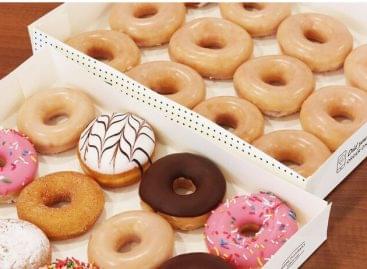
Cheese-cocoa-peach jam: these are the most popular cookie flavors
🎧 Hallgasd a cikket: Lejátszás Szünet Folytatás Leállítás Nyelv: Auto…
Read more >
Brits Embrace At‑Home Celebrations While Germans Cut Back on Valentine’s Day Spending
🎧 Hallgasd a cikket: Lejátszás Szünet Folytatás Leállítás Nyelv: Auto…
Read more >Related news

Green light for SPAR’s new acquisition in Austria
🎧 Hallgasd a cikket: Lejátszás Szünet Folytatás Leállítás Nyelv: Auto…
Read more >
Hungarian vegan label helps conscious consumers
🎧 Hallgasd a cikket: Lejátszás Szünet Folytatás Leállítás Nyelv: Auto…
Read more >
Suntory expands European partnership with Keurig Dr Pepper
🎧 Hallgasd a cikket: Lejátszás Szünet Folytatás Leállítás Nyelv: Auto…
Read more >
